
The primary HS heading for wiping rags is 6310, split into 6310.10 for sorted rags and 6310.90 for other or unsorted rags. Which subheading applies depends on whether the rags show appreciable wear and arrive presented in bulk, typically as bales or sacks. That six-digit code is only the starting point. Before you file an entry, confirm the full 8 or 10-digit national extension and duty rate in your own country’s tariff schedule, because the HS code alone won’t tell you what you owe.
TL;DR:
- Sorted rags with appreciable wear and bulk packaging are classified under specific national extensions of HS code 6310.10, affecting duty rates and import procedures.
- Customs classification depends on visible wear, with stains and frayed edges indicating rags, while packaging in bales or sacks distinguishes them from resale clothing under 6309.
- Proper documentation, including bale manifests, fiber-content photos, and supplier affidavits, is essential to prevent delays and misclassification at ports.
- Importers should verify exact tariff codes and additional tariffs like Section 301 rates before purchasing to accurately calculate landed costs.
- Binding customs rulings often rely on physical evidence from samples and detailed descriptions, making thorough documentation crucial for gray-area shipments.
Table of Contents
- What HS Heading 6310 Covers and How It Maps to National Codes
- How Customs Classify Wiping Rags: Wear and Presentation
- Country Examples and Tariff Implications for Wiping Rag Imports
- What Customs Rulings Like NY E83734 Show Importers
- Practical Declaration Checklist for Wiping Rag Imports
- Operating at Scale and Reducing Classification Risk
- Sourcing Compliant Wiping Rags in Bulk from Msexpspzoo
- Sources
- FAQ
What HS Heading 6310 Covers and How It Maps to National Codes
Chapter 63 of the Harmonized System handles “other made-up textile articles,” and heading 6310 is the specific slot for used or new rags, scrap twine, cordage, and worn textile articles no longer fit for their original purpose. The UN Statistics classification detail for 6310 lays out the two subheadings almost every importer will encounter: 6310.10 for sorted rags, and 6310.90 for everything unsorted or mixed.
Six digits is where the World Customs Organization’s authority stops. Every country then builds its own 8 or 10-digit extension on top of that base to set duty rates and statistical reporting requirements. In the United States, that means the Harmonized Tariff Schedule (HTSUS) carries codes like 6310.10.2010 for sorted cotton wiping rags, a level of detail the international HS text never specifies. The United Kingdom, the European Union, and India all layer their own extensions the same way, which is why “6310” gets you in the right chapter but never tells you the actual rate.
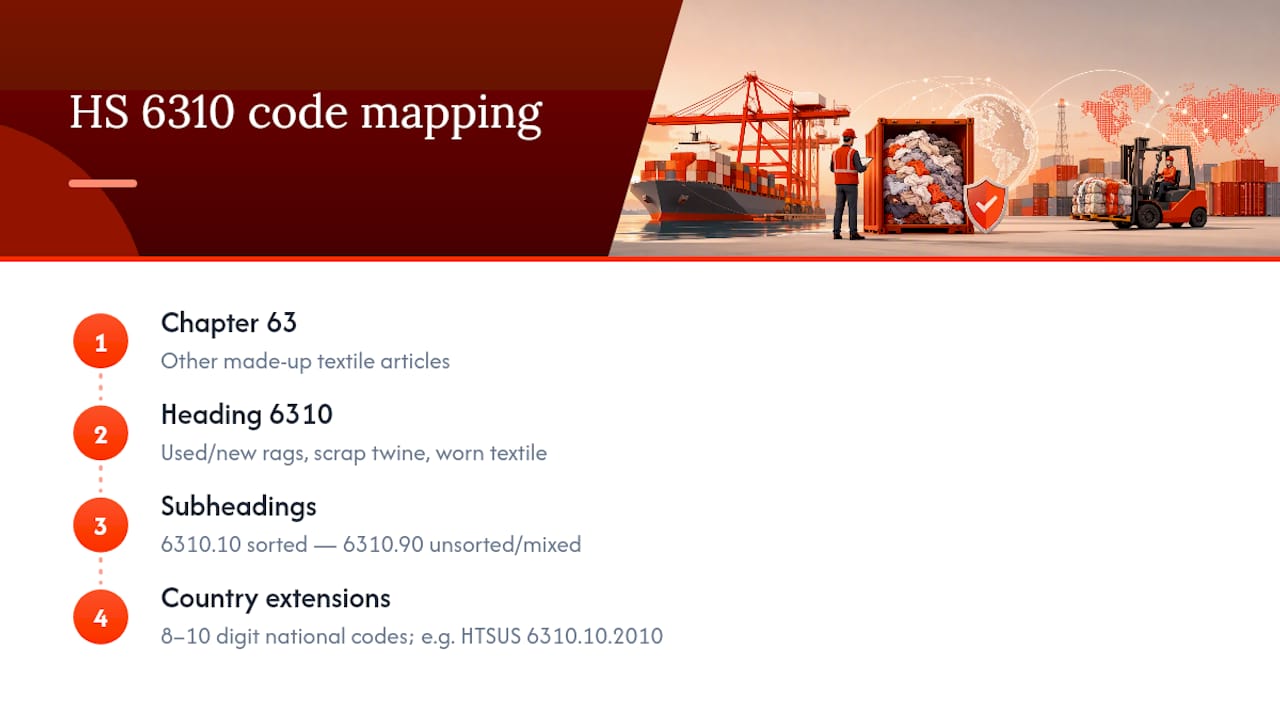
The words “sorted” and “other” aren’t decorative. Customs officers treat sorted rags, meaning materials separated by fiber type or color for resale as wiping cloths, differently from a mixed, unsorted bale destined for shredding or fiber recovery. That distinction changes the subheading and, depending on the country, can change the duty rate too. If your invoice doesn’t specify which category applies, expect a customs officer to ask, or worse, to guess for you.
How Customs Classify Wiping Rags: Wear and Presentation
Two tests decide whether goods land in 6310 rather than somewhere else entirely: appreciable wear and bulk presentation. Both need to show up clearly in your documentation, not just in your product description.
Appreciable wear means the textile shows genuine, visible degradation. Customs examiners in the United Kingdom look for the same signals most inspectors worldwide check for, according to the UK’s Integrated Online Tariff guidance on Chapter 63: stains, frayed edges, repaired tears, worn seams, or fabric that’s lost its original finish. A shirt with a small hole counts. A shirt that’s simply out of style and still wearable does not, and that’s where a lot of shipments run into trouble.
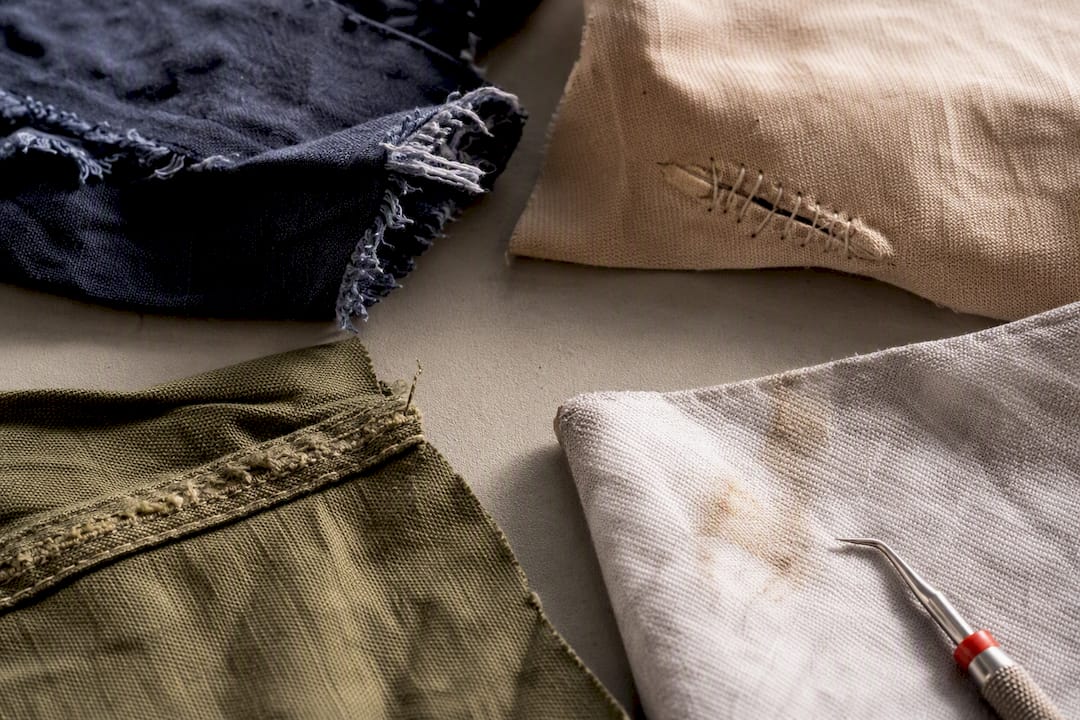
Bulk presentation matters just as much. Rags need to arrive compressed into bales or packed in sacks, with a manifest that describes quantity, weight, and fiber content. Individually folded or retail-packaged goods signal resale-as-clothing, not rag use, no matter how worn they are.
This is also where heading 6309, covering worn clothing intended for reuse, splits from 6310. The line comes down to intended use and how the goods are packaged, not just condition. A batch of well-worn t-shirts folded for a used-clothing retailer belongs in 6309. The same t-shirts baled and shredded into wiping cloths belong in 6310.
Common mis-declarations that trigger delays or reclassification:
- Describing rags as “used clothing” or “second-hand garments” on the invoice, which invites a 6309 challenge
- Omitting fiber content, so customs can’t verify the material claim
- Shipping in retail-style packaging instead of bales, which undercuts the bulk-presentation argument
- Leaving off any mention of wear condition, forcing the examiner to make that call unaided
Pro Tip: Attach two or three close-up photos of the actual bale contents to your entry paperwork, not stock images. Inspectors trust what they can see, and a photo showing frayed, stained fabric does more to head off a hold than any amount of written description.
Country Examples and Tariff Implications for Wiping Rag Imports
Classification isn’t an academic exercise. It determines your landed cost, and the gap between getting it right and getting it wrong can run into real money on a container-scale shipment.
In the United States, sorted cotton wiping rags showing appreciable wear and presented in bulk typically fall under HTS subheading 6310.10.20. That’s the line item US Customs and Border Protection expects to see on entries for this exact product, and it carries its own base duty rate separate from unsorted or other-fiber rags.
Base duty is only half the picture. Depending on country of origin, Section 301 tariffs can add a substantial surcharge on top of the standard HTS rate for goods sourced from certain countries, and those additional duties get layered onto the base rate rather than replacing it. Illustrative tariff lookups for sorted cotton wiping rags sourced from China, for instance, show exactly this stacking effect: a base 6310.10.20 duty rate plus an additional Section 301 charge that meaningfully raises total cost per pound.
Practical steps before you commit to a purchase order:
- Pull the exact 8 or 10-digit code from your destination country’s own tariff schedule, not a generic HS lookup
- Confirm whether Section 301 or a comparable trade measure applies to your specific country of origin
- Check for entry conditions beyond duty, including fumigation certificates or import permits some ports require for baled textile waste
- Verify the rate is current, since Section 301 lists and country-specific measures get amended without much advance notice
Statistic to flag: import data on wiping rag shipments into the US shows real-world entries using HS variants like 63109040, and some ports apply fumigation or sanitary requirements on top of the standard classification paperwork, according to shipment records compiled by Seair Exim Solutions. That’s a detail generic tariff guides rarely mention, and it can hold a container at port just as long as a misclassified code.
What Customs Rulings Like NY E83734 Show Importers
Binding rulings are where classification theory meets actual customs decisions, and they’re worth reading before you file anything ambiguous.
Ruling NY E83734 classified submitted rag samples under 6310 based on physical evidence: the fabric showed wear, terry construction, and textile degradation consistent with actual wiping use rather than salvaged clothing. The ruling didn’t rely on the importer’s product description. It relied on what the samples themselves demonstrated.
That’s the model to follow when your own shipment sits in a gray area. A binding ruling request typically needs:
- Physical fabric samples, not photos alone, representative of the actual shipment
- A clear description of fiber content, origin, and intended commercial use
- Documentation showing how the goods will be packaged and sold once imported
Binding rulings can take weeks to months to process, but for importers moving regular volume, the lead time is usually worth it. A ruling on file removes the guesswork at every future port of entry.
Practical Declaration Checklist for Wiping Rag Imports
Getting the paperwork right the first time beats fighting a reclassification after the fact. Use this sequence when preparing an entry:
- Write a precise product description. Use language like “sorted cotton wiping rags, industrial use” rather than “used textiles” or “second-hand garments.”
- State fiber content explicitly. Cotton, cotton-poly blend, and terry cloth each may carry different scrutiny; don’t leave the examiner to guess.
- Attach photos of actual bale contents. Stock or sample images won’t hold up if questioned.
- Include the bale manifest. Weight, count, and packaging method should match what’s on the commercial invoice.
- Get a supplier affidavit. A signed statement confirming the goods are rags intended for wiping use, not resale clothing, adds another layer of proof.
- Confirm fumigation or health certificates. Some destination ports require these for baled textile waste regardless of HS code accuracy.
Keep your invoice line items specific and consistent across every document in the shipment. A mismatch between the invoice description and the bale manifest is one of the fastest ways to draw a hold.
Pro Tip: Retain physical fabric samples from every shipment for at least the duration your country’s customs authority can audit past entries, usually several years. If a classification gets questioned months later, having the actual sample on hand beats trying to reconstruct your reasoning from memory.
Operating at Scale and Reducing Classification Risk
Moving bulk bales of wiping rags across dozens of markets means classification questions come up constantly, and the shipments that clear fastest are the ones backed by clear documentation from the start. Consistent bale manifests, fiber-content statements, and photo records don’t just satisfy one customs officer. They build a paper trail that holds up if a shipment gets flagged for review months later.
Good packaging habits and a supplier willing to put fiber content and condition in writing reduce reclassification risk more than any single clever argument at the port. For shipments that sit in genuinely gray territory, a formal consultation with customs counsel or a binding ruling request remains the safer route than hoping an examiner agrees with your read of the tariff schedule.
— rodrigues
Sourcing Compliant Wiping Rags in Bulk from Msexpspzoo
Getting the HS code right is only useful if the supplier behind your shipment can back it up on paper. Msexpspzoo ships recycled industrial wiping rags in bulk bales, sorted by fiber type, with the kind of documentation customs brokers actually ask for: bale manifests, fiber-content statements, and photos of the baled product itself.
Every bale ships from a 133,000 square foot warehouse built for fast turnaround, so you’re not waiting weeks between order and dispatch while your own customers wait on inventory. Msexpspzoo’s packaging process is set up specifically to support the bulk-presentation and wear-condition criteria that determine 6310 classification, which means fewer questions at your port of entry, not more. If you’re sourcing wiping rags for resale or industrial use and want a supplier who treats compliance paperwork as part of the order and not an afterthought, request a quote or sample through the recycled industrial wiping rags page and get a bale manifest attached to your first shipment.
Sources
- UNSD — Classification detail for 6310
- HTS search — sorted cotton wiping rags (HTSUS examples)
- UK Integrated Online Tariff — Chapter 63 (rags and worn articles)
- Customs ruling NY E83734 — classification of rags
FAQ
What Is the HS Code for Wiping Rags?
The HS heading is 6310, with sorted wiping rags typically falling under 6310.10 and unsorted or mixed rags under 6310.90. Your country’s own tariff schedule then adds a national extension to determine the exact duty rate.
What Is HS Code 61091000?
The HS codes covering garments like cotton T-shirts, singlets, and similar knitted articles relate to wearable apparel, not wiping rags. This classification becomes relevant to rag importers only if the goods are still considered wearable textiles rather than degraded or worn textile waste.
What Is the HS Code for Cleaning Cloths?
New cleaning cloths manufactured specifically for that purpose are usually classified elsewhere in the textile chapters based on material and construction, while worn rags repurposed for wiping fall under 6310. The distinguishing factor is whether the item was made new for cleaning use or converted from worn textile material.
What Is the HS Code for Wash Cloths?
New terry wash cloths sold as toiletry or bath products are generally classified under textile headings covering toweling and terry fabric, separate from 6310. Once a wash cloth is worn out and repurposed in bulk as an industrial wiping rag, it can shift into 6310 depending on condition and presentation.
Does Msexpspzoo Provide Documentation to Support HS 6310 Classification?
Yes. Msexpspzoo supplies bale manifests, fiber-content details, and photos with its bulk wiping rag shipments, giving importers the documentation customs officers typically request when verifying a 6310 declaration.