
Whether you need import permits for used clothing depends entirely on your destination country. The United States typically does not require a special used-clothing license, but U.S. Customs and Border Protection still enforces strict entry rules, HTS classification, and duty payment. Your first moves: confirm the destination’s specific policy, verify HTS code 6309, and request fumigation certificates and supplier documentation before you book transport.
TL;DR:
- Most countries regulate used clothing imports through bans, quotas, or classification rules, making it essential to verify destination-specific policies before shipment.
- In the U.S., used clothing must meet criteria for appreciable wear and proper presentation under HTS 6309 to avoid higher duties and increased scrutiny.
- Suppliers must provide original fumigation certificates, bale labeling with detailed contents, and conformity attestations to prevent delays and reclassification.
- Countries like Bangladesh, South Africa, and Kenya have strict, frequently updating regulations requiring permits, inspection, and specific documentation for used clothing imports.
- Working with experienced customs brokers and maintaining standardized, well-documented bale labeling significantly reduces the risk of delays, rejections, or penalties.
Table of Contents
- When Is an Import Permit Actually Required for Used Clothing?
- U.S. Rules: HTS 6309, “Appreciable Wear,” and CBP Entry Steps
- What Documents Should You Get From Your Supplier Before Shipping?
- How Do Bangladesh, South Africa, and Kenya Handle Used Clothing Imports?
- Step-by-Step: Preparing a Compliant Used Clothing Shipment
- Health and Safety Rules Beyond Fumigation
- Do Environmental Rules on Textile Waste Affect Your Shipment?
- Why Do Used Clothing Shipments Get Rejected or Delayed?
- When Should You Bring in a Customs Broker or Freight Forwarder?
- What Labeling and Packaging Standards Apply Beyond Bale Tags?
- Supplier Documentation Practices That Reduce Compliance Risk
- Get Consistently Documented Bales for Your Next Shipment
- Where to Verify Current Rules Before You Ship
- Sources
- FAQ
When Is an Import Permit Actually Required for Used Clothing?
Permits get triggered by three things: outright bans, quota or selected-importer systems, and the distinction between donated goods and commercial resale. Some countries restrict who can import used apparel at all, capping the number of licensed importers or the total weight and value allowed per shipment. Others treat humanitarian donations differently than for-profit resale, which changes both the paperwork and the tax treatment.
Checking whether your shipment needs a permit means going straight to the source, not relying on forum posts or a freight forwarder’s guess. Start with the destination country’s customs authority or ministry of trade portal, then check any national standards body that oversees textile imports.
A few things to verify before you commit to a shipment:
- Whether the destination has a general ban, a partial ban on certain categories, or a quota system limiting who can import.
- Whether your shipment qualifies as a commercial import or a donation, since the rules and required proof often differ sharply.
- Any weight or declared-value caps tied to your import category.
- Whether you need proof of the seller’s status (registered exporter, chamber-certified supplier) before customs will process entry.
Some countries have tightened these rules after past abuses of donation privileges, so a policy that applied last year may not apply today.
U.S. Rules: HTS 6309, “Appreciable Wear,” and CBP Entry Steps
Used clothing imported for sale into the United States faces the same duties, marking, and entry requirements as new clothing, according to CBP guidance. The relevant classification is HTS heading 6309, which covers “worn clothing and other worn articles.” Getting bumped out of that heading and into chapters 61 or 62, which cover new apparel, usually means a higher duty rate and closer scrutiny.
CBP applies two practical tests to decide whether goods qualify as “used” under 6309. The first is appreciable wear: visible signs of use, not cosmetic staging. The second is presentation: goods bundled in bulk bales read as used stock, while individually packaged items marketed as “good quality” can get reclassified, based on the reasoning in CBP Ruling N236006.
On the process side, you or your customs broker file as the importer of record, submit entry documentation, and post a bond when required. Duties are calculated on declared value, so accurate invoicing matters.
Worn clothing shipments feed a market worth watching: Comtrade data for HS 630900 puts Pakistan, the European Union, the UAE, Guatemala, and Kenya among the top import destinations in 2023, together representing over a billion dollars in trade.
Keep this on hand for any shipment:
- Supplier invoices and photos showing visible wear or bale condition.
- Written attestations from your supplier confirming the goods are used, not new overstock.
- Bond documentation if your broker determines one is required for your entry.
Misclassifying a shipment as new when it’s actually worn goods, or vice versa, risks penalties, delayed release, and repeat audits on future shipments.
What Documents Should You Get From Your Supplier Before Shipping?
Most of the friction in importing used clothing happens before the container ever leaves the dock, not after it arrives. Getting the right paperwork from your supplier up front is the single biggest lever you control.
- Fumigation or sanitization certificates. Several destination countries require proof that bales were treated against pests before export, particularly for used footwear and textiles.
- Certificate of Conformity or Pre-Export Verification (PVoC). Markets like Kenya mandate this before goods clear customs, confirming the shipment meets national safety and quality standards, per Kenya’s PVoC protocols.
- Bale labeling with full detail. Weight, category of goods, supplier and importer contact information, and country of origin should all appear on each bale, along with a declaration that no prohibited items are included.
- Standard shipping paperwork. Commercial invoice, packing list, bill of lading or air waybill, and often a chamber of commerce attestation confirming the shipment’s contents.
Pro Tip: Ask your supplier for original certificates, not scanned copies with signatures cropped out. Some customs offices reject photocopies outright, and reprinting a fumigation certificate after a shipment has already sailed is nearly impossible.
How Do Bangladesh, South Africa, and Kenya Handle Used Clothing Imports?
National rules vary enough that a shipment cleared without issue in one country can get held indefinitely in another. Three examples show the range.
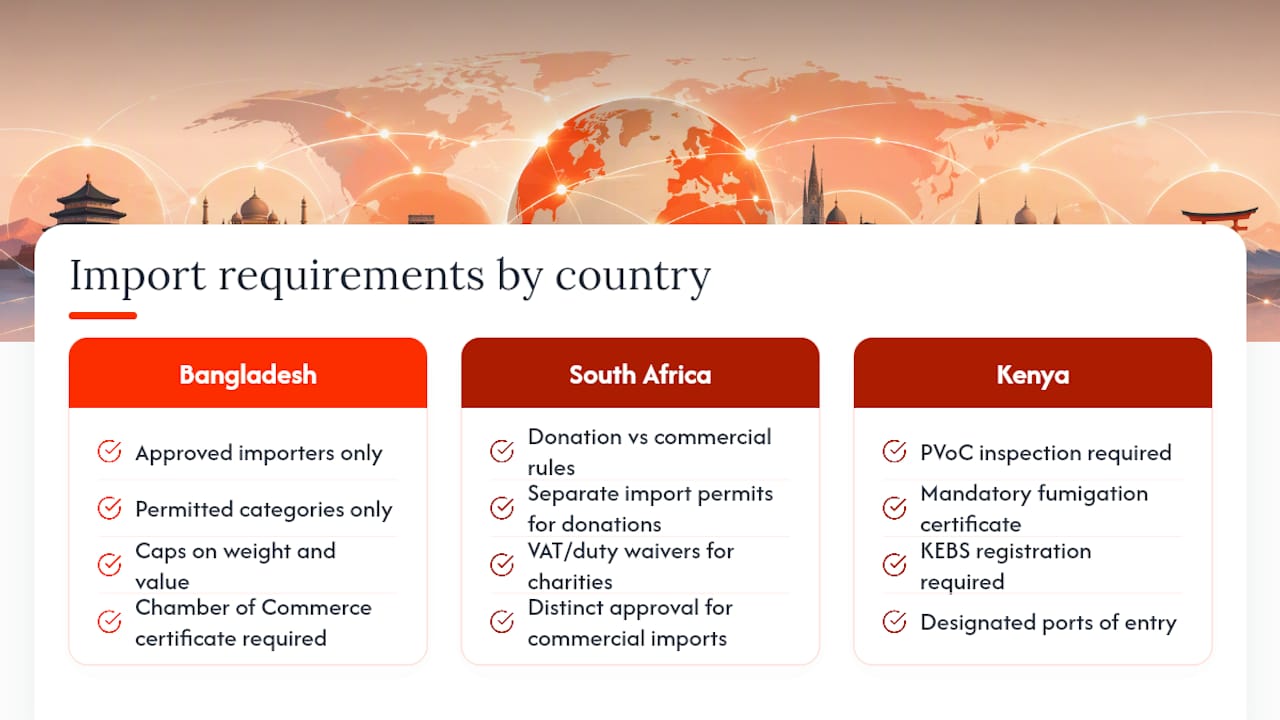
Bangladesh restricts second-hand clothing imports to a specific list of approved importers and permitted categories, with caps on weight and declared value per shipment. Every consignment needs a certificate from a recognized Chamber of Commerce confirming the goods contain nothing on the banned list, according to the Bangladesh Trade Portal.
South Africa treats donated used clothing differently from commercial imports, with separate import permits and documentation needed to qualify for VAT or duty waivers on charitable shipments. Commercial importers face a distinct approval process entirely.
Kenya requires PVoC inspection, mandatory fumigation certificates, and registration with the Kenya Bureau of Standards before goods can clear. Shipments must also enter through designated ports, and bale labeling gets checked closely against the KEBS protocols.
The takeaway across all three: verify the current policy directly with the destination’s customs or standards authority before you book freight, not after. Rules on used clothing tend to shift faster than most trade regulations, often in response to local textile industry pressure.
Step-by-Step: Preparing a Compliant Used Clothing Shipment
Getting a shipment through customs without delays comes down to sequencing. Do these in order, not as an afterthought once goods are already packed.
-
Confirm destination rules first. Contact the customs authority or standards body for your specific country before sourcing inventory, since permit requirements can eliminate categories you were planning to ship.
-
Verify HTS classification. For U.S.-bound shipments, confirm the goods qualify under heading 6309 rather than chapters 61 or 62, and gather proof of appreciable wear.
-
Arrange required treatments. Book fumigation, pre-shipment inspection, or PVoC/COC certification wherever the destination mandates it, well before your ship date.
-
Prepare entry documents. Assemble commercial invoices, packing lists, and bills of lading; for U.S. entries, coordinate CBP entry filing and bond posting through your broker.
-
Engage a broker and retain records. Work with a broker familiar with used-goods classification, and keep copies of every certificate and entry form for the period your destination country requires.
Pro Tip: Build a standing checklist template per destination country rather than starting from scratch each time. Rules rarely change shipment to shipment, but they do change year to year, so review the template before each new order rather than assuming last year’s version still applies.
Health and Safety Rules Beyond Fumigation
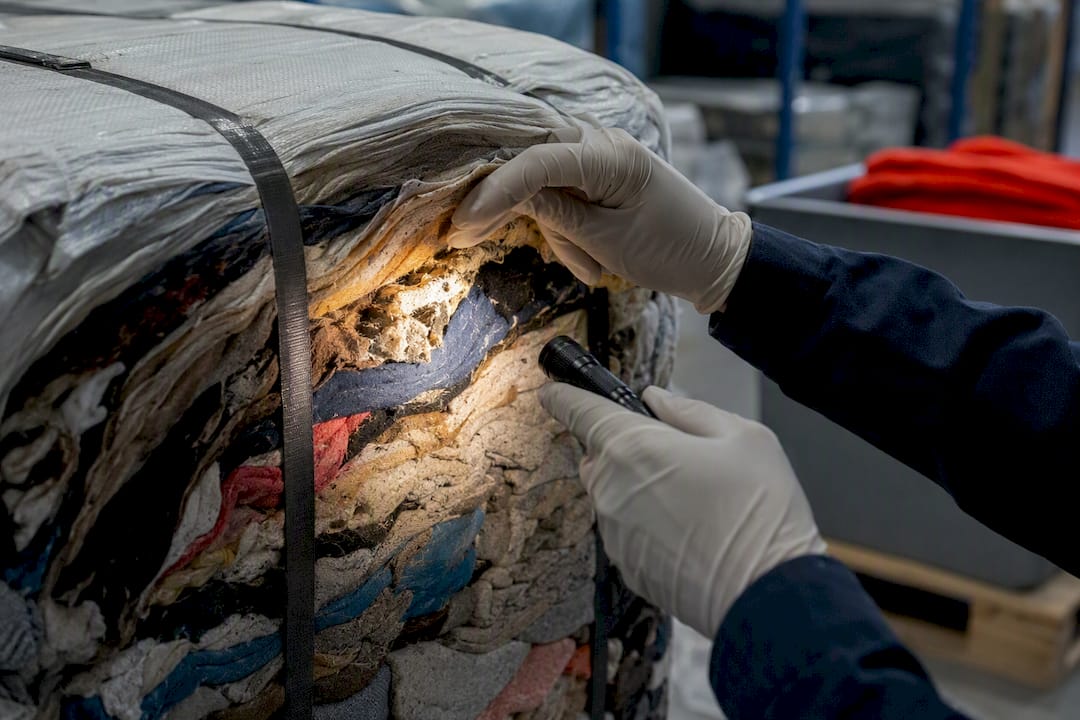
Fumigation gets most of the attention, but it’s only one piece of the pest and contamination controls that used clothing shipments face. Many destination standards bodies also check for mold, mildew, and residual contamination that fumigation alone doesn’t address, particularly in bales that traveled through humid transit routes or sat in storage before export.
Inspectors at ports of entry commonly examine bales for signs of moisture damage, insect infestation beyond what fumigation targets, and evidence of improper storage. A bale that passed fumigation but shows water staining or a musty smell can still get flagged, delayed, or rejected outright.
Sanitization standards differ by category too. Used footwear tends to draw more scrutiny than clothing because rubber and leather retain contaminants differently than cotton or synthetic fabric. Some countries require separate treatment certificates for shoes even when clothing in the same shipment passed a single fumigation round.
The practical fix is asking your supplier for storage and handling records, not just a fumigation certificate. A supplier that stores bales in a dry, climate-controlled warehouse and packs them promptly after sorting produces cleaner shipments with fewer pest and contamination flags at the border. That operational detail rarely shows up on a certificate, but it shows up in inspection outcomes.
Do Environmental Rules on Textile Waste Affect Your Shipment?
Yes, and this is where a lot of importers get caught off guard. The line between “used clothing” and “textile waste” is a legal distinction, not just a descriptive one, and crossing it changes everything about how your shipment gets treated.
Classifying goods as waste rather than reusable clothing can trigger obligations under the Basel Convention and national waste-control rules, according to UK government guidance on textile imports and exports. That means cross-border notification requirements, additional permits, and in some cases, outright seizure if the paperwork doesn’t clearly establish the goods as reusable.
Some countries have also introduced recycling and extended producer responsibility policies aimed at reducing textile waste imports, which can add fees or restrictions specifically on shipments that look more like discarded material than resalable stock. A bale with heavily damaged, unwearable items mixed in with good-condition clothing risks the whole shipment getting reclassified as waste.
The fix is sorting quality control on the supplier side. Bales should contain genuinely wearable, resalable goods, with damaged or unsellable items removed before packing. Documentation should describe the shipment as reusable secondhand clothing intended for resale, not as discarded or unsorted textiles, since that framing matters when a customs officer is deciding which regulatory bucket your shipment falls into.
Why Do Used Clothing Shipments Get Rejected or Delayed?
Most rejections trace back to a small handful of recurring problems, and nearly all of them are preventable with better paperwork upfront.
Misclassification tops the list. A shipment declared under HTS 6309 that actually looks like new overstock, or individually packaged goods presented as premium quality, invites reclassification and back duties under CBP’s ruling framework. Missing or incomplete fumigation certificates cause a close second, especially for shipments headed to markets like Kenya where PVoC and fumigation are non-negotiable.
Inconsistent bale labeling is another common trigger. If the declared weight, category, or contact information on the label doesn’t match what’s inside the bale, inspectors treat that mismatch as a red flag worth a full inspection, which adds days or weeks to clearance.
Valuation disputes also cause delays. Declaring a value that seems too low for the volume and category of goods invites a customs officer to question the entire shipment, sometimes requesting third-party appraisal before release.
Reducing this risk starts with treating documentation as seriously as the goods themselves. Consistent, accurate labeling and verified certificates from a supplier who standardizes their packing process cut down on the inspection triggers that cause most delays.
When Should You Bring in a Customs Broker or Freight Forwarder?
Bring one in before you finalize sourcing, not after your shipment is already at port. A broker who has handled used-clothing entries before knows the specific classification issues under HTS 6309 and can flag a documentation gap before it becomes a customs hold.
Look for brokers who can point to experience with worn-goods classification specifically, since general apparel experience doesn’t always translate. Ask directly whether they’ve handled bulk used-clothing or used-footwear entries, whether they’re familiar with bond requirements for your import volume, and whether they’ve worked with your destination country’s specific permit or PVoC system.
A good freight forwarder complements this by managing the physical logistics: booking the right vessel or route, coordinating pickup timing with fumigation schedules, and making sure documents travel with the shipment rather than arriving separately. For smaller importers running occasional shipments, a broker who handles both classification and forwarding under one relationship tends to reduce the number of handoffs where paperwork can go missing.
Getting quotes from two or three brokers before your first shipment is worth the time. Ask each one directly about past used-clothing entries and how they’ve handled reclassification disputes, since their answer tells you more than any marketing page will.
What Labeling and Packaging Standards Apply Beyond Bale Tags?
Bale labels get most of the attention, but U.S.-bound shipments face additional marking requirements that catch first-time importers off guard. Country-of-origin marking has to be clear and durable enough to survive transit and handling, not just printed on a tag that falls off in the container.
Packaging itself matters for inspection efficiency. Bales that are uniformly compressed and wrapped in a way that allows customs officers to sample contents without fully unpacking the load tend to clear faster than loosely packed or irregularly sized bales. Some importers work with suppliers who use standardized bale dimensions specifically because it speeds up the sampling process at U.S. ports.
Beyond the bale itself, individual garment care labels matter more than most importers expect. If garments retain their original fiber-content and care labeling, that consistency supports the “used” classification narrative rather than raising questions about whether the goods were relabeled or altered before export. Missing or altered labels can prompt closer scrutiny of the whole shipment.
Packing lists should also break down bale contents by general category rather than listing a single vague description like “assorted clothing.” A packing list that separates categories, such as men’s outerwear, women’s casual wear, or children’s items, gives customs a clearer basis for valuation and reduces the odds of a manual recount.
Supplier Documentation Practices That Reduce Compliance Risk
A supplier’s documentation habits shape how smoothly your shipment moves through customs. Accurate bale labeling, current fumigation certificates, and chamber of commerce attestations aren’t paperwork for paperwork’s sake. They’re what a customs officer checks first when deciding whether to wave a shipment through or pull it for inspection.
Msexpspzoo operates from a 133,000 square foot warehouse in Poland and ships to more than 40 countries, using packaging machinery built for consistent, fast bale turnaround. That kind of scale matters here specifically because consistent packing processes produce consistent labeling, which is exactly what customs officers are trained to check against.
The practical ask for any importer: request supplier-signed declarations and original certificates, not photocopies, before goods leave the dock. Final compliance responsibility sits with the importer, but the paperwork you receive from your supplier is the foundation everything else gets built on.
— rodrigues
Get Consistently Documented Bales for Your Next Shipment
Sourcing used clothing from a supplier with standardized packing and documentation practices takes one whole category of risk off your plate before your shipment ever reaches customs. The supplier prepares bulk bales with consistent labeling and can provide fumigation certificates and supporting paperwork on request, which offers importers a cleaner starting point than sourcing from suppliers who treat documentation as an afterthought.
To be clear: final import compliance, permits, and classification decisions remain the importer’s responsibility, and no supplier can guarantee customs clearance in every destination. What Msexpspzoo can do is give you a documented, well-labeled shipment to work from. Browse the bulk used clothing catalog to check current stock and request a quote, or look at the used shoes wholesale page if footwear is part of your next order. Either page lets you request documentation details before you commit to a shipment.
Where to Verify Current Rules Before You Ship
Check the CBP help center for U.S. classification and entry rules, and Usa for general import licensing guidance. For destination-specific rules, consult national trade portals directly, and use WITS/Comtrade data for market context on trade volumes.
This article is general information, not a substitute for advice from a qualified lawyer. Consult a qualified legal professional about your own circumstances before acting on anything here.
Sources
- What are the requirements to import used or worn clothing into the United States? — CBP help
- Usa
- Worn clothing and other worn articles imports by country (WITS/Comtrade) — 2023
- Approval required to import Second-hand Clothing — Bangladesh Trade Portal
FAQ
What Requires an Import Permit for Used Clothing?
Whether a permit is required depends on the destination country. Some markets require permits for all used clothing imports, others only restrict specific categories or quantities, and the United States generally requires no special license but still enforces HTS classification and entry rules through CBP.
What Is the HS Code for Second-Hand Clothing?
Used and worn clothing falls under HS/HTS heading 6309, covering “worn clothing and other worn articles,” distinct from the chapters that cover new apparel.
How Much Does an Import License Cost?
Costs vary by country and by whether a license is even required. In the U.S., most imports need no separate license at all, according to USA.gov; other markets set fees tied to their specific permit or quota systems, so check the destination’s customs authority directly.
Do You Need a Permit to Start a Clothing Brand?
Starting a clothing brand doesn’t automatically require an import permit; that requirement depends on whether you’re importing goods and from where. If your brand sources used clothing internationally for resale, the same destination-specific rules covered above apply to your shipments, regardless of your brand’s size.