
The clothing sorting process is a staged workflow that converts mixed donations, returns, or collection bin contents into resale-ready garments, repair candidates, or recycling feedstock. It runs from pre-sort (removing hazards and non-textiles) through primary sorting (broad category splits) to fine grading (quality and value decisions), ending in routing to specific bales or buyers. The rest of this guide breaks down each stage, the grading logic behind it, and where automation actually pays off.
TL;DR:
- Contamination is the primary reason for skipping the pre-sort stage, which adds risk of slowing down the line and cross-contamination of bales.
- AI and multisensor systems improve sorting speed at the fine grading stage but still require manual feeding, which remains the bottleneck.
- Standardizing incoming loads and training staff on specific grading criteria can significantly improve throughput without costly hardware upgrades.
- Large-scale operations like MS EXP SP Z O O handle diverse inventory across categories in a single warehouse, enabling faster turnaround and consistent quality.
- Automation benefits are maximized when modular and upgradeable, focusing on critical bottlenecks rather than replacing entire lines upfront.
Table of Contents
- The Clothing Sorting Process, Stage by Stage
- Grading Scales That Actually Predict Resale Value
- What Sensors and AI Actually Add to a Sorting Line
- Where the Real Bottleneck Sits: Human Feeding Speed
- Running an Efficient Sorting Floor: A Practical Checklist
- How MS EXP SP Z O O Runs This at Scale
- Where Sorting Technology Is Actually Headed
- Sourcing Bulk Sorted Inventory From a Partner Who Handles the Grading
- Sources
- FAQ
The Clothing Sorting Process, Stage by Stage
Every functioning sorting floor runs the same basic sequence, whether it processes 500 kilograms a day or 50 tonnes. The stages exist because a single sorter cannot make ten decisions about one garment at once. Splitting the workload into discrete passes is a known efficiency pattern rooted in how human sorters process one decision at a time.
- Gross sorting and pre-sort. Operators pull non-textiles (hangers, plastic, footwear mixed into clothing loads) and flag contaminated or hazardous items like mold-damaged or soiled garments before they touch the main line.
- Primary sorting. Garments get distributed into broad product categories: outerwear, pullovers and sweaters, T-shirts and shirts, lower-body items, children’s wear, household textiles, shoes, and accessories.
- Fine sorting. Each item within a category gets checked for quality, style relevance, and season fit, then assigned to resale, repair, or recycling streams.
- Routing. Grade and category decisions determine which bale a garment lands in and where that bale ships, whether that’s a reseller, a rag processor, or a fiber recycler.
Skipping the pre-sort stage is the single most common mistake newer facilities make. Contaminated items that reach the fine-sorting table slow everyone down and risk cross-contaminating clean bales.
Grading Scales That Actually Predict Resale Value
Grading turns subjective judgment into a repeatable system. Most facilities use letter or symbol-based scales, though the exact labels vary by region and buyer network:
- Grade A / Cream: Like-new condition, current styles, recognizable brands. Goes straight to resale, often at premium prices.
- Grade B: Wearable with minor wear, but not premium enough for cream markets. Standard resale or export.
- Grade 1: Older but structurally sound. Works for bulk export markets with different quality expectations.
- Grade E (economy) or R (repair): Functional but flawed, needs mending, or fits a lower price tier.
- Recycling grade: Torn, stained beyond cleaning, or structurally compromised, but still useful as fiber feedstock or industrial wiping rag material.
Fast triage relies on a short checklist: stains, tears, missing buttons or zippers, odor, and brand recognition. Size, gender, and seasonality also shift target bale composition. A bale heavy in winter outerwear built in March has different value than the same bale built in September, so timing matters as much as condition.
What Sensors and AI Actually Add to a Sorting Line
Technology enters at the fine-sorting stage, where decisions get granular and repetitive. Three sensor types dominate current equipment:
- Near-infrared (NIR) sensors identify fiber composition, which is essential for separating recycling feedstock from reuse-grade garments.
- RGB and 360-degree imaging catch visible defects, read brand labels, and estimate size without a human touching the garment.
- Hyperspectral cameras go further, reading fabric structure and blend composition to support semi-automatic sorting machines that route items through compressed-air ejection into modular unloading cells.
AI-based grading systems can process garments at high rates and can increase overall throughput substantially compared to fully manual sorting, according to Valvan’s Hypersort platform, which digitizes each item, assigns a price, and generates a routing code automatically. Multisensor industrial lines like REDWAVE TEX push throughput even higher for shredded or bulk fractions, with some configurations handling up to 16 tonnes per hour while splitting output into two to six separate streams.
None of this eliminates the feeding bottleneck. A camera can classify a garment in milliseconds, but someone still has to place that garment on the belt, front side up, without overlap. Retraining a model for a new brand mix or seasonal pattern also takes time and clean training data, and maintenance costs on multisensor rigs are not trivial. Automation raises the ceiling; it does not remove the floor.
Where the Real Bottleneck Sits: Human Feeding Speed
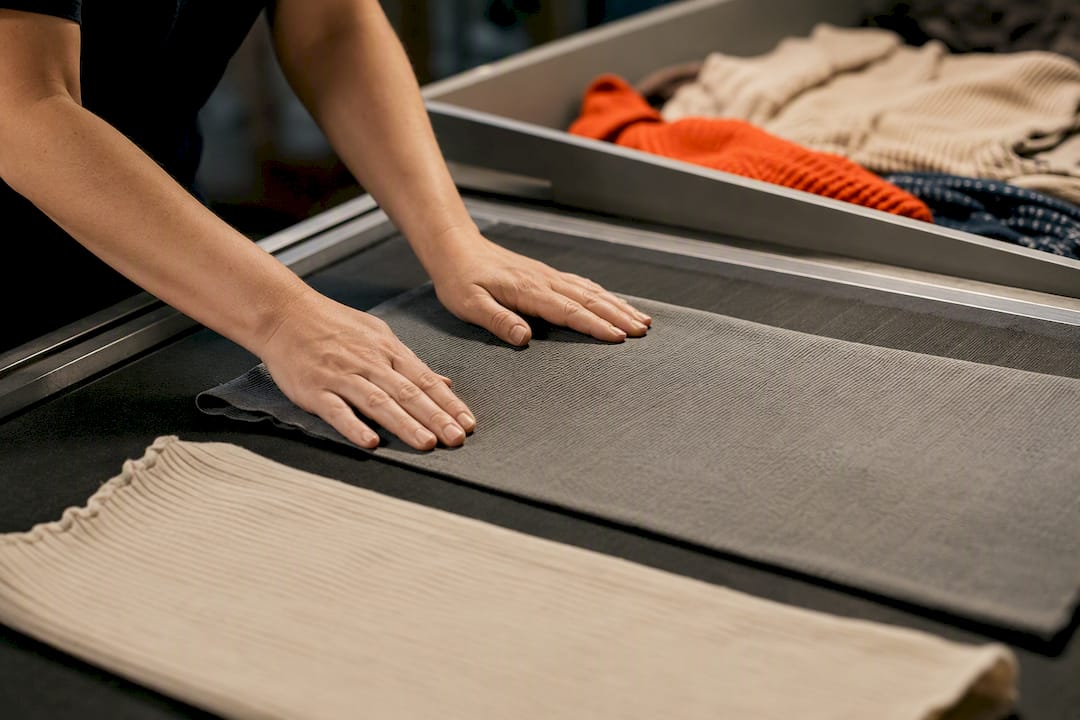
A manual operator handling simple primary sorting can move several tonnes per day. Add fine-grading parameters like brand, defect type, and season, and that same operator’s output often drops considerably, based on findings from Trosort’s analysis of multi-stage sorting.
That gap explains why facilities layer their workflow instead of asking one person to grade everything at once. Three levers help close it without buying new hardware:
- Standardize incoming loads so pre-sort takes less judgment and more speed.
- Train fine sorters on a narrow, consistent grading rubric rather than open-ended judgment calls.
- Add modular automation at the single stage causing the worst slowdown, rather than replacing the whole line.
Running an Efficient Sorting Floor: A Practical Checklist
Layout and staffing decisions matter as much as equipment. A poorly arranged floor wastes labor no camera can fix.
- Design for flow, not just space. Put pre-sort zones near intake docks, primary sorting stations mid-floor, and fine-grading tables closest to packaging and shipping.
- Pair new hires with experienced graders for the first two to three weeks; grading consistency takes longer to build than speed does.
- Run spot checks on finished bales. Pull five to ten items per bale weekly and re-grade them independently to catch drift.
- Label and track at the bale level with origin, grade, and date, so any quality complaint traces back to a shift and station.
- Track a small KPI set: garments or kilograms per hour, yield by grade, and rejection rate on outbound bales.
Contaminated or hazardous textiles, anything with mold, chemical residue, or biohazard risk, need separate handling protocols and PPE for staff, regardless of how fast the rest of the line moves.
Pro Tip: Run your rejection-rate KPI by shift, not just by week. A spike tied to one shift usually points to a training gap, not a bad batch of donations.
How MS EXP SP Z O O Runs This at Scale
MS EXP SP Z O O operates from Poland and ships to more than 40 countries, applying the same staged logic described above across a much larger footprint.
- A 133,000 square foot warehouse gives the company room to hold diverse used clothing inventories across categories and grades simultaneously, rather than sorting in small, disconnected batches.
- Packaging machinery speeds up bale turnaround, which matters most for buyers who need consistent shipment schedules rather than one-off lots.
- The same infrastructure handles adjacent categories, including shoes, industrial wiping rags, and vintage items, so grading decisions that route garments away from resale still capture value elsewhere.
- Partners cite consistent product quality and responsive support as reasons they keep reordering rather than shopping around each cycle.
Where Sorting Technology Is Actually Headed
Single-pass AI sorting gets the headlines, but the near-term reality is hybrid: high-throughput pre-sort handling volume, with selective sensor analysis reserved for items where grading precision actually changes value. The bigger long-term payoff is lifecycle data capture that feeds traceability across the whole circular supply chain, not just faster grading.
My advice to operators evaluating upgrades: buy modular. Compressed-air ejection systems and reconfigurable unloading cells let you adjust bale definitions for a new customer or season without replacing hardware. Sinking capital into a single rigid automated line before you know your actual bottleneck is the costliest mistake I see repeated across this industry.
— rodrigues
Sourcing Bulk Sorted Inventory From a Partner Who Handles the Grading
Building an in-house sorting line takes months of tuning before throughput and grade consistency stabilize. Msexpspzoo skips that ramp-up for you: the sorting, grading, and bale composition work is already done, and the company’s packaging machinery keeps turnaround fast enough to fit tight retail restocking schedules.
Buyers get access to bulk used clothing and accessories, worldwide shipping from a 133,000 square foot Polish warehouse, and category flexibility that extends into used shoes and recycled industrial wiping rags if your business sources across multiple product lines. Buyers who source recycled-content apparel for resale may also find useful context in this analysis of recycled materials in streetwear.
Starting is straightforward: request sample bales to check grading consistency against your market, discuss which categories and grade mixes fit your resale channel, then confirm shipment logistics. Visit the used clothing page to get that conversation started.
Sources
- Hypersort – AI-based textile pricing & grading | Valvan
- Beyond the multi-stage bottleneck: is single-pass textile sorting the future? | Trosort
- Semi-automatic machine for the selection and sorting of post-consumer textile materials/garments | Next Technology Tecnotessile
- How are garments sorted in large facilities? → Fashion sustainability directory
FAQ
What is the best way to sort clothing?
The most reliable method uses staged sorting: pre-sort to remove hazards and non-textiles, primary sorting into broad categories, then fine grading for quality and resale value. Facilities that skip the pre-sort stage typically see more contamination reach fine-grading tables, slowing the entire line.
What is the 3-3-3 rule for clothing?
The 3-3-3 rule is a personal wardrobe-building method, not an industry sorting standard. It has no direct application to commercial clothing sorting, grading, or bale composition.
What is the 5-5-5 rule for clothing?
Like the 3-3-3 rule, the 5-5-5 rule is a consumer wardrobe or decluttering guideline rather than a term used in commercial sorting or grading operations. It doesn’t factor into the grading scales or throughput standards covered in this guide.
What are the main stages in garment sorting for resale or recycling?
Commercial sorting typically runs through gross pre-sorting, primary category sorting, fine quality grading, and final routing to resale, repair, or recycling streams. Automated systems like Hypersort can process garments at high rates at the fine-grading stage, though feeding speed remains the practical limit on most floors.
How does Msexpspzoo grade and supply used clothing in bulk?
Msexpspzoo sources, grades, and packages used clothing at scale from a 133,000 square foot warehouse in Poland, shipping to more than 40 countries. Pricing for bulk orders is available through the used clothing page rather than listed publicly, since bale composition and volume affect the quote.