
For B2B buyers who need a reliable alternative to Garson & Shaw, MS EXP SP Z O O stands out for a straightforward reason: it pairs a 133,000-square-foot warehouse with packaging machinery built for fast bale turnaround, and it ships to more than 40 countries. That combination matters most to importers, resellers, and wholesalers who need volume without unpredictable wait times.
TL;DR:
- Suppliers with proven grading consistency and transparent documentation provide higher resale value and reduce the risk of misgraded inventory.
- Global exporters like MS EXP SP Z O O ship to over 40 countries, offering extensive regional and international reach that simplified supply chain management.
- Vet suppliers by requesting samples, grading sheets, export licenses, and verifying documentation before placing a full container order.
- Pricing varies with grade and lot size, but lower prices often conceal inconsistent grading that can increase costs in resale.
- Timelines for sourcing depend on paperwork readiness and container compression efficiency, with initial orders requiring extra vetting time.
Table of Contents
- What Are Garsonshaw Alternatives Buyers Should Actually Look For?
- Where Do Wholesale Buyers Source Used Clothing and Textile Recycling Partners?
- How Do You Vet a Used Clothing Supplier Before Placing a Bulk Order?
- What Makes MS EXP SP Z O O a Credible Alternative for B2B Buyers?
- What Do Garsonshaw and Its Alternatives Typically Charge?
- How Long Does It Take to Source Used Clothing and Textile Recycling Orders?
- Which Regions Do Alternative Suppliers Actually Cover Well?
- What Certifications Matter for Textile Recycling Compliance?
- A Sourcing Professional’s Take on Moving Fast Without Getting Burned
- How to Request a Sample or Quote From MS EXP SP Z O O
- Sources
What Are Garsonshaw Alternatives Buyers Should Actually Look For?
Not every used-clothing exporter deserves a spot on your shortlist. The suppliers worth vetting share a few traits that separate real operators from middlemen reselling someone else’s inventory.
Grading matters most. A/B grade bales command higher resale value and typically go to boutique resellers, while C grade and mixed-rag lots suit industrial buyers or recyclers. Ask exactly how a supplier defines its grades, since the terms aren’t standardized across the industry.
Packaging density affects your freight bill directly. Compressed bales cut container costs but can hide moisture damage, so ask for bale weight and compression specs before you commit to a container load.
- Lead times and MOQs: confirm minimum order quantities and how often the supplier restocks specific categories.
- Export documentation: incoterms (FOB, CIF, EXW), commercial invoices, and packing lists should be standard, not negotiable extras.
- Traceability signals: ask where the raw stock originates and how it’s sorted before baling.
- Price-per-unit vs. lot pricing: a cheap bale price can hide poor grading ratios that raise your effective cost per usable garment.
Pro Tip: Ask for the grading sheet before you ask for the price. A supplier that hesitates to share how it grades stock is telling you something about quality control.
Where Do Wholesale Buyers Source Used Clothing and Textile Recycling Partners?
Buyers rarely realize how fragmented this market is. Beyond any single exporter, four distinct channels supply the global secondhand trade, and each fits a different kind of order.
- Wholesale exporters. These companies process raw collected clothing into graded bales, sorting by category (menswear, kids, shoes, bags) and quality tier. This is where most B2B resellers buy their core inventory, since exporters carry consistent volume and can quote lot sizes upfront.
- Specialty recyclers. Some suppliers focus narrowly on industrial wiping rags, graded vintage pulls, or non-apparel categories like used tires. These niche operators often move faster on repeat orders because their product mix is simpler to forecast.
- Brokers and B2B marketplaces. Aggregator platforms and trade brokers connect buyers to multiple suppliers at once. SiteLike’s directory of comparable exporters shows dozens of sites grouped by category, from bulk clothing exporters to regional footwear wholesalers. Useful for building a candidate list, but you still need to verify each one operationally.
- Trade shows and direct warehouse visits. Nothing replaces walking a warehouse floor. Buyers who can travel often negotiate better lot terms in person, especially for first orders where trust hasn’t been established yet.
Industry directories list Garson & Shaw alongside a handful of smaller exporters, which confirms this is a market with real alternatives, not a single dominant supplier. The catch is that name recognition doesn’t tell you anything about fulfillment speed or grading consistency. That’s where vetting takes over.
How Do You Vet a Used Clothing Supplier Before Placing a Bulk Order?
Treat the first order like due diligence, not a transaction. A legitimate exporter will not flinch at any of the requests below.
Start with documentation. Ask for business registration, export licensing, and a sample packing list from a recent shipment. A supplier that can’t produce these within a day or two is a warning sign, not a formality you can skip.
Request a paid sample bale before committing to a container. A real grading sheet should accompany it, along with photos or video of the actual lot you’re being offered, not stock images. Compare what arrives against what was promised. Discrepancies here predict what a full container will look like.
- Confirm incoterms in writing (FOB, CIF, or EXW) and clarify who carries risk during transit.
- Ask about container loading practices and whether the supplier provides loading photos.
- Verify insurance coverage on the shipment, not just on the warehouse.
- Insist on payment terms that release full funds only after documentation matches the shipment.
Pro Tip: A supplier who pushes back on a paid sample order, but wants full payment upfront for a container, is asking you to skip the one verification step that actually protects your money.
Watch for three red flags: grading sheets that don’t match sample photos, reluctance to specify incoterms, and pressure to wire full payment before any documentation changes hands. Any one of these should slow down negotiations, not speed them up.
What Makes MS EXP SP Z O O a Credible Alternative for B2B Buyers?
Warehouse capacity is the clearest proof point here. MS EXP SP Z O O operates from a 133,000 square foot facility, which supports the packaging machinery behind its faster bale turnaround. For buyers juggling replenishment schedules, that turnaround speed often matters more than a marginally lower unit price.
Product breadth is the second factor worth checking. The company’s used-clothing pages detail its core apparel categories, while its used-shoes line covers footwear lots separately. Buyers who need mixed containers, spanning clothing, shoes, purses, tires, or even used laptops, get that variety from one supplier instead of coordinating three separate vendors.
Long-term partners have reported consistent quality and responsive communication, which lines up with what a repeat-order relationship actually requires: predictability more than novelty.
- Ask MS EXP SP Z O O directly for current MOQs by category.
- Request lot photos and a grading sheet before your first container.
- Confirm lead times against your specific destination port.
None of that replaces your own verification. Even a supplier with strong infrastructure deserves the same sample check you’d run on any new vendor.
What Do Garsonshaw and Its Alternatives Typically Charge?
Pricing in this market moves by grade, not by brand name. A/B grade mixed clothing bales generally command a premium because resellers can flip them with minimal additional sorting, while C grade and rag-heavy lots price lower per kilogram since buyers absorb more sorting labor themselves.
Lot size changes your unit economics too. Full container loads (FCL) usually bring a better price per kilogram than smaller partial loads, since the supplier’s packaging and loading labor gets spread across more volume. Buyers ordering less than a full container should expect a per-unit premium to offset that fixed handling cost.
Comparing Garson & Shaw against alternatives on price alone misses the real variable: grading consistency. A supplier quoting a lower headline price but delivering inconsistent grades often costs more once you factor in the resale value lost on misgraded stock. That’s why experienced buyers ask for a grading sheet and a paid sample before comparing quotes side by side.
Freight terms shift the final landed cost more than most buyers expect. FOB pricing puts shipping cost and risk on the buyer once goods leave the origin port, while CIF quotes bundle insurance and freight into the supplier’s price. Neither is inherently cheaper. The right choice depends on whether you already have a freight forwarder relationship or want the supplier to manage that logistics leg.
How Long Does It Take to Source Used Clothing and Textile Recycling Orders?
Timelines vary more by paperwork readiness than by shipping distance. Once a buyer and supplier agree on grade, quantity, and incoterms, sample bale requests usually turn around within a week or two, since most established exporters keep graded stock on hand rather than sorting on demand.
Full container orders take longer, largely because of loading and export documentation. Buyers should expect several weeks between order confirmation and vessel departure, then additional transit time that depends entirely on destination port and shipping route. Ocean freight to distant markets naturally runs longer than regional routes.
Packaging efficiency, the kind driven by compression machinery, cuts the loading portion of that timeline noticeably. A supplier that can compress and load a container in days rather than weeks gives buyers a real edge when they’re managing tight retail replenishment cycles. This is one area where warehouse infrastructure translates directly into calendar time, not just capacity.
Buyers reordering from an established supplier typically see faster cycles on repeat orders, since grading preferences and documentation templates are already on file. First orders should always build in extra buffer time for the vetting steps covered earlier. Rushing that stage to save a week rarely pays off if the container arrives misgraded.
Which Regions Do Alternative Suppliers Actually Cover Well?
Geographic reach separates suppliers more than most buyers initially assume. Some exporters focus almost entirely on regional trade lanes, serving neighboring countries where shipping costs and transit times stay low. Others build genuinely global distribution networks.
MS EXP SP Z O O ships to over 40 countries, which puts it in a different category than regional-only exporters that serve a single continent or trade bloc. For buyers importing into markets across Africa, Eastern Europe, or Latin America, that global reach reduces the need to juggle separate suppliers for separate regions.
Regional strength still matters even within a global supplier’s network. Port access, customs familiarity, and existing shipping lane relationships all affect how smoothly a container clears at your destination. Buyers should ask any prospective supplier directly which ports they ship through most often and whether they have prior shipping history to the buyer’s specific destination country. A supplier’s global reach on paper doesn’t guarantee smooth customs clearance in every market it lists.
What Certifications Matter for Textile Recycling Compliance?
Environmental and social compliance in secondhand textile trade doesn’t run through one universal certification body the way some industries do. Buyers should instead look for a combination of signals rather than a single stamp of approval.
Traceability documentation matters most. Ask suppliers how collected textiles move from donation or collection point through sorting and grading. Suppliers who can describe this chain clearly are generally more compliant operators than those who can’t explain where their raw material originates.
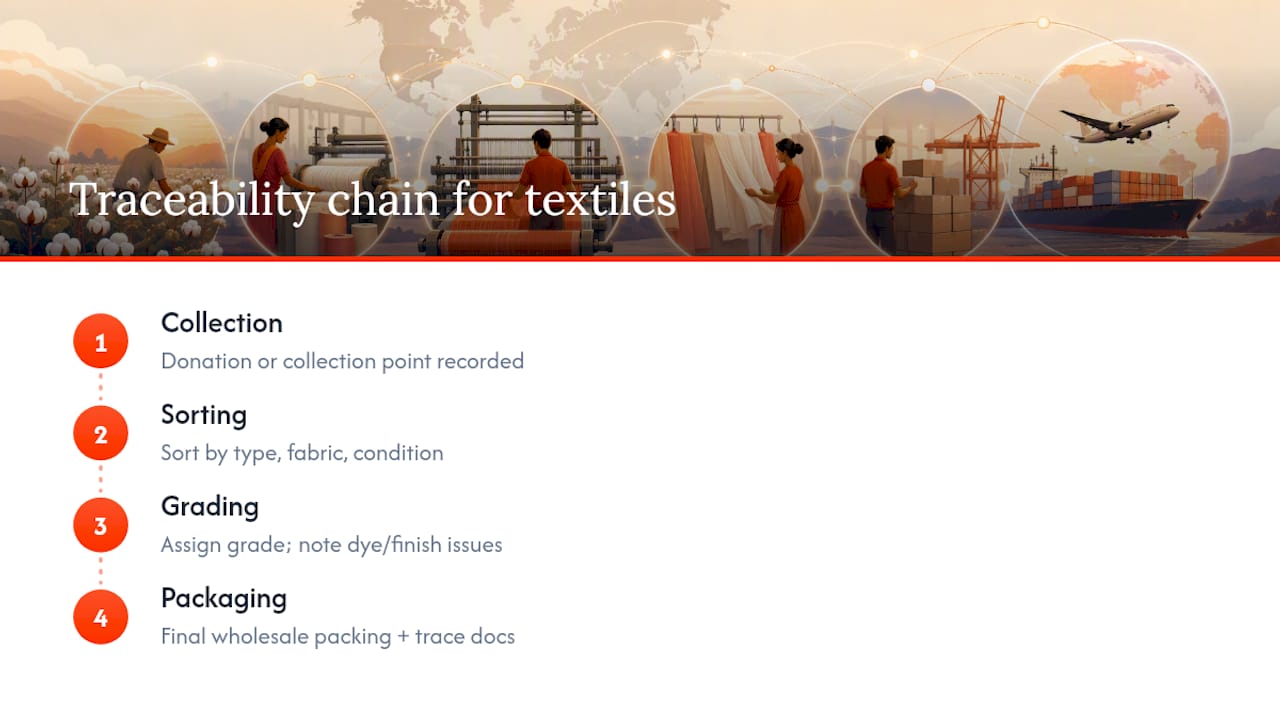
Labor practices at sorting and packaging facilities deserve direct questions too, particularly for buyers selling into markets where corporate customers require supply chain accountability. This is worth raising early in vendor conversations, since retrofitting compliance documentation after a relationship is established rarely works smoothly.
Buyers evaluating vintage or specialty lots should also understand fabric composition, since dye and finishing methods affect both grading and resale positioning. A primer on distinguishing garment dyed from pigment dyed fabric gives useful groundwork for anyone grading vintage tees by feel rather than by label. Environmental standards in this industry are still maturing, so the strongest protection remains asking suppliers direct questions and verifying answers against sample shipments rather than assuming any label covers every compliance concern.
A Sourcing Professional’s Take on Moving Fast Without Getting Burned
Skip the weeks of email back and forth. A paid sample bale and an actual packing slip tell you more in three days than a month of price negotiation ever will, because you’re comparing what a supplier delivers against what they promised, not what they claim.
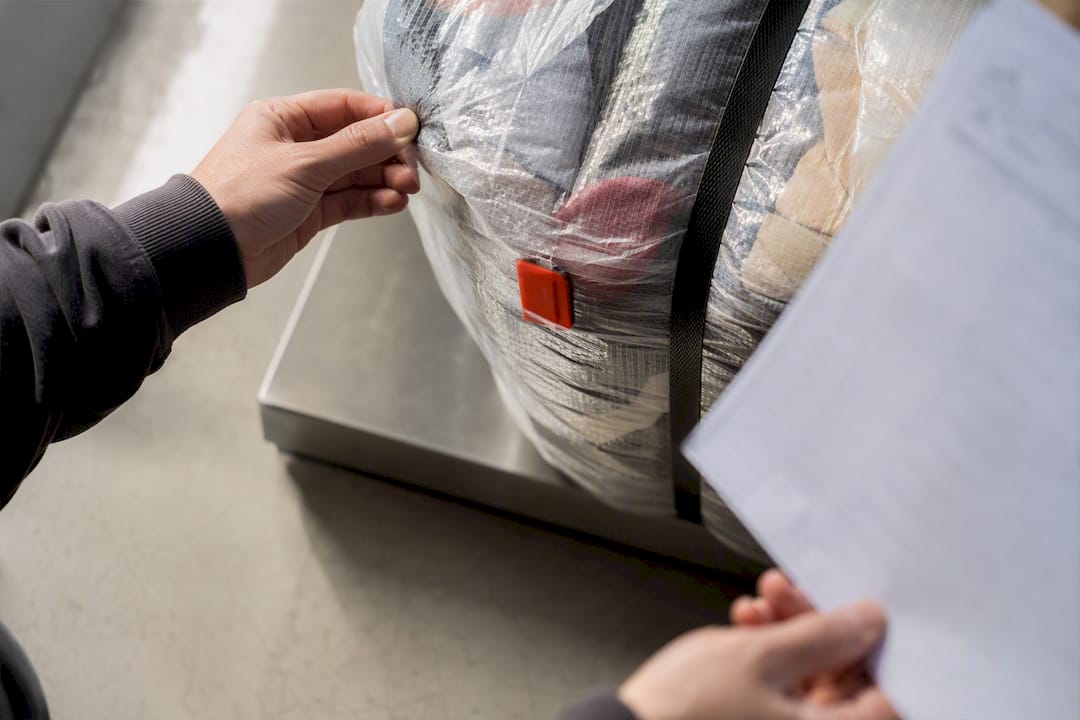
Structure your first real order as a pilot: one container, clear grading requirements, and payment terms tied to document verification. Scale the second order only after that pilot clears customs cleanly.
Walk away if a supplier resists sample requests, can’t produce export documentation on demand, or pushes full payment before any verification step. Those three signals rarely improve with a bigger order.
— rodrigues
How to Request a Sample or Quote From MS EXP SP Z O O
If you’ve read this far, you already know what separates a real supplier from a listing on an aggregator page: documentation, sample verification, and packaging that supports fast turnaround. MS EXP SP Z O O offers all three, backed by warehouse capacity and packaging equipment designed to move bales efficiently once an order is confirmed.
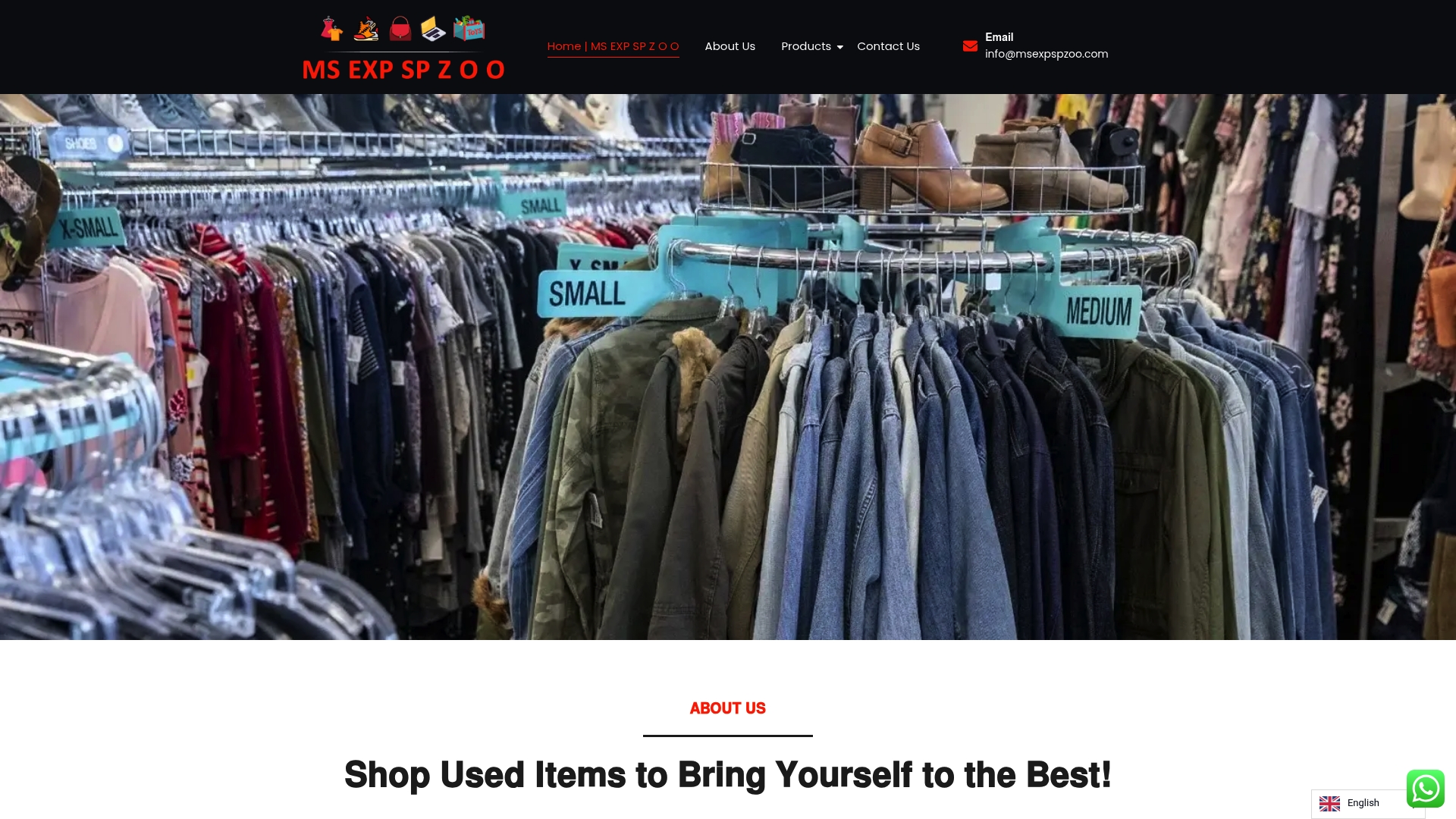
Start by requesting a sample bale and current grading sheet through the used-clothing wholesale page, or check available footwear lots on the used-shoes page if apparel isn’t your main category. When you reach out, include your destination port, target grades, desired container size, and preferred arrival window. That detail lets the team quote freight options accurately on the first pass instead of going back and forth. Buyers diversifying beyond apparel can also ask about industrial wiping rags or other categories in the same request. One clear inquiry, with your specifics attached, gets you a usable quote faster than a generic “send me pricing” email ever will.
Sources
- Garson & Shaw Company Profile | Management and Employees List
- garsonshaw.com alternatives | Top 70 similar sites like garsonshaw.com