
Organizing a bulk order for your business sounds simple, right? Yet a strong needs assessment alone can prevent unnecessary spending and reduce procurement headaches right from the start. Most people think it is all about finding the best price, but real success actually begins before you even talk to suppliers.
Table of Contents
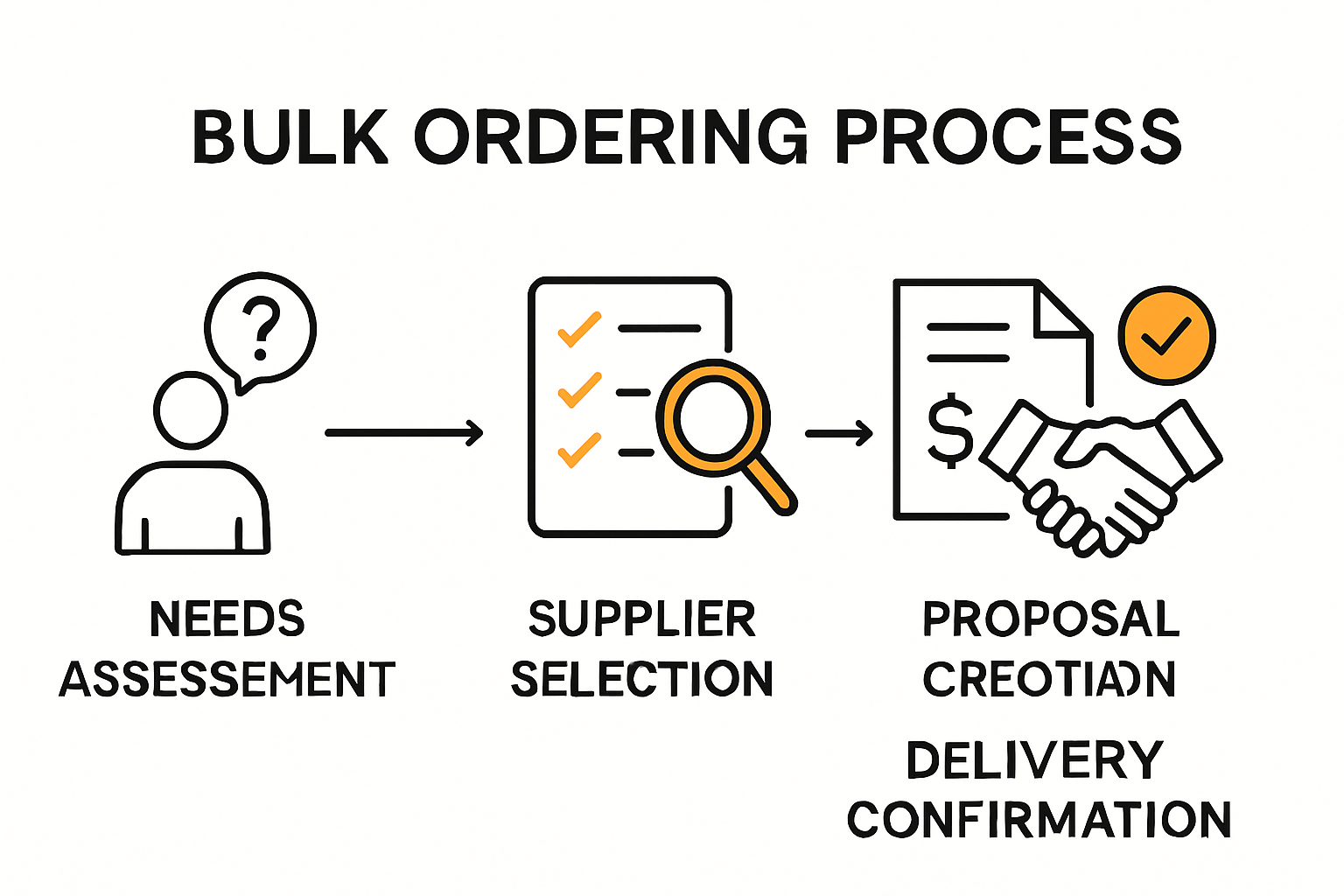
- Step 1: Assess Your Ordering Needs And Requirements
- Step 2: Research And Select Suppliers With Bulk Options
- Step 3: Create And Submit Your Bulk Order Proposal
- Step 4: Negotiate Terms And Confirm Order Details
- Step 5: Verify Order Confirmation And Set Delivery Arrangements
Quick Summary
| Key Point | Explanation |
|---|---|
| 1. Assess your organization’s needs | Understand your purchasing requirements to prevent overspending and streamline procurement. |
| 2. Develop a supplier evaluation framework | Create criteria for assessing potential suppliers’ reliability and product quality, not just price. |
| 3. Craft a detailed bulk order proposal | Organize all information clearly to effectively communicate your needs to suppliers. |
| 4. Engage in collaborative negotiations | Prioritize transparency and mutual benefits during negotiations to foster long-term supplier relationships. |
| 5. Confirm order details meticulously | Review all aspects of the order and establish delivery conditions to ensure successful procurement. |
Step 1: Assess Your Ordering Needs and Requirements
Bulk ordering begins with a comprehensive understanding of your organization’s specific purchasing requirements. This initial assessment serves as the critical foundation for developing an efficient and strategic procurement process. Effective needs assessment prevents unnecessary spending, reduces procurement complexity, and ensures you acquire precisely what your business demands.
Understanding Organizational Purchasing Dynamics
Starting your bulk ordering process requires a detailed examination of your current operational landscape. Begin by conducting a thorough internal audit of your purchasing patterns, consumption rates, and future projected needs. This means carefully analyzing historical purchasing data, tracking inventory turnover, and identifying recurring product requirements.
Carefully map out your organization’s consumption patterns by reviewing past purchase orders, consulting department heads, and examining inventory management reports. Look for consistent purchasing trends that indicate predictable product needs. For instance, if your company consistently purchases specific quantities of supplies every quarter, this information becomes crucial for developing a streamlined bulk ordering strategy.
According to the Georgia Department of Administrative Services, successful procurement starts with comprehensive need identification. This involves several key considerations:
- Analyzing existing supply sources
- Determining precise product specifications
- Evaluating potential volume discounts
- Assessing long term organizational requirements
Strategic Requirement Mapping
Develop a comprehensive procurement requirement document that outlines specific details about your bulk ordering needs. This document should include precise product specifications, expected quantities, delivery timelines, and budget constraints. Consider factors such as storage capacity, product shelf life, and potential seasonal variations in demand.
Engaging cross functional teams during this assessment phase provides multiple perspectives on organizational purchasing needs. Finance teams can offer budget insights, operations teams can share consumption data, and procurement specialists can help negotiate optimal purchasing terms. By collaborating across departments, you create a holistic view of your bulk ordering requirements that goes beyond surface level observations.
Verify your assessment by cross referencing multiple data sources, consulting internal stakeholders, and conducting periodic reviews. A successful needs assessment results in a clear, actionable procurement strategy that aligns with your organization’s operational goals and financial constraints.
Step 2: Research and Select Suppliers with Bulk Options
After thoroughly assessing your organizational needs, the next critical phase involves identifying and selecting suppliers capable of meeting your bulk ordering requirements. This step transforms your procurement strategy from conceptual planning to practical execution. Supplier selection is not merely about finding the lowest price but discovering partners who can consistently deliver quality products that align with your specific operational demands.
Begin your supplier research by developing a comprehensive evaluation framework that goes beyond simple price comparisons. Look for suppliers with robust track records of reliability, flexibility, and consistent product quality. Industry trade publications, professional networking platforms, and targeted online research can help you discover potential bulk suppliers across different markets.
According to the National Institute of Standards and Technology, effective supplier selection involves understanding multiple capability dimensions. This means examining not just pricing, but investigating the supplier’s production capacity, quality control systems, technological infrastructure, and financial stability.
Strategic Supplier Evaluation
Create a systematic approach to supplier assessment that includes comprehensive evaluation criteria. Develop a scoring matrix that weights different supplier attributes according to your organization’s priorities. Key evaluation parameters might include:
- Product quality consistency
- Delivery reliability and speed
- Minimum order quantity flexibility
- Payment and credit terms
- Technical support capabilities
Reach out directly to potential suppliers to request detailed information about their bulk ordering processes. Schedule introductory meetings or request comprehensive capability presentations. During these interactions, probe deeply about their supply chain resilience, inventory management practices, and ability to scale production based on your changing organizational needs.
Verify potential suppliers through multiple validation methods. Request and contact references, review independent third party assessments, and if possible, conduct site visits or arrange sample product trials. A thorough verification process prevents potential future disruptions and ensures you select suppliers who can truly support your long term operational objectives.
The final supplier selection should represent a strategic partnership rather than a transactional relationship. Look for suppliers who demonstrate willingness to collaborate, adapt to your specific requirements, and provide transparent communication channels. Your chosen suppliers should feel like an extension of your own operational team, committed to supporting your organization’s success.
Step 3: Create and Submit Your Bulk Order Proposal
Transitioning from supplier research to order submission requires crafting a comprehensive and strategic bulk order proposal. This critical document serves as the formal communication bridge between your organization’s purchasing needs and potential suppliers. A well structured proposal demonstrates professionalism, clarity, and serious purchasing intent.
Begin by organizing all the detailed information gathered during your initial supplier research and needs assessment. Your proposal should present a clear, concise narrative that communicates exactly what your organization requires. Compile precise product specifications, expected quantities, delivery timelines, and any unique operational constraints that might impact the ordering process.
According to the Federal Acquisition Regulation, comprehensive proposals should include related items and clearly outline potential award parameters. This means constructing a document that provides suppliers with a holistic understanding of your purchasing expectations.
Proposal Development Strategy
Develop a meticulously structured proposal that leaves no room for misinterpretation. Start with a comprehensive header that includes your organization’s complete contact information, the specific products you are seeking, and the anticipated order volume. Break down your requirements into clear, measurable sections that allow suppliers to quickly understand the scope of your bulk ordering needs.
Include critical details that demonstrate your organizational preparedness:
- Exact product specifications and technical requirements
- Anticipated order quantity and frequency
- Preferred delivery schedules and logistics preferences
- Budget parameters and payment terms
- Quality control and acceptance criteria
Pay careful attention to formatting and presentation. Your proposal should look professional, well organized, and easy to navigate. Use clear headings, consistent fonts, and include any supporting documentation that might strengthen your position. Consider creating accompanying spreadsheets or supplementary documents that provide additional context about your purchasing requirements.
Before submission, conduct a thorough internal review to ensure all information is accurate, complete, and aligned with your organization’s procurement strategy. Have multiple stakeholders review the proposal to catch potential errors or omissions. A proposal that demonstrates comprehensive preparation increases your credibility and signals to suppliers that you are a serious, professional purchasing partner.
Verify your proposal’s completeness by confirming you have addressed all potential supplier questions, provided clear contact information, and presented a compelling case for why your organization represents an attractive bulk ordering opportunity. Your goal is to make it as simple as possible for suppliers to understand and respond to your requirements.
Step 4: Negotiate Terms and Confirm Order Details
Negotiation represents the critical bridge between your initial proposal and final purchasing agreement. This step transforms your bulk ordering strategy from theoretical planning into a concrete, mutually beneficial arrangement. Successful negotiation requires a balanced approach that protects your organizational interests while maintaining a collaborative relationship with potential suppliers.
Approach negotiations with a clear understanding of your core requirements and acceptable compromise zones. Preparation is key. Review your initial research, supplier capabilities, and organizational budget constraints before entering discussions. This means having precise data about acceptable price ranges, delivery timelines, quality standards, and payment terms readily available.
Effective negotiation is not about winning at all costs but creating a sustainable partnership that benefits both parties. Prioritize transparency, clear communication, and a willingness to find mutually advantageous solutions. Listen carefully to supplier perspectives, understand their operational constraints, and seek creative solutions that address both your needs and their business capabilities.
Strategic Negotiation Techniques
Develop a structured negotiation framework that addresses multiple critical aspects of your bulk order. Focus on key negotiation parameters that extend beyond simple pricing considerations. Your discussion should comprehensively cover:
- Volume discounts and pricing tiers
- Delivery scheduling and logistics
- Payment terms and potential early payment incentives
- Quality assurance and product replacement policies
- Minimum and maximum order quantity flexibility
Document every discussion and agreement meticulously. Request formal written summaries after each negotiation session to ensure all parties share a consistent understanding of discussed terms. Maintain a professional yet collaborative tone throughout the negotiation process, demonstrating that you view this as a potential long term strategic partnership rather than a one time transactional interaction.
Carefully evaluate each proposed modification to your original proposal. Some suppliers might offer creative solutions that improve your original requirements. For instance, a supplier might suggest alternative delivery schedules that reduce transportation costs or propose volume based pricing structures that provide additional financial benefits.
Verify the final negotiated terms by conducting a comprehensive review with key stakeholders in your organization. Ensure that the agreed upon details align with your initial procurement objectives, budgetary constraints, and operational requirements. A successful negotiation results in a clear, written agreement that provides flexibility, protects your interests, and establishes a foundation for potential future collaborations.
Step 5: Verify Order Confirmation and Set Delivery Arrangements
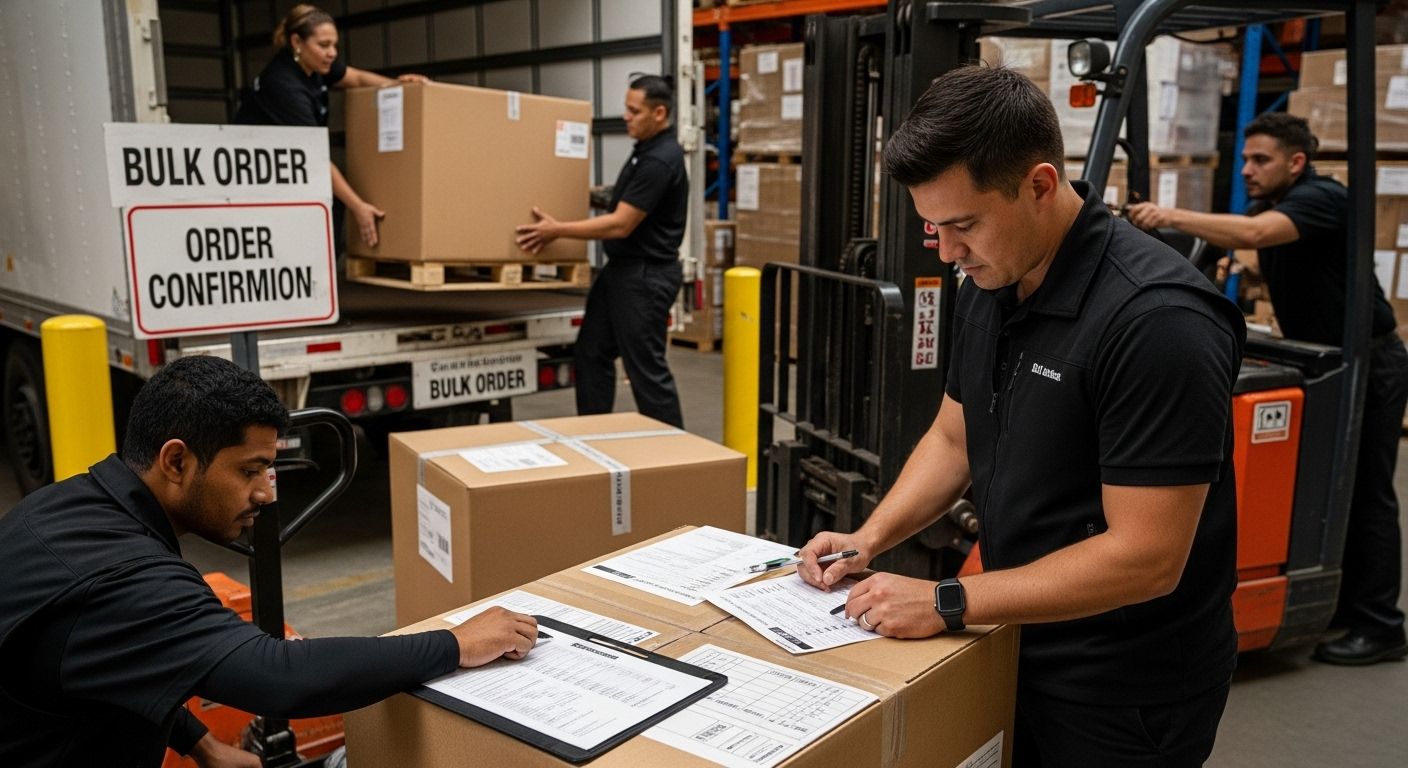
After completing negotiations, the critical phase of order confirmation and delivery arrangement begins. This step transforms your carefully planned bulk order from a conceptual agreement into a tangible logistical process. Precision and attention to detail are paramount in ensuring a smooth procurement experience that meets your organizational expectations.
Initiate the confirmation process by thoroughly reviewing the final purchase order. Carefully compare every detail against the negotiated terms, checking product specifications, quantities, pricing, and delivery schedules. A meticulous review prevents potential misunderstandings and establishes clear expectations for both parties. Request a formal written confirmation that includes all agreed upon terms, serving as a legally binding document that protects your organizational interests.
According to Penn State Extension, providing clear information about shipping and delivery is crucial for customer satisfaction. This principle applies equally to bulk ordering processes across various industries.
Strategic Delivery Planning
Develop a comprehensive delivery management strategy that anticipates potential logistical challenges. Coordinate directly with the supplier to establish precise delivery parameters, including:
- Exact delivery date and time windows
- Specific receiving location and contact person
- Preferred unloading and handling procedures
- Contingency plans for potential delivery delays
- Required documentation for receipt and acceptance
Establish clear communication channels for tracking and managing the incoming order. Request real time tracking information and set up notification systems that keep relevant organizational stakeholders informed about the order’s progress. This proactive approach allows your team to prepare adequately for receiving and processing the bulk shipment.
Prepare your receiving area to handle the incoming bulk order efficiently. This means clearing appropriate space, ensuring necessary equipment is available for unloading, and briefing receiving staff about the expected delivery. Organizational readiness can significantly streamline the receiving process and prevent potential logistical bottlenecks.
Verify the order confirmation by creating a comprehensive checklist that covers all critical aspects of the delivery. This should include physical inspection protocols, documentation requirements, and immediate steps for addressing any discrepancies. A successful verification process ensures that your bulk order meets all predetermined specifications and arrives exactly as negotiated, setting the stage for a successful procurement cycle.
Transform Your Bulk Ordering Into a Competitive Edge With Agrotura
Are you struggling to align your bulk ordering process with reliable supplier partnerships and transparent pricing? The guide you just explored highlights the stress of vetting suppliers, managing complex procurement steps, and ensuring consistent delivery quality. At Agrotura Sp. z o.o., we understand how important it is to move quickly from careful needs assessment to a flawless delivery of your floral and nursery stock supplies. Our extensive range of over 1000 products from more than 100 trusted suppliers, combined with clear communication and proven reliability, helps businesses like yours simplify every phase of bulk purchasing.
Ready to stop overpaying and wasting time on supplier uncertainty? Start partnering with a company that values your growth. Visit our main site to discover how our tailored sourcing solutions and low minimum order value can help you achieve smoother, more cost-effective bulk procurement today. Your business deserves a dedicated partner who wants to see you succeed. Take the first step now.
Frequently Asked Questions
What is the first step in the bulk ordering process?
The first step involves assessing your organization’s specific ordering needs and requirements. This includes analyzing purchasing patterns, consumption rates, and projected future needs to develop an efficient procurement strategy.
How can I evaluate potential suppliers for bulk orders?
Evaluate potential suppliers by creating a comprehensive evaluation framework that considers product quality, reliability, pricing, production capacity, and financial stability. Use a scoring matrix to weigh these attributes based on your organizational priorities.
What should I include in a bulk order proposal?
A bulk order proposal should include detailed product specifications, expected quantities, delivery timelines, budget constraints, and any unique operational requirements. Structuring the proposal clearly will help suppliers understand your needs effectively.
How do I ensure successful negotiation of terms with suppliers?
To ensure successful negotiation, approach discussions with a clear understanding of your requirements and areas for compromise. Document every agreed term, prioritize transparency, and actively listen to the supplier’s perspective to create a mutually beneficial agreement.