
Store used clothing clean, dry, dark and cool, in breathable or inert containers, off the floor, and away from sudden swings in temperature and humidity. If you buy in bulk, add one more rule: never put a new shipment straight into your main stock. Hold it in a separate quarantine area first. The rest of this guide shows how to apply those rules, whether you keep a few bins of resale stock or run a warehouse of bales.
We export used clothing, shoes and other second-hand goods in bulk bales from Poland, so this guide leans toward buyers who store inventory for resale. Home storage tips are included where they carry over.
TL;DR
- Aim for a stable room at roughly 65°F to 75°F and 45% to 65% relative humidity. Avoid anything at or above 70% RH, which raises the risk of mold.
- Quarantine every new bale or container before it touches existing stock. This is the step buyers skip most often.
- Use breathable or inert materials. Avoid non-acid-free cardboard, bare wood and standard plastic hangers for stock you will hold a long time.
- Keep a simple pest routine: inspect, clean, keep food out, and freeze suspect items if you find larvae.
- Label everything and rotate stock so older lots sell first.
Table of Contents
- Why storage decides your margin
- Set the room before you buy the shelves
- Quarantine: the step that protects everything else
- Choose containers and materials that will not damage the stock
- Keep pests out
- Home and small-scale storage
- Storing bales
- Our perspective
- Choosing stock that stores well
- A quick intake and storage checklist
- FAQ
- Sources
Why storage decides your margin
Used clothing is bought by weight and sold by piece. Every item that comes out of storage musty, creased, stained or moth-eaten is margin lost. The goods were fine when they left the exporter. Storage is where you either protect that value or erase it.
Most of what is traded is resellable. A UNCTAD-backed study of the secondhand clothing trade found that 96 percent of the imported secondhand clothing it analyzed was rewearable, with a small share downgraded to rags and only about 1 percent classed as textile waste. That makes careless storage the avoidable part of the loss.
The same study area points to what buyers look at in a garment: appearance, condition, fashion, functionality and perceived durability, as described in a UNCTAD brief on secondhand clothes in Uganda and Tanzania. Storage affects at least two of those directly: appearance and condition.
Set the room before you buy the shelves
Conservation institutions have studied textile storage for decades. Their guidance is written for museums, but the physics of fabric does not change when the garment is a 1990s denim jacket for sale.
Temperature and humidity targets
The U.S. National Park Service’s guidance on textile objects points to a stable temperature in the range of about 65°F to 75°F and relative humidity between 45% and 65%. Humidity at 70% or above sharply raises the risk of mold and chemical degradation. Very dry air, under about 35% RH, can leave fibers brittle.
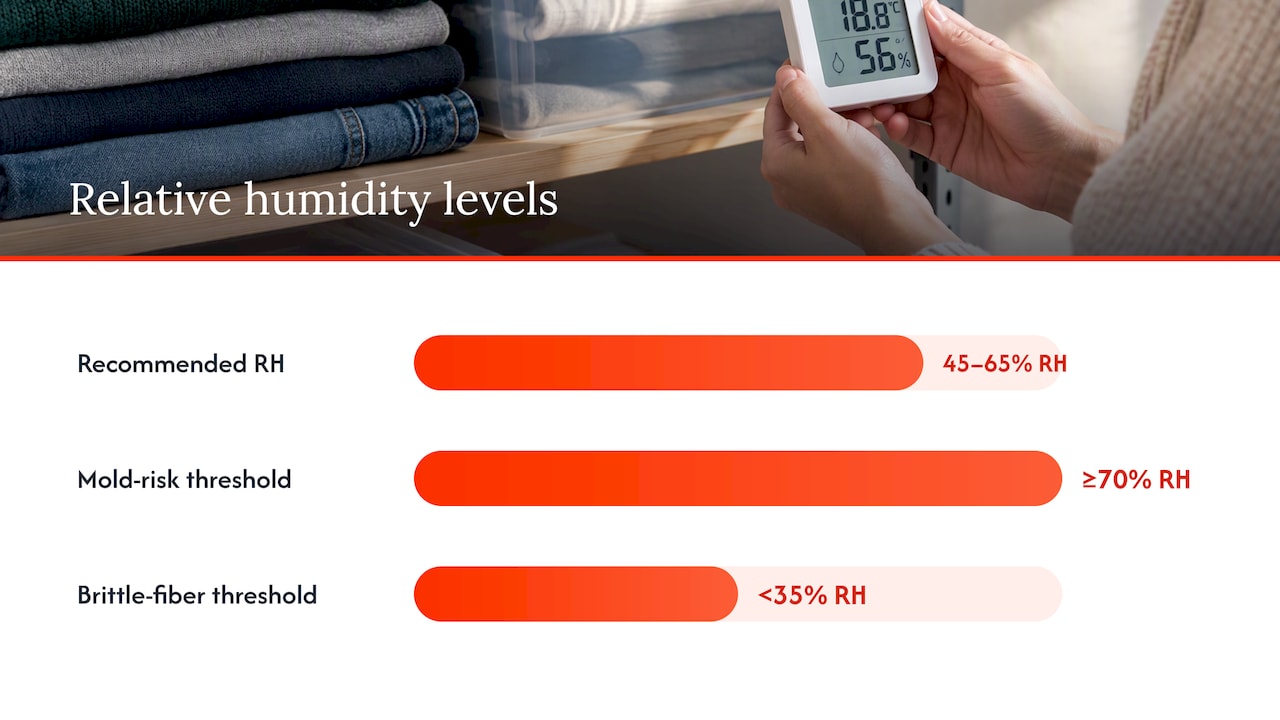
Stability matters as much as the number itself. The same guidance says fluctuations within 24 hours should stay within about 4°C (roughly 7°F) and 5% RH, to avoid mechanical stress on fibers.
What this means in practice:
- Put a cheap digital hygrometer on each shelf level and in each room. Read it weekly and write the number down.
- Avoid basements, attics, garages and any space beside an exterior wall that sweats. The Smithsonian’s advice on storing textiles at home rules out basements and attics because their temperature and humidity swing.
- If humidity creeps up, dehumidify the room instead of sealing garments tighter. Sealed damp fabric is how mold starts.
Light
Light fades dyes and weakens fibers. Keep stock in the dark, in closed boxes, under covers, or in a room where lights are off when nobody is working. Windows should be shaded.
Quarantine: the step that protects everything else
Textile conservators repeatedly name the same mistake: assuming a bulk shipment is clean enough to go straight onto the shelves. The North Carolina preservation guide for textiles recommends keeping new arrivals separate from existing inventory, because mold spores and insects such as moths and carpet beetles can travel in packed goods.
A workable quarantine zone for a reseller or wholesaler has four features:
- A separate space. A room, a cage or a marked floor area that is not connected to your main shelving by shared racks.
- Environmental monitoring. The same hygrometer routine as your main storage, plus pest traps.
- A fixed hold time. Choose a period, such as a few days, and keep the lot there until it is opened, checked and cleared.
- A written log. Lot number, date received, who inspected, what was found.
What to check when you open a bale
- Smell: musty or sour odor means moisture got in somewhere.
- Feel: damp patches, especially in the center of the bale.
- Sight: white or green spotting, webbing, cases or small holes, insect droppings.
- Condition against the grade you ordered. Pull a sample from several layers, not only the top.
If the bale does not match what you ordered, document it with photos on the day it is opened and send it to your supplier. Our guides on vetting a used clothing supplier before you pay and on the bale specs buyers should demand for warehousing cover what to agree in writing before the order ships.
Choose containers and materials that will not damage the stock
The housing matters as much as the room. Conservation guidance is consistent here: acidic and off-gassing materials are slow damage.
| Material | Good for | Watch out for |
|---|---|---|
| Polyethylene (Tyvek-type) covers | Hanging garments, lining shelves | Not a replacement for airflow in a damp room |
| Stainless-steel racks | Long-term hanging and bulk shelving | Needs a padded or covered contact point |
| Acid-free tissue and boxes | Vintage and delicate pieces | Ordinary cardboard is not acid-free |
| Plastic bins with lids | Seasonal stock, small lots, humid regions | Must be filled with clean, fully dry items |
| Vacuum bags | Short-term space saving only | Compress fibers and crease them if left for months |
| Standard plastic hangers | Short-term display | Can degrade and off-gas over time |
| Bare wood shelving | Nothing long term | Can release acids unless sealed or lined |
The NPS appendix advises against wood shelving and non-acid-free cardboard for textile storage, and favors inert liners such as polyethylene. The North Carolina guide adds that for long-term vintage storage you should avoid standard plastic hangers and favor padded cotton, polyester-based covers or stainless-steel racks. It also recommends airing garments periodically so they do not develop permanent creases.
If you are choosing bins for a small operation, a guide to storage baskets, boxes and bins from a resin storage manufacturer is a useful comparison of sizes and lid types. Pick clear, stackable bins you can label on two sides.
Folded or hung?
Fold knits, sweaters and heavy items, because hanging stretches shoulders. Hang structured jackets, dresses and coats on wide, padded or inert hangers. Never overstuff a rack: garments pressed together cannot breathe and wrinkle in place.
For folds, pad creases with acid-free tissue on higher value pieces, and refold on a different line when you air them. The Museums Association’s quick tips also note that poor handling is among the most common causes of textile damage, so handle only when needed and put clear identification on the outside of boxes so you do not need to open them to find things.
Keep pests out
Moths and carpet beetles go after wool, silk, fur and soiled fabric first, but they will move across a whole room. The Canadian Conservation Institute recommends an integrated pest management plan: regular monitoring, cleaning, and keeping storage areas free of food and organic debris. If you suspect an infestation, isolate the items immediately.
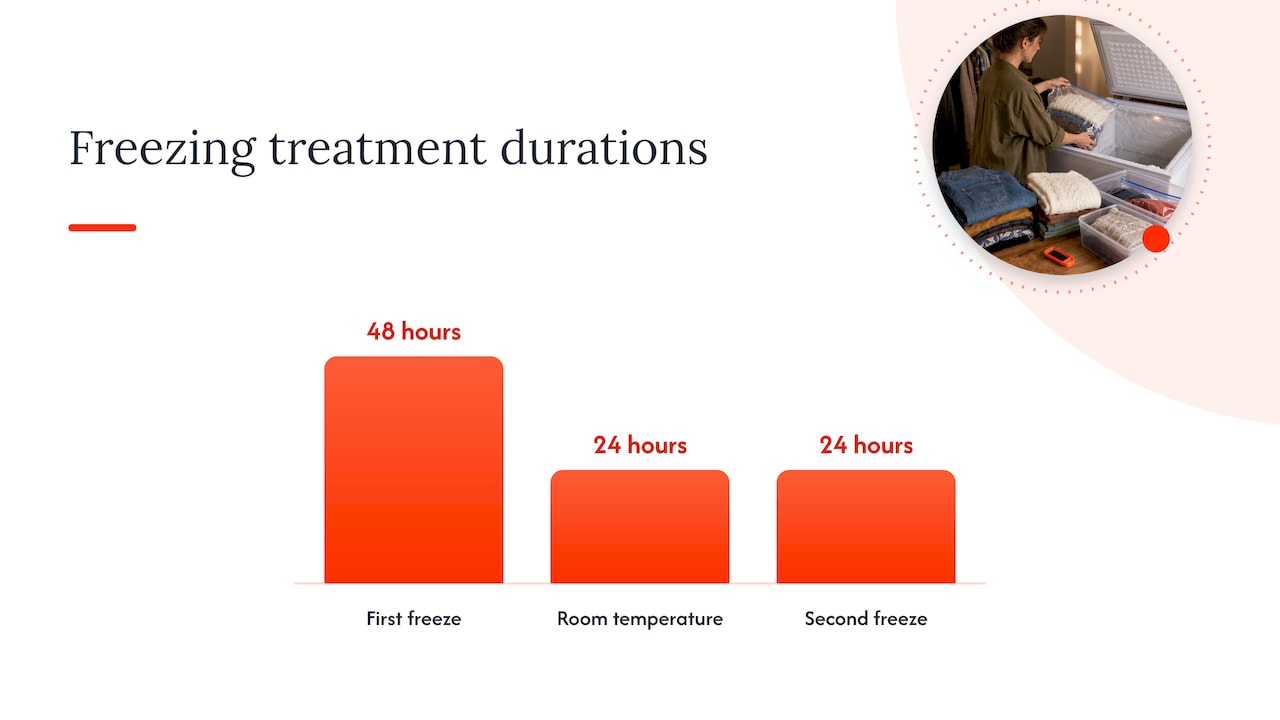
Its low-tech treatment for suspect items is freezing without chemicals: freeze for 48 hours, let the items come back to room temperature for 24, then freeze again for 24 more. Seal items in bags first. If you find more than a handful of moths, or the problem is widespread, seal the affected goods and call a pest control professional rather than treating a whole warehouse yourself.
A basic pest routine:
- Sweep and vacuum under racks and along walls monthly.
- Ban food and drinks from the storage room.
- Place sticky monitoring traps at floor level and near doors, and check them on a schedule.
- Keep a gap between stock and walls so you can see and clean behind it.
- Inspect the quarantine zone more often than the main room.
Home and small-scale storage
Most of the pages that rank for this query cover wardrobes and storage units. Their advice mostly matches the professional guidance above. Wash and dry everything first, sort by season or type, and use labeled bins. One storage-unit guide also argues that dirty clothing attracts moths more than clean clothing, because sweat, oils and food residue give larvae something to feed on.
A simple setup for a side-hustle reseller:
- Clean, dry and sort each item the day you receive it.
- Store it by category and size in clear bins with lids, and mark the bin with a lot number.
- Keep bins off the floor, ideally on metal shelving.
- Photograph and list as you go, so you do not need to unpack to check what you have.
- Revisit seasonal bins every few months, air them out and refold.
A guide to organizing reselling inventory describes the same clear-bin method that many sellers use, and it works well until volumes outgrow your spare room.
Storing bales
Bales are different from loose stock. They are compressed, packed for shipping, and often arrive after weeks in a container. Industry sorting centers stack bales in the warehouse before they are sold on. The Humana and Mepex report on sorting and sales of secondhand clothing describes 15 kg and 45 kg bales holding specific product types, stacked in the warehouse.
Practical rules for bales:
- Keep them off the floor on pallets, so air can move and floor moisture does not wick in.
- Leave the wrapping on until you are ready to open. Intact wrapping is your first barrier against dust and damp.
- Stack to a safe height and keep aisles wide enough to inspect the sides and to reach any lot without moving others.
- Date and lot-label every bale on at least two faces, so you can use older stock first.
- Open one at a time in a clean area, and sort it at once. A bale cut open and left becomes loose, damp-prone stock.
- Vacuum-packed bales need extra attention to humidity once opened, because garments expand and can hold moisture. Our guide to vacuum packed used clothing and port holds covers what to know before ordering.
If you resell abroad, storage links to paperwork. Documentation, labeling and HS codes need to match what is physically in the bale. See our notes on 8–10 digit HS codes for used clothing imports and on certificates that U.S. importers need.
Our perspective
We run a warehouse of 133,000 square feet in Poland and ship used clothing, shoes, bags, wiping rags and other second-hand goods to customers in more than 40 countries. From that vantage point, the storage mistakes we see repeated have little to do with equipment.
Buyers spend money on racks and bins and then skip housekeeping. They stack a new container beside old stock because the shelf was free. They open a bale, sort half of it and leave the rest on the floor over a humid weekend. None of this is expensive to fix. A marked quarantine area, a hygrometer and a log cost far less than one lost lot.
We also think storage starts at the exporter. We use advanced machinery to pack bales quickly, so goods spend less time sitting between sorting and loading. Clear documentation travels with each shipment so you know what is inside before you open it. Our view: a well-packed, well-documented bale is easier to store, inspect and sell, and a good supplier will help you plan for that before the order is placed.
Our advice for any buyer, new or experienced: write down your intake routine before the first container lands. Decide where it goes, who opens it, what counts as a problem and who you call. Then follow it every time, including on the busy weeks.
— rodrigues
Choosing stock that stores well
Some categories need more care than others. Cotton basics and denim tolerate a lot. Wool, silk, leather and vintage pieces with fragile dyes need cooler, drier, darker conditions and acid-free housing. Shoes need airflow and should be paired and kept apart from fabrics that can pick up odors. Our piece on disinfecting used shoes for resale covers the compliance side of that category.
If you are building a stockroom, start with the categories you can turn quickly. Slow-moving, high-value vintage can come later when your storage is dependable. Our used clothing range ships in bales packed with advanced machinery, and you can pair it with used shoes or used purses and bags in the same order. Contact us through the site to discuss grades, bale sizes and the destination you ship to.
A quick intake and storage checklist
- Before arrival, clear and clean the quarantine area and confirm the hygrometer works.
- On arrival, check the outer wrapping for tears, stains and damp, and photograph any damage.
- Move the lot straight to quarantine, on pallets, away from existing stock.
- Open a sample from several bales. Record smell, moisture, pests and grade accuracy.
- Report any mismatch to your supplier promptly, with photos and the lot number.
- Clear the lot into main storage only after inspection, with a date and lot label.
- Check humidity and traps weekly, and walk the aisles monthly.
- Rotate stock so older lots leave first.
FAQ
What is the best way to store used clothing long term?
Wash and dry it fully, then pack it in breathable or inert containers such as lidded bins lined with acid-free tissue. Keep them in a cool, dark, stable room, not in an attic or basement. Check them every few months and air them out.
Can I store used clothes in vacuum bags?
Vacuum bags save space, but they suit short-term storage best. Over months they compress fibers and set creases, and if the clothes were even slightly damp, they can trap moisture. For long-term storage, use breathable containers or lidded bins instead.
How do I keep moths out of stored clothing?
Start with clean clothes, because food residue and sweat attract larvae. Keep the storage room clean, free of food, and monitored with traps. If you find larvae, seal the items and use the freezing method described by the Canadian Conservation Institute, or call a professional if the infestation is widespread.
How should a reseller store newly arrived bales?
Keep them on pallets in a separate quarantine area, still wrapped, until you have inspected a sample. Do not mix them with existing stock until they are cleared. Record the lot number and date on every bale.
Sources
- Appendix K: Curatorial Care of Textile Objects, U.S. National Park Service
- Caring for textiles and costumes, Canadian Conservation Institute
- Textile Conservation: A Primer for the Non-Specialist
- How do I store antique textiles at home? Smithsonian Institution
- Quick tips for displaying, handling and storing textiles, Museums Association
- Trade in Secondhand Clothing, SMEP and UNCTAD
- UNCTAD brief on second-hand clothes in Uganda and Tanzania
- Sorting and sales of second-hand clothing, Mepex and Humana
- Storing Clothes Without Moth Damage
- How to Organize Reselling Inventory