
The most effective way to cut textile waste is to keep garments in circulation longer through reuse, repair, and resale, backed by design changes that stop waste before it’s created. Recycling matters, but it’s a second-tier fix: only about 1% of new apparel fibers come from recycled textiles, and the U.S. recycling rate for textiles has sat near historic lows for years. Get the hierarchy right, and everything else follows.
TL;DR:
- Reuse through donation, resale, and redistribution has a much greater impact on reducing textile waste than recycling, which processes only about 1% of new fibers.
- Design improvements like digital patterning and upcycling can cut fabric waste on production floors by up to 80%, preventing leftovers before they occur.
- Mechanical, chemical, and textile-to-textile recycling each have limitations, with fiber blends and contamination reducing the quality and feasibility of true closed-loop recycling.
- Improving data transparency and implementing policies like extended producer responsibility can unlock more reuse and repair, significantly lowering overall textile waste.
- Wholesale export channels like industrial grading and sorting facilities are essential for scaling reuse, diverting vast amounts of clothing from landfills in a cost-effective, fast manner.
Table of Contents
- Why Reuse-First Beats Recycling for Textile Waste Reduction
- How Can Design Reduce Fabric Waste Before It’s Even Cut?
- Mechanical, Chemical, or Textile-to-Textile: Which Recycling Route Works?
- What Policy Levers Actually Move the Needle?
- How Much Textile Waste Are We Actually Talking About?
- What Should You Actually Do This Week?
- How Wholesale Redistribution Diverts Textiles at Scale
- Where Textile Waste Reduction Efforts Stall, and Why
- Where Msexpspzoo Fits Into Your Waste Diversion Plan
- Sources
Why Reuse-First Beats Recycling for Textile Waste Reduction
Reuse keeps a garment’s embedded energy, water, and labor intact. Recycling, by contrast, destroys the finished product to recover raw material, and that process almost always loses fiber quality along the way. A cotton shirt kept in circulation for two more years does more for textile waste reduction than the same shirt shredded into insulation fiber, because reuse skips the manufacturing footprint entirely.
Three channels scale this in practice:
- Donation networks move volume fast but need sorting infrastructure to avoid dumping low-grade items on secondary markets that can’t absorb them.
- Resale markets, from consignment shops to online platforms, capture value for higher-quality pieces and extend garment life by years.
- Bulk redistribution through wholesale exporters routes graded lots to markets where demand actually exists, rather than letting usable clothing sit in a landfill queue.
The bottleneck isn’t willingness to donate. It’s logistics: collection quality, consistent grading standards, and matching supply to the right buyer. A load of mixed-condition clothing sorted by grade and season sells faster and diverts more material than the same load shipped ungraded. This is where most reuse programs quietly fail.
How Can Design Reduce Fabric Waste Before It’s Even Cut?
Somewhere between 25% and 40% of fabric used in garment manufacturing ends up as leftover on the cutting-room floor, according to research on circular fashion production. That’s not a marginal inefficiency. It’s a structural one, and it’s fixable at the design stage, long before a single seam gets sewn.
Marker efficiency (how tightly pattern pieces are arranged on a bolt of fabric) and matching pattern width to actual fabric width are two of the oldest tricks in the industry, yet they’re still inconsistently applied. Digital tools have made this easier to enforce. Digitalization in textile manufacturing, including CAD systems and 3D fitting software, catches scrap-heavy layouts before cutting begins. MIT CSAIL’s WasteBanned tool takes this further, letting designers build garments around the fabric’s actual dimensions instead of forcing a pattern onto it and dealing with the leftovers afterward.
Where leftover fabric is unavoidable, industrial upcycling can reclaim 50% to 80% of certain leftover types when it’s built into production planning rather than bolted on as an afterthought.
Pro Tip: If you’re a small manufacturer without CAD software, start by standardizing pattern widths to your most common fabric roll size. It’s a low-tech version of the same fix and costs nothing to implement.
Mechanical, Chemical, or Textile-to-Textile: Which Recycling Route Works?
Mechanical recycling shreds fabric into fiber and respins it, which is cheap and widely available but degrades fiber strength with each pass. Chemical recycling breaks fabric down to a polymer or molecular level and can produce higher-quality output, but it requires more energy and infrastructure that most regions still don’t have at scale. Textile-to-textile recycling, the closed loop where old garments become new ones, remains the rarest of the three because it demands clean, single-fiber input.
That last requirement is where things fall apart in practice:
- Fiber blends (a cotton-polyester shirt, for instance) are difficult to separate cleanly, and most recycling technology handles single fibers far better than mixes.
- More than 15,000 chemicals are used across textile production, and dyes, finishes, and coatings can contaminate recycled output or make it unsafe to reprocess.
- Trims, zippers, and buttons need manual removal before recycling, which adds cost most facilities won’t absorb.
The practical routing order stays: reuse first, recycle what can’t be reused, and treat energy recovery as a last resort for material that’s genuinely unfit for either. Recycling technology is improving, but it’s not a substitute for keeping usable garments in use.
What Policy Levers Actually Move the Needle?
Extended producer responsibility (EPR) shifts the cost of end-of-life textile disposal back onto the companies that made the garments, which changes the incentive to design for longevity instead of volume. It’s the single policy lever with the clearest track record for pushing manufacturers toward durability and repairability.
Business models matter just as much as regulation:
- Leasing and rental models keep ownership (and disposal decisions) with the brand, not the consumer.
- Take-back programs create a direct pipeline from used garment to resale or recycling instead of the trash.
- Repair-as-a-service offerings extend garment life without requiring a new purchase.
Textile Exchange’s preferred production systems guidance pushes this same logic further, arguing brands should evaluate whole production systems rather than swapping in a “better” material and calling the job done. A single organic-cotton line doesn’t fix a business model built on overproduction.
How Much Textile Waste Are We Actually Talking About?
The numbers set the priority order. The U.S. EPA’s textile recycling rate has hovered at levels low enough that landfill remains the default endpoint for most discarded clothing. Add the 25% to 40% pre-consumer waste range from cutting-floor scrap, and it’s clear the waste problem starts well before a garment ever reaches a closet.
The core statistic to remember: only about 1% of fibers in new apparel come from recycled textile sources. Recycling capacity isn’t the primary constraint on textile waste reduction right now. Collection, sorting, and reuse infrastructure are.
Hotspot research from WRAP’s Transform Textiles program points to cutting and processing stages, plus retail-phase returns and unsold stock, as the places where interventions pay off fastest. Retail-phase waste is also the least transparent part of the chain, which makes it the hardest to fix without better disclosure first.
What Should You Actually Do This Week?
Pick your lane and start here.
For individuals:
- Donate to organizations that grade and sort, not general drop boxes with no downstream visibility.
- Repair before replacing, even a $10 tailor fix extends garment life by years.
- Buy resale first for basics you’ll wear hard.
For designers and manufacturers:
- Audit your marker efficiency this quarter and set a scrap-reduction target.
- Pilot a zero-waste layout tool on one product line before rolling it out company-wide.
- Build an upcycling process into production planning, not as a side project.
For brands and municipalities:
- Write take-back requirements into procurement contracts.
- Fund or partner with local repair hubs instead of building new infrastructure from scratch.
- Publish retail-phase waste data, even imperfect numbers move the conversation forward.
Pro Tip: The fastest win for any organization is auditing your own waste stream before picking a solution. You can’t prioritize interventions you haven’t measured.
How Wholesale Redistribution Diverts Textiles at Scale
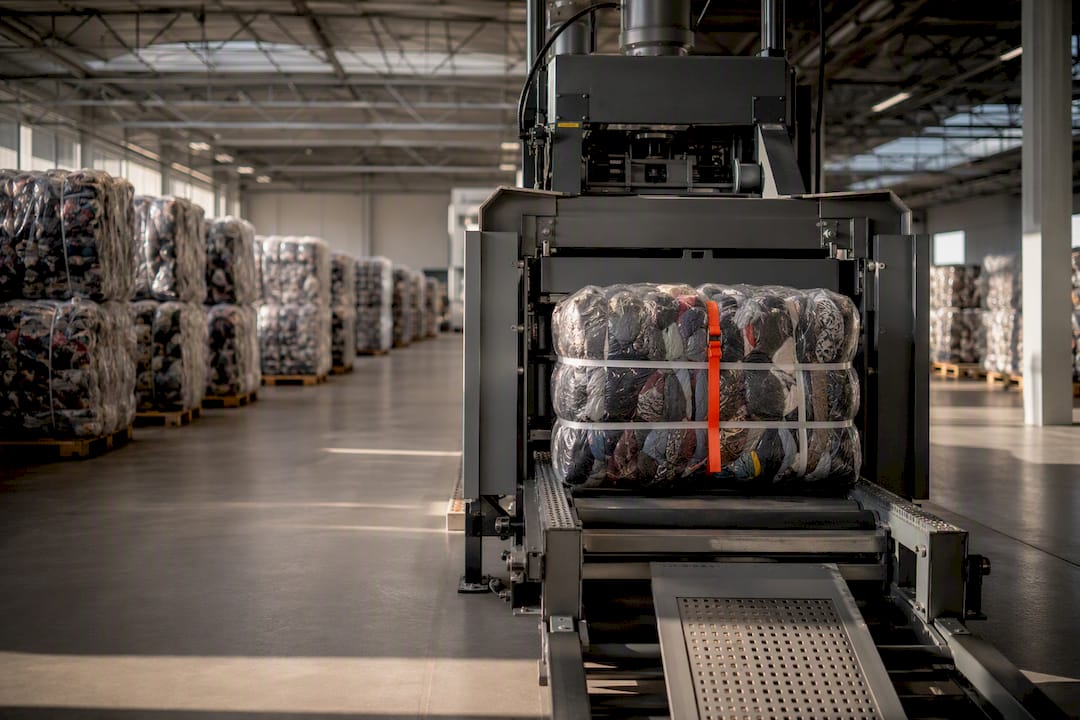
Individual and factory-level fixes matter, but volume diversion depends on infrastructure most people never see. Sorting, grading, and shipping thousands of bales a month requires warehouse capacity and packaging systems built for speed, not just intention.
Msexpspzoo operates 133,000 square feet of warehouse space in Poland, moving graded bales of used clothing, shoes, and industrial wiping rags to buyers across more than 40 countries. Advanced packaging machinery shortens turnaround time on bale processing, which means surplus stock reaches secondary markets before it ages out of resale value and gets written off as waste. That’s the operational reality behind reuse-first strategy: someone has to sort, grade, and move the material fast enough that it never becomes landfill in the first place. Wholesale export channels like this absorb volume that donation networks alone can’t handle.
Where Textile Waste Reduction Efforts Stall, and Why
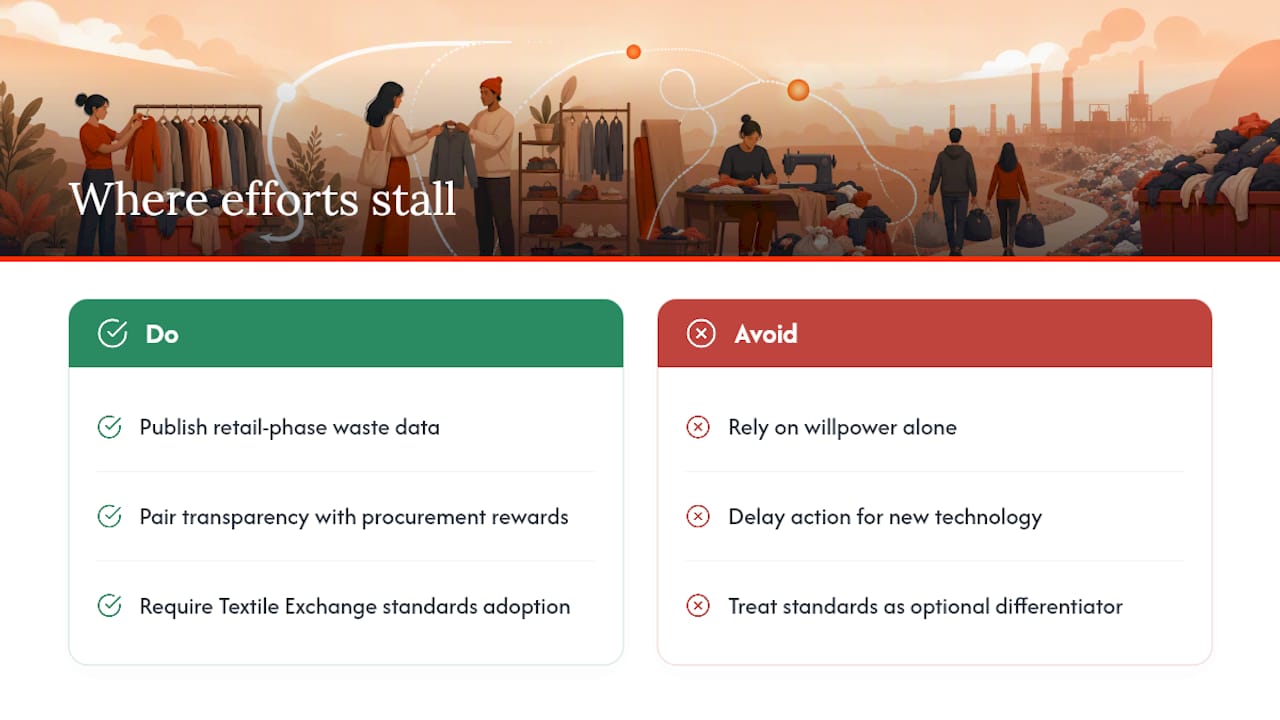
Reuse-first systems work because they’re cheap to scale and don’t require new technology, just better logistics and consistent grading standards. The real barrier isn’t willpower. It’s data: most brands still don’t disclose retail-phase waste, which makes it nearly impossible to target interventions where they’d help most.
Fix that transparency gap and pair it with procurement rules that reward take-back and repair, and reuse infrastructure can absorb far more volume than it currently does. Standards adoption from bodies like Textile Exchange should be a baseline expectation for large buyers, not a differentiator.
— rodrigues
Where Msexpspzoo Fits Into Your Waste Diversion Plan
If you’re a retailer or reseller trying to source reliable inventory without building your own collection and sorting network from scratch, that infrastructure gap is exactly what Msexpspzoo solves. Bulk export of used clothing, shoes, purses and bags, and industrial wiping rags means graded, sorted material ready to resell, not raw donations you have to process yourself.
The advanced packaging machinery in the Poland warehouse compresses turnaround time on bale orders, so you get consistent, quality-checked inventory instead of unpredictable supply. That reliability is what long-term partners in more than 40 countries point to when they explain why they keep reordering. If you’re ready to source bulk second-hand goods with dependable logistics behind them, browse the used clothing catalog and request a quote for your first order.
Sources
- Five ways to reduce waste in the fashion industry (UNEP)
- Textiles: Material-Specific Data | US EPA
- Digitalization and sustainable textile manufacturing (MDPI article)
- A zero waste design tool for more sustainable fashion | MIT CSAIL
- Preferred Production Systems Guidance (Textile Exchange)