
Ocean freight, either full container load (FCL) or less-than-container load (LCL), dominates the bill for bulk used-clothing bales, with origin and destination terminal charges, duties, and inland trucking layered on top. Before you request a quote, have your bale count, average bale weight, the HS code you plan to declare (commonly HS 6309 for used clothing), and your destination port ready.
TL;DR:
- Filling at least 70 to 80 percent of a container with used clothing bales usually results in lower per-unit freight costs compared to LCL shipping.
- A typical full container load for used clothing costs in the low-to-mid thousands of dollars, with the per-bale cost depending heavily on actual container fill level and duty rates.
- Proper bale compression and accurate weight certification at origin significantly reduce damage disputes and improve container utilization.
- Customs treatment of HS 6309 can vary, so having sorting records and clear documentation halts delays and avoids costly re-shipment.
- Small operational improvements, such as consolidating shipments, requesting itemized quotes, and verifying pre-shipment, can meaningfully cut down total landed costs.
Table of Contents
- What Drives Used Clothing Shipping Costs?
- How Do You Calculate the Total Landed Cost Per Bale?
- Why Bale Weight and Baling Quality Change Your Per-Pound Cost
- How Do Customs and HS Codes Affect Shipping Costs?
- What Actually Lowers Your Landed Cost?
- How We Quote Bulk Used-Clothing Shipments
- Ready to Request a Bulk Used-Clothing Quote?
- Sources
What Drives Used Clothing Shipping Costs?
Most quotes break down into two buckets: the ocean move itself and everything that happens on land at both ends. Getting the logic straight here saves you from underestimating a landed cost by hundreds of dollars per container.
FCL versus LCL comes down to volume. FCL is priced per container regardless of how full it is, so a 40-foot container costs roughly the same whether you ship 450 bales or 380. LCL is charged by weight or volume, whichever is greater, a method called W/M. For most bulk bale shipments, FCL pricing beats LCL once you can fill even 70 to 80% of a container, because LCL’s per unit handling fees at both ends add up fast.
Beyond the base freight rate, expect these line items on a real quote:
- Origin charges: pickup from the warehouse, export documentation, origin terminal handling (THC), booking fees, verified gross mass (VGM) certification, and pre-carriage trucking to the port.
- Destination charges: destination THC, delivery order fees, customs clearance, port storage if the container sits past free time, and final delivery trucking.
- Surcharges: bunker adjustment factor (BAF) for fuel, currency adjustment factor (CAF), peak season surcharges, and congestion fees during high-volume months.
- Insurance: typically a small percentage of declared cargo value, but worth confirming what it actually covers before you skip it to save money.
- Duties: vary by destination country and by how customs classifies the shipment under HS 6309 or a related heading, so verify current tariff schedules for your specific market rather than assuming last year’s rate still applies.
How Do You Calculate the Total Landed Cost Per Bale?
Building your own landed-cost model takes ten minutes once you have the right inputs. Here’s the sequence:
- Gather your inputs. Bale count, average bale weight in pounds or kilograms, cubic meters (CBM) per bale if you know it, origin pickup cost, ocean freight rate (per container or per W/M), destination fee total, estimated duty rate, insurance rate, and inland trucking cost at destination.
- Total the container-level cost. Add ocean freight plus every origin and destination charge plus surcharges. This gives you one lump figure for the whole shipment.
- Add duties and insurance. Estimate duty as a percentage of declared value based on your destination’s tariff schedule, then add your insurance premium.
- Divide by bale count, then by weight. Take the grand total and divide by the number of bales for a per-bale figure, then divide that by average bale weight for a per-pound figure you can compare across suppliers and shipments.
Here’s a rough illustration using ranges, not fixed numbers, since actual rates swing by route and season. A 40-foot container loaded near capacity with mixed clothing bales, once you add ocean freight, origin and destination charges, and a modest duty estimate, tends to land somewhere in the low-to-mid thousands of dollars total. Spread across many bales, that can translate to a per-bale cost that swings noticeably depending on two variables: how full the container actually is and what duty rate your destination applies.
Why Bale Weight and Baling Quality Change Your Per-Pound Cost
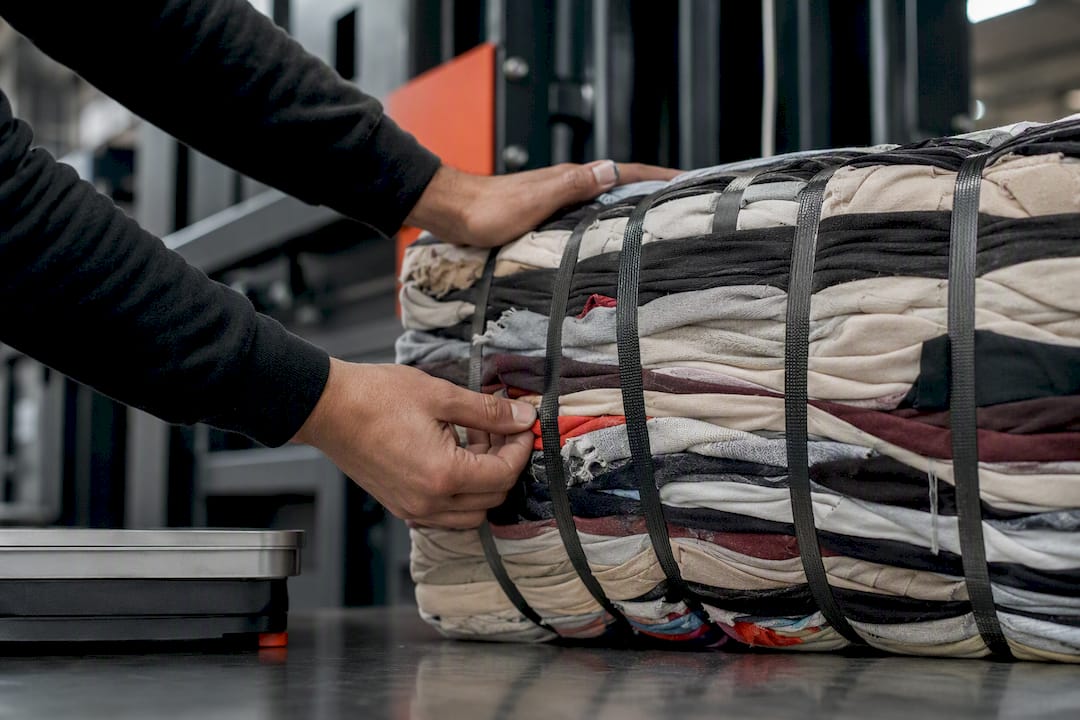
Container math is unforgiving. A 40-foot container has a fixed volume and a fixed maximum weight, so the density of your bales determines how many actually fit. Loose, poorly compressed bales waste space and drive up your cost per pound because you’re paying the same freight rate for fewer usable pounds inside the box. Average bale weights and baling efficiency directly affect how many bales load per container and what your final per-pound freight cost looks like, which is why serious exporters invest in mechanical baling rather than manual compression.
Mechanically baled cargo also handles better. It shifts less in transit, needs less restrapping at destination, and triggers fewer handling charges from terminal operators who charge extra for repacking damaged or loose bales.
- Mechanical baling raises container utilization, sometimes meaningfully, compared with hand-packed loads.
- Tighter bales mean less shifting during ocean transit and fewer damage claims.
- Certified bale weights, palletization where applicable, and photographic documentation at load time all reduce disputes when a buyer claims a container arrived underweight or damaged.
Pro Tip: Ask your supplier for load photos and a signed weight certificate before the container leaves origin. It costs nothing to request and it’s your best evidence if a dispute comes up three weeks later at destination.
How Do Customs and HS Codes Affect Shipping Costs?
HS 6309, the code most commonly used for worn clothing, sits in a gray zone at many customs authorities. Inspectors sometimes treat a shipment as reusable secondhand goods and sometimes flag it as waste or unsorted textile, and that distinction changes duty rates, inspection requirements, and whether the container clears at all. Ambiguity around HS 6309 and related headings is a documented source of shipment rejections and costly re-shipment, and the same analysis notes that customs authorities generally want evidence the goods were sorted and prepared for actual re-use, not dumped in bulk.
The paperwork that helps most:
- Sorting records showing grading was done before export.
- Photos of sorted, baled inventory rather than mixed, unsorted piles.
- Commercial invoices that describe the goods clearly as sorted secondhand apparel intended for resale.
- Certificates of origin where the destination country requires them.
If a container gets held, act fast: contact your forwarder immediately, provide the sorting documentation, and check whether your cargo insurance or supplier contract covers re-shipment costs. Rising tariffs and import restrictions in major destination markets like Guatemala are already stretching transit times and squeezing margins for secondhand exporters, so building customs risk into your budget upfront beats discovering it at the port.
What Actually Lowers Your Landed Cost?
Small operational changes move the needle more than aggressive freight negotiation ever will.
- Raise sorting standards and send sample photos before shipment; this reduces the buyer-side deductions that eat into margin after arrival.
- Consolidate orders to hit full FCL thresholds instead of shipping partial containers at LCL rates with their higher per-unit handling fees.
- Push for itemized quotes that separate origin charges, destination charges, and surcharges, and negotiate incoterms with full clarity on who pays what. Shifting between DDP and DAP, as this primer on incoterm responsibility explains, moves cost burden but only works if both parties agree who handles customs clearance.
- Request pre-shipment inspection and pack verification to head off customs disputes before the container ever leaves the origin warehouse.
Pro Tip: A tool like a dropshipping profit calculator built for hidden costs can help you model landed cost scenarios even outside apparel, since the underlying logic of freight plus fees plus duty applies across product categories.
How We Quote Bulk Used-Clothing Shipments
We ask for the same short list every time: bale count, average bale weight, product mix, destination port, preferred incoterm, and target ship month. That’s usually enough to return a workable quote within a day or two.
The company operates a large warehouse and ships to many countries, with machinery designed to bale efficiently, shortening the time between order confirmation and container loading. Every shipment ships with photographic samples and export documentation prepared to reduce the customs friction covered above. You can see the current used clothing offering here.
— rodrigues
Ready to Request a Bulk Used-Clothing Quote?
This supplier turns bale orders into loaded containers efficiently due to the use of high-throughput baling machinery, reducing the wait between order and ship date. That speed matters when you’re trying to hit a specific FCL sailing or lock in a rate before a peak season surcharge kicks in.
To get an accurate quote, send us your destination port, bale count and average bale weight, product mix (clothing, shoes, or purses and bags), preferred incoterm, and target ship month. Most quotes go out within a day or two, and you can request pre-shipment sample photos or upgraded baling if your destination market has stricter documentation expectations. Start by visiting the used clothing wholesale page and submitting your bale specs, or browse the full used goods catalog if you’re mixing product lines into one container.
Sources
- Diversion Dynamics: Secondhand exports slow down fast fashion – Resource Recycling
- Textile Trade Codes_Challenge Note_FINAL (Cambridge Land Economy)
- Used Clothing Logistics 2026: Complete Export Guide