
Yes, significant demand for used shoes exists across many African markets, and the opportunity is proven, not theoretical. Importers who source the right bale grades and control landed cost consistently find healthy margins, since footwear imports already cover a high share of regional demand. The practical next step is simple: pick a grade, run a small trial order, and model your break-even price before scaling.
TL;DR:
- The market relies heavily on Grade A and B bales, which contain mostly undamaged or functional shoes, commanding higher resale prices.
- Secondhand footwear in Africa often comes from exporting hubs in the US, Europe, China, and the UAE, with grading certificates and sample verification crucial before purchase.
- Branded sneakers, leather shoes, and children’s footwear outperform generic bales, especially in urban markets where demand for current styles and durability is high.
- Landed costs depend on bale price, freight, duties, and handling, with careful calculation needed to ensure profitability at the determined break-even price.
- Policy changes, such as tariffs or bans, pose significant risks, making market diversification and thorough supplier vetting essential for sustainable trading.
Table of Contents
- How big is the used shoe market across Africa?
- Why do shoppers keep choosing used shoes over new ones?
- Where does supply come from and how are bales graded?
- Which shoe categories and channels pay off best?
- What does it actually cost to land a container of shoes?
- What risks could disrupt your import plans?
- How do you vet a supplier before placing a first order?
- Is this a market worth entering right now?
- How MS EXP SP Z O O supports importers entering this market
- Reports and studies worth reading before you source
- Sources
- FAQ
How big is the used shoe market across Africa?
Regional trade data points to a structural gap between what African markets consume and what local factories produce, and that gap is what pulls in used footwear imports. Specifically, in East Africa, second-hand clothes and shoes supply up to 60% of footwear imports in some EAC states, with the bloc’s secondhand clothing imports valued around $151 million in the mid-2010s. That scale did not happen overnight, and it has held because domestic manufacturing has not kept pace with population growth or urban demand.
A few patterns matter for anyone estimating addressable volume:
- East Africa (Uganda, Tanzania, Kenya) remains a key region with significant import dependency for secondhand footwear.
- West African hubs, particularly Nigeria and Ghana, absorb large volumes through informal redistribution networks.
- Southern African markets show steadier formal retail channels alongside informal resale.
Growth projections should be built from these regional baselines rather than a single continental number, since policy, tariffs, and local production capacity vary by bloc.
Why do shoppers keep choosing used shoes over new ones?
Affordability drives a lot of the demand, but it is not the whole story. Consumer research from Malawi found buyers select used footwear for perceived quality and brand access, not simply because they cannot afford new shoes. A used pair of branded sneakers often beats a new unbranded pair on durability and style, which changes how importers should think about their product mix.
- Price sensitivity still matters most in rural and lower-income urban areas.
- Younger shoppers increasingly treat secondhand footwear as a fashion choice, seeking specific brands and styles.
- Urban buyers tend to favor variety and current styles, while rural buyers prioritize durability and low price per pair.
Consumer research shows used footwear is chosen for perceived quality and brand access, not poverty alone, which means demand for well-known sneaker brands tends to hold up even as incomes rise.
Where does supply come from and how are bales graded?
Used shoes entering African markets mostly pass through sorting and export hubs in the United States, the United Kingdom, continental Europe, and increasingly China and the United Arab Emirates. These hubs collect donated and discarded footwear, then sort it into grades before export.
- Grade A pairs are clean, undamaged, and often still carry recognizable branding, commanding the highest resale price.
- Grade B pairs show visible wear but remain functional, fitting mid-tier retail and market stalls.
- Grade C or mixed bales contain a wider range of condition, including pairs needing repair or cleaning.
- Rag or waste allocation is typically small: field research in Uganda and Tanzania found a very high proportion of imported secondhand textiles were rewearable, with a small share classified as textile waste and rags.
- Before ordering, request a recent sorting certificate, sample photos, and the exporter’s grading specification in writing.
That rewearable share matters for compliance discussions too, since it pushes back against any blanket claim that secondhand shipments are mostly waste.
Which shoe categories and channels pay off best?
Not every bale performs the same way once it hits a market stall. Branded sneakers, leather dress shoes, and children’s shoes consistently outperform generic mixed-adult bales because demand for them is steadier across seasons and income levels.
- Branded sneakers hold resale value well, especially among younger urban buyers chasing recognizable logos.
- Leather and formal shoes do well in markets with office culture and growing middle-class demand.
- Children’s shoes turn over quickly because kids outgrow footwear fast, creating constant replacement demand.
Margins vary by channel: market stall resellers often work on tighter per-pair margins but higher volume, while online and platform-based resellers in cities such as Nairobi, Lagos, and Johannesburg can charge more per pair as recommerce platformization grows in urban centers.
Pro Tip: Sort your first bale by category before pricing anything. Branded sneakers and children’s shoes sell fastest, so price them to move while you gauge demand for the rest.

What does it actually cost to land a container of shoes?
Landed cost is where margins get made or lost, and it is more than the bale price you negotiate. Build your cost estimate line by line before you commit.
- Purchase price per kilogram or per bale, which varies by grade and exporter.
- Freight and marine insurance, which shift significantly depending on origin port and container size.
- Customs duties and tariffs, which differ by destination country and product classification.
- Port handling, inland transport, and local market or stall fees.
CIF terms differ meaningfully by origin, and that difference flows straight into your per-pair cost, since shortfalls between regional footwear demand and local production keep import volumes high and freight lanes competitive. A workable formula: add purchase price, freight, insurance, duties, and handling, then divide by the number of pairs in the bale to get your break-even price. Anything you sell above that is margin, before accounting for cleaning or minor repairs.
What risks could disrupt your import plans?
Policy shifts are the biggest wildcard. Some governments have floated tariff increases or outright bans on secondhand footwear imports to protect domestic manufacturing, and one policy analysis notes these measures can hurt consumer welfare when local alternatives aren’t price-competitive. A gradual phase-in tends to cause less market disruption than a sudden ban.
- Track proposed tariff changes in your target country before placing large orders.
- Keep documentation clean, since quality thresholds and traceability reduce friction with customs and waste regulations.
- Build a waste-handling plan for the small non-rewearable portion of any bale.
- Diversify across two or three destination markets to reduce exposure to a single country’s policy shift.
How do you vet a supplier before placing a first order?
A low-risk first order starts with paperwork, not price.
- Ask for the exporter’s grading specification and a sample policy covering photo or video verification of bale contents.
- Confirm HS codes and documentation match your destination country’s import requirements.
- Request evidence of warehouse capacity, packaging machinery, and typical bale turnaround time, along with references from existing buyers.
- On arrival, verify grade accuracy against the sample, check sanitation, and budget for minor repairs or cleaning.
Pro Tip: Order one mixed trial bale first, calculate your per-pair landed cost from it, and only scale once that number pencils out.
Is this a market worth entering right now?
The opportunity is real, and the underlying numbers back it up, but it rewards importers who treat sourcing as a discipline rather than a gamble. Grade accuracy, landed cost math, and policy awareness separate the traders who build repeat business from those who get stuck with an unsellable bale. Start small, verify everything the exporter claims, and keep one eye on tariff news in your target country, since that is the variable most likely to move without warning.
— rodrigues
How MS EXP SP Z O O supports importers entering this market
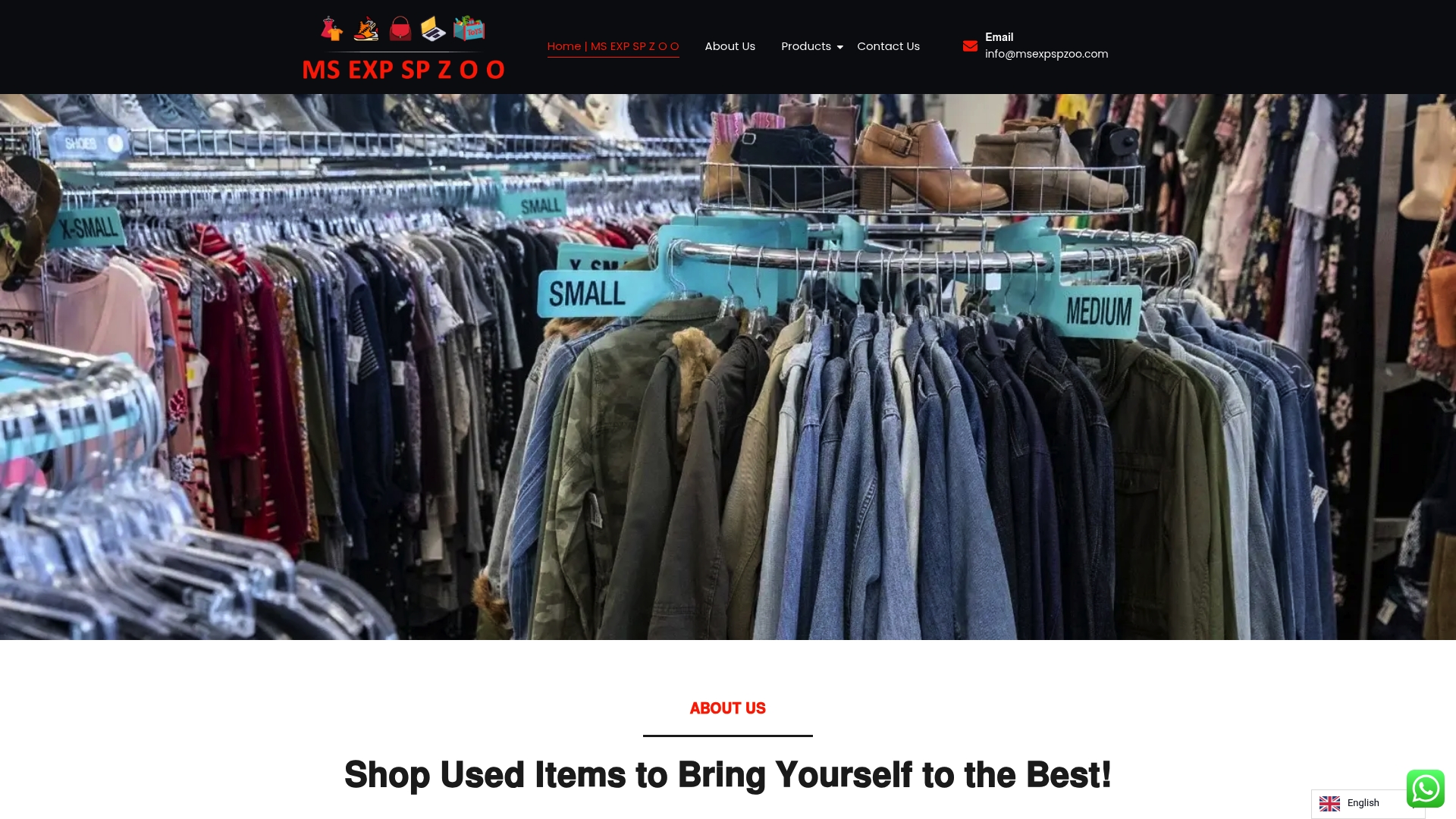
Sourcing reliably graded bales at predictable turnaround is the hardest part of this business, and that’s the gap MS EXP SP Z O O is built to close. The company uses advanced packaging machinery to keep bale turnaround fast and consistent, which matters when you’re trying to model landed cost against a firm delivery date.
- Consistent bale grading and documentation to support your customs paperwork.
- Fast packaging turnaround so container schedules stay predictable.
- A broad product range, including used clothing and used shoes bales for wholesale buyers.
If you’re ready to test a grade before committing to a full container, request a trial order through the used shoes page and ask about current availability.
Reports and studies worth reading before you source
- SMEP brief on second-hand clothes markets in Uganda and Tanzania (UNCTAD, 2024)
- Why used clothing is popular across Africa (The Conversation, 2020)
- Africa Recommerce Market Intelligence Report (2025)
Sources
- SMEP brief on second-hand clothes: analysis of markets in Uganda and Tanzania (UNCTAD)
- Why is used clothing popular across Africa? We found out in Malawi (The Conversation)
- Africa Recommerce Market Intelligence Report 2025 (ResearchAndMarkets / BusinessWire)
FAQ
What products are in high demand across Africa?
Secondhand clothing and footwear are among the most consistently traded categories, alongside electronics and household goods. Within footwear specifically, branded sneakers, children’s shoes, and leather dress shoes tend to move fastest across most regional markets.
What is the best-selling shoe type in used markets?
There’s no single global best seller tracked across used footwear markets, since demand varies by region and season. Branded athletic sneakers are generally the strongest performers in urban African markets because of their durability and brand recognition.
How can I donate shoes instead of selling them commercially?
Donating used shoes typically works through local charities, religious organizations, or international aid groups that accept footwear donations and arrange their own logistics and distribution. This article focuses on commercial wholesale import, so check with a specific charity for their donation process and any shipping requirements.
Is there a genuine market for used shoes, or is it shrinking?
Yes, demand remains strong and well documented. Secondhand footwear supplies up to 60% of footwear imports in some East African states, and recommerce activity continues to grow across urban centers like Nairobi and Lagos.
How much does it cost to buy wholesale used shoes?
Pricing depends on the exporter, grade, and bale size, and is generally available on request rather than published as a fixed rate. Buyers can check current availability and request a quote through a supplier’s product page, such as the used shoes listing from MS EXP SP Z O O.