The HS code for used pneumatic rubber tyres is 4012.20. Heading 4012 covers retreaded or used pneumatic tyres, solid or cushion tyres, tyre treads and tyre flaps, and the 4012.20 subheading is the one reserved for used pneumatic tyres that have not been retreaded. That is the six-digit international code. Your destination country adds its own digits and sets its own duty, so the number on your commercial invoice may be longer than six digits. Below we walk through the tyre code, then the codes for the other used goods importers ask about most: laptops, shoes, toys and wiping rags.
TL;DR
- Used pneumatic rubber tyres go under HS 4012.20. Retreaded tyres sit in 4012.11, 4012.12, 4012.13 or 4012.19, and solid or cushion tyres fall under 4012.90.
- Only the first six digits are international. The U.S. uses 10 digits, and other countries add their own national lines and duty rates.
- Used laptops usually fall under 8471.30. Used shoes have no single code: construction and materials decide, and worn bales can qualify for 6309 under strict conditions. Toys sit in 9503.
- Always confirm the national tariff line with your customs authority or broker before you ship. In the U.S., you can request a binding ruling from CBP.
Table of Contents
- The used tyres HS code: 4012.20
- What can change a tyre’s classification
- From six digits to your national tariff line
- Used laptops: HS 8471.30
- Used shoes: construction and materials decide
- Used toys: heading 9503
- Wiping rags and used clothing
- How to verify a code before you ship
- Buy used tyres and other bales from us
- FAQ
- Sources
The used tyres HS code: 4012.20
Customs systems around the world classify goods using the Harmonized System, maintained by the World Customs Organization. The code has six digits: the first four identify the heading, and the fifth and sixth identify the subheading. For tyres, the heading is 4012 and the subheading for used pneumatic tyres is 4012.20.
The U.S. Customs and Border Protection (CBP) tyre classification guide confirms 4012.20 as the international subheading for used pneumatic rubber tires and notes that heading 4012 also takes in solid or cushion tires, treads and flaps.
The split inside heading 4012 matters, because it changes the paperwork you present:
| Product | HS subheading |
|---|---|
| Retreaded pneumatic tyres, by application | 4012.11, 4012.12, 4012.13, 4012.19 |
| Used pneumatic tyres, not retreaded | 4012.20 |
| Solid or cushion tyres, treads, flaps and other products | 4012.90 |
This breakdown follows the HS 2022 explanatory edition for heading 4012. If a buyer asks for “used tyres” and you ship tyres that have been retreaded, the code on your documents is different. Describe each lot precisely: used or retreaded, passenger or truck, and how many pieces.
Do not confuse it with new tyres or scrap
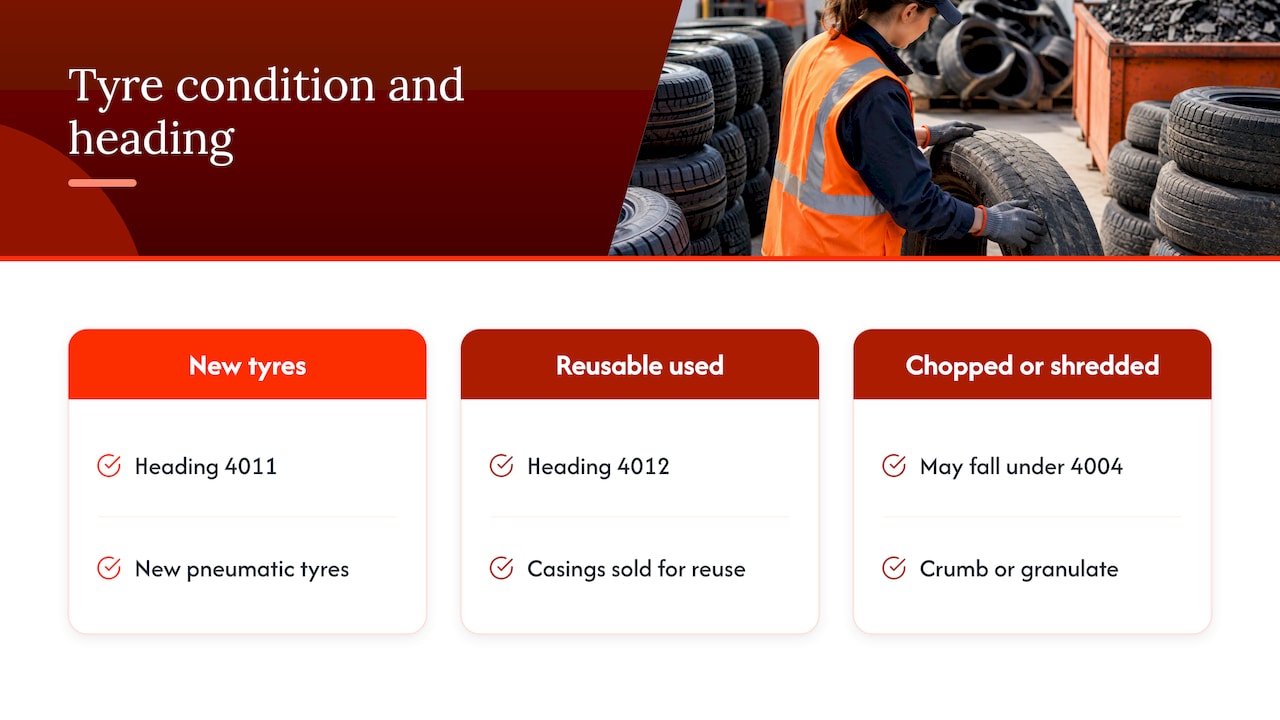
Heading 4011 is for new pneumatic tyres. Used tyres belong in 4012. Tyres that have been chopped or shredded are a different matter: the CBP guide says chopped or shredded tires may instead fall under heading 4004. If your goods are casings sold for reuse, 4012 is the place to start. If they are crumb or granulate, it is not.
What can change a tyre’s classification
The tyre code is simple on paper, but customs officers look at the physical tyre. According to CBP, classification can depend on whether the tire is used, retreaded, solid or cushion, as well as size, weight, load capacity, speed rating, tread pattern, intended use and sidewall markings.
In practice, that gives you a checklist for every shipment:
- Condition. Is each tyre used and original, or has it been retreaded?
- Type. Pneumatic (air-filled) or solid and cushion?
- Size and load data. Record the dimensions and the load and speed markings printed on the sidewall.
- Intended use. Passenger car, truck, agricultural or other. Retreaded tyres are split by application, so use matters.
- Photos and packing list. Match what the paperwork says to what is in the container.
A mismatch between the declared code and the goods is the usual reason a container is held at the port. Clean, specific descriptions make a hold less likely.
From six digits to your national tariff line
The six-digit code is only the shared base. The U.S. International Trade Commission explains that the first six digits are internationally harmonized, while digits after the sixth and their descriptions can differ by country, and each country sets its own duty rates. The same source notes the United States uses a 10-digit HTS number. The WCO says the same thing from the other side: final classification for import into a specific country is made under that country’s own national tariff schedule.
So “4012.20” is what you put in the first six digits, and the destination decides the rest. Exporters shipping to several countries need a different full code and duty check for each market. This guide on HS code steps for exports covers the practical routine of finding the code and matching it with customs documents.
For tyres bound for Africa, South America, Pakistan, the UAE or India, ask your clearing agent for the national tariff line and any import conditions in that country before you confirm an order. Rules on used goods vary by country, and we do not state them here for any market that we have not verified.
Used laptops: HS 8471.30
Laptops come up often because many importers of used goods mix electronics and tyres in the same trading business. The international subheading is 8471.30: portable automatic data-processing machines weighing not more than 10 kg, with at least a central processing unit, keyboard and display.
The code does not change because a laptop is used. CBP ruling R03778 classified used laptop computers imported from Canada under HTSUS 8471.30.0000 and stated that the duty rate was free. That is a U.S. national rate, so do not assume the same result elsewhere.
Condition does matter once a laptop is non-functioning. CBP ruling N290200 classified non-operational scrap laptops under 8471.30.0100, and scrap desktop or tower PCs under 8471.50.0150. If your lot is described as working used laptops, your paperwork should say so and list quantities and models. If it is described as scrap, say that too.
Used shoes: construction and materials decide
There is no single “used shoes” code. Chapter 64 divides footwear by how it is built and what it is made of, and heading 6406 covers parts. The European Commission’s footwear classification material lists:
| Heading | Footwear covered |
|---|---|
| 6401 | Waterproof footwear with rubber or plastic outer soles and uppers |
| 6402 | Other footwear with rubber or plastic outer soles and uppers |
| 6403 | Rubber, plastic, leather or composition-leather soles with leather uppers |
| 6404 | Such soles with textile uppers |
| 6406 | Parts of footwear |
A bale of mixed sneakers, leather shoes and sandals can therefore touch several headings. Sort and describe by construction before you declare.
When worn shoes fall under 6309
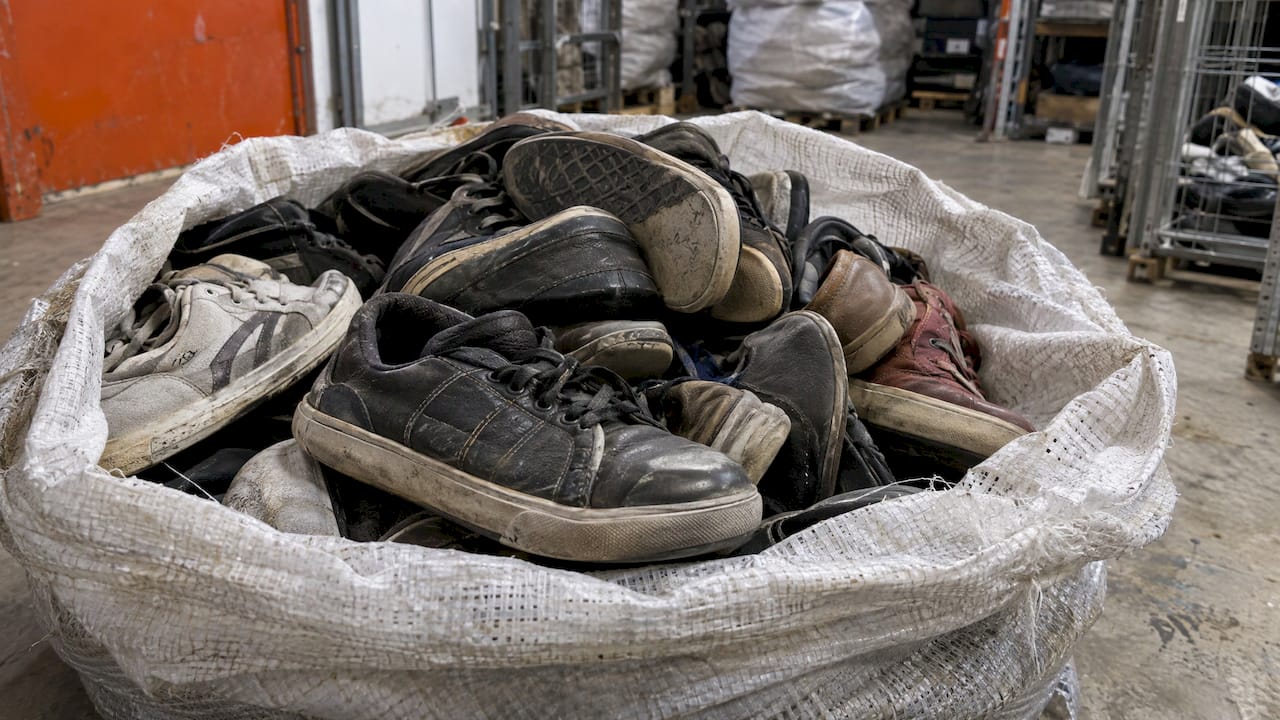
Heading 6309 is the worn clothing and other worn articles heading in Chapter 63. CBP ruling N340317, dated 20 June 2024, states that worn footwear can be included in heading 6309 only when the Chapter 63 conditions are met, including appreciable wear and presentation in bulk, bales, sacks, bundles or similar rough packing.
The ruling relies on a U.S. Court of International Trade reading of “appreciable wear”: visible damage or impairment caused by use, so use alone without visible damage is not enough. Practically, that means a pair that looks nearly new may not qualify for 6309, even in a bale. Grading and documentation matter. Our guide to shoe bale grading explains how grades work, and the used shoes market checklist for Africa covers what buyers in those markets usually ask for.
For shoes bound for resale, destination rules may also require disinfection. See our compliance guide to disinfecting used shoes.
Used toys: heading 9503
Toys are classified in heading 9503, and being used does not move them into a different heading. What decides is the article itself. In Minnetonka Brands v. United States, the U.S. Court of International Trade held that toy classification under 9503 depends on principal use for amusement, diversion or play rather than practicality, judged by physical characteristics, purchaser expectations, trade channels and sale environment. The court placed the hollow character figures at issue in U.S. subheading 9503.49.00, so the design and use of an item matter more than its marketing name.
National lines differ. Canada’s tariff, for example, lists 9503.00 for tricycles, scooters, pedal cars, dolls’ carriages, dolls, other toys, scale models and puzzles, with national lines such as 9503.00.10 for ridden wheeled toys and 9503.00.90 for other toys.
For a mixed lot of hard toys, soft toys and miscellaneous household items, list each category separately on the packing list and check each against your destination’s tariff.
Wiping rags and used clothing
Two more codes our buyers ask about:
- Industrial wiping rags are covered in our guide to HS 6310 for wiping rags, which explains how to avoid port holds and extra duty.
- Used clothing is usually discussed under heading 6309. Our guides on HS code 6309 classification rules and U.S. used clothing tariffs go through the detail, and 8 to 10 digit codes for clearance shows why the national extension matters.
How to verify a code before you ship
A code you found online is a starting point. Use this routine:
- Write a plain description of the goods: material, condition, packing, quantity and use.
- Take the first six digits from the HS heading and subheading that fits.
- Find the destination tariff line. For U.S. imports, consult the HTS legal text and request a binding ruling from CBP if needed.
- For EU destinations, hard cases can be checked in the EU Binding Tariff Information database of customs rulings.
- Make the documents agree: invoice, packing list, bill of lading and any certificates must all show the same description and code.
- Ask a licensed customs broker in the destination country to confirm duty and import conditions for the specific product.
Our perspective on used goods classification
We export used clothing, shoes, bags, wiping rags, toys, bric-a-brac and used tyres in bales from Poland to buyers in more than 40 countries. The pattern we see is that an order moves quickly when the paperwork describes the goods the way the customs officer sees them.
That is why we pack with advanced machinery and document each shipment. Faster bale packaging only helps a buyer if the contents, weights and descriptions on the papers are consistent from the warehouse to the port. Our 133,000 square foot warehouse lets us hold a broad range of goods, so a buyer can combine categories and still get a clear, itemized packing list for each.
Our advice to importers: decide the code per product, never per container. A tyre, a laptop, a bale of shoes and a bale of soft toys each have their own heading. Give your broker the exact description, and we will support you with the shipment documents your market needs.
rodrigues
Buy used tyres and other bales from us
We supply used tyres, used clothing, shoes, bags, toys, bric-a-brac and recycled industrial wiping rags in bulk to importers, wholesalers and resellers. Orders ship in packed bales with documentation that supports your customs clearance. See our used tyres wholesale page or browse the used shoes range.
Tell us the destination country and product mix, and we will help you prepare the shipment description. Start from our main site.
FAQ
What is the HS code for used tyres?
The international subheading is 4012.20, for used pneumatic rubber tyres. Retreaded tyres use 4012.11, 4012.12, 4012.13 or 4012.19, and solid or cushion tyres fall under 4012.90. Your destination country adds digits after the sixth.
Is the HS code for used laptops different from new ones?
No. Portable laptops are classified under 8471.30 whether new or used, as long as they meet the heading description. Duty rates and extra digits come from the national tariff, and non-working scrap units may have their own national line.
Do used shoes have one HS code?
No. Chapter 64 headings depend on the sole and upper materials, such as 6401 to 6404. Worn shoes in rough bales can fall under 6309 only if they meet the Chapter 63 conditions, including appreciable wear.
What is the HS code for used toys?
Toys are classified under heading 9503, and used condition does not change the heading. The item’s design and principal use for play decide the national line, so check your destination’s tariff.
Who decides the final code for my shipment?
The customs authority of the importing country decides under its national tariff. In the U.S., you can request a binding ruling from CBP. Elsewhere, a licensed customs broker can confirm the code before shipment.
Sources
- World Customs Organization: Harmonized System FAQ
- U.S. CBP: Classification of Tires
- HS 2022 explanatory edition for heading 4012
- USITC: Frequently Asked Questions about the tariff
- Rotterdam Customs Services: What is an HS code
- CBP Ruling R03778
- CBP Ruling N290200
- CBP Ruling N340317
- European Commission: footwear classification material
- Minnetonka Brands, Inc. v. United States
- Canada Customs Tariff, chapter 95
- HS code steps for exports