
Bale contamination control means stopping unwanted material from getting into a bale, finding it when it does, and keeping a record that proves you did both. In used clothing, that covers trash, wet or moldy garments, hazardous items such as lithium-ion batteries left in pockets, and items that simply do not suit your market. The cheapest place to fix all of it is at intake, not at your warehouse door.
TL;DR
- Contamination in textile loads is a supply-chain problem. Post-consumer textiles often arrive with 15 to 30 percent non-recyclable material, so checks belong at the start of the chain.
- Inspect every bale on five sides and open a risk-based sample to compare the contents with the packing list.
- Treat batteries, wet bales and unknown items as separate hazards, with their own isolation area and written steps.
- Agree grades and a rejection allowance in writing before the first order. Many disputes come from mismatched expectations, not from trash.
- Keep records and import paperwork in order. Receiving countries can hold or reject shipments that lack them.
Table of Contents
- What counts as contamination in a used clothing bale
- Start at intake, not at the sorting line
- The five-side bale inspection
- Batteries, wet bales and other hazards
- Grades and tolerances: where most disputes begin
- Turn contamination data into leverage
- Packing and transit protection
- Contamination control is also a customs matter
- A 30-minute receiving routine
- Our perspective
- Buying bales with fewer surprises
- FAQ
- Sources
What counts as contamination in a used clothing bale
Buyers use the word for at least three different problems, and mixing them up is how arguments start.
Physical contamination. Plastic film, packaging, rubbish, broken hangers, loose stuffing, sharp objects and foreign items. This is the textbook meaning.
Condition contamination. Wet, moldy, oil-soaked, mildewed or heavily soiled garments. One damp bale can taint the bales stacked around it.
Market contamination. Clothing that is clean and wearable but wrong for your customers: heavy winter coats for a hot coastal market, or styles that your traders cannot sell. A UNCTAD brief on second-hand clothes in Uganda and Tanzania points to the same pattern: without agreed quality grades, buyers and sellers disagree about what counts as contamination, including usable clothing that fails local taste.
The ECOS and EEB position paper on reuse textiles notes that the share of waste in used-textile bales is highly debated, ranging from 20-50% to almost zero depending on who you ask. That spread is the reason you define the term in your contract rather than assume the supplier shares your meaning.
Start at intake, not at the sorting line
The trade press is consistent here. Waste Advantage Magazine frames contamination as an intake-management issue: quality is set long before material reaches a sorting line, and facilities without documented intake protocols see more downtime and more safety incidents.
For an importer or wholesaler, that translates into questions you ask the supplier before you ask about price:
- Where does the material come from: charity collection, door-to-door, bring banks, retail take-back? Each source has a different contamination profile.
- Is it protected from rain and moisture between collection and baling?
- Who sorts it, how many times, and to which written grade?
- What is the bale weight, wrap and strapping standard?
- What records come with each lot?
On the collection side, simple measures matter: asking donors to bag textiles so they stay dry and do not mix with loose waste, and using container designs with narrow openings and secure lids. The Washington State Department of Ecology companion guide describes these infrastructure-level strategies for recycling streams, and the logic carries over to clothing collection. A supplier that controls its sources has fewer problems to catch later.
The five-side bale inspection
The ESA plastic quality standard is written for plastics, not clothing, but its inspection discipline is a useful model: visually inspect every bale on five sides, record the findings, and record corrective action so there is an audit trail. The same habit works for textile bales.
What to look for on each face
- Wrap and strapping: tears, loose straps, patched wrap, which can hide repacking.
- Surface fabric: staining, mold spots, odor, damp patches, visible film or non-textile items.
- Shape: bulges, soft spots or uneven density. Surface irregularity often masks something inside.
- Labels: grade, weight, origin and lot number matching the packing list.
- Weight: a bale far from its stated weight is either wet or short.
A single-face check is the common pitfall. A bale can look clean on its visible side and be a different product underneath.
Opening a sample
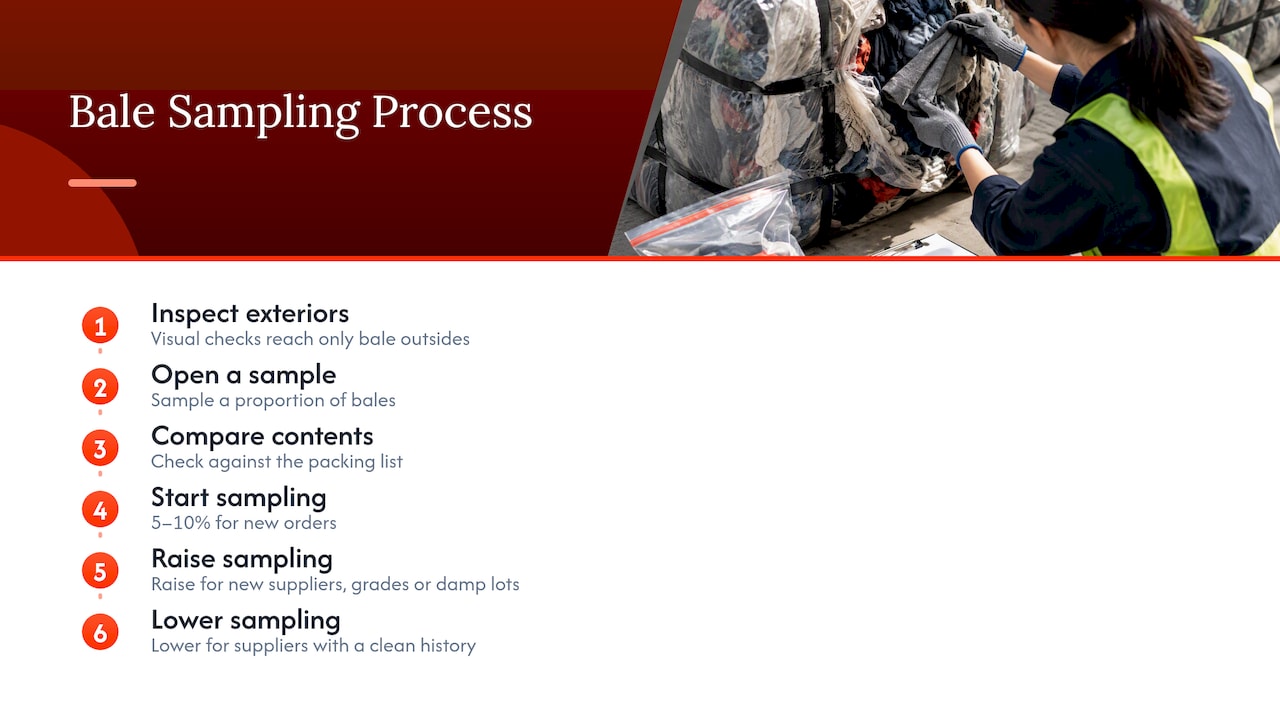
Visual checks only reach the outside. On a risk-based approach, open a proportion of bales and compare the contents with the packing list. Raise the proportion for a new supplier, a new grade, or a lot that arrived damp. Lower it for a supplier with a clean history. Our own guide on cutting bale rejects that can reach 36% with AQL checks walks through how sampling plans work, and sampling 5 to 10 percent first is the approach we suggest for new orders.
Batteries, wet bales and other hazards
Some contamination is more than a quality loss. It is a safety event.
Lithium-ion batteries
Batteries and battery-powered items turn up in pockets, bags and accessories. OSHA has determined that lithium-ion batteries cannot be treated as articles under the Hazard Communication Standard, because damage can cause fire and the release of toxic contaminants. For a U.S. facility, that means safety data sheets and training are not optional where such items are handled. Check the current OSHA text for your situation, since your classification depends on how the batteries are present.
In practice:
- Set up a segregation area at the unloading point for suspect loads, so they never enter the main line.
- Give staff a clear rule: stop, isolate, report. No one tries to open or crush a swollen or hot device.
- Store removed batteries in a non-combustible container away from stock.
- Keep an incident log.
If a battery leaks onto a warehouse floor, cleanup also matters. Property managers dealing with spills can read this guide on acting within 60 seconds to stop battery acid stains, though it comes from an Australian cleaning provider, so follow your own local safety rules and the product data sheet first.
Wet, moldy and soiled bales
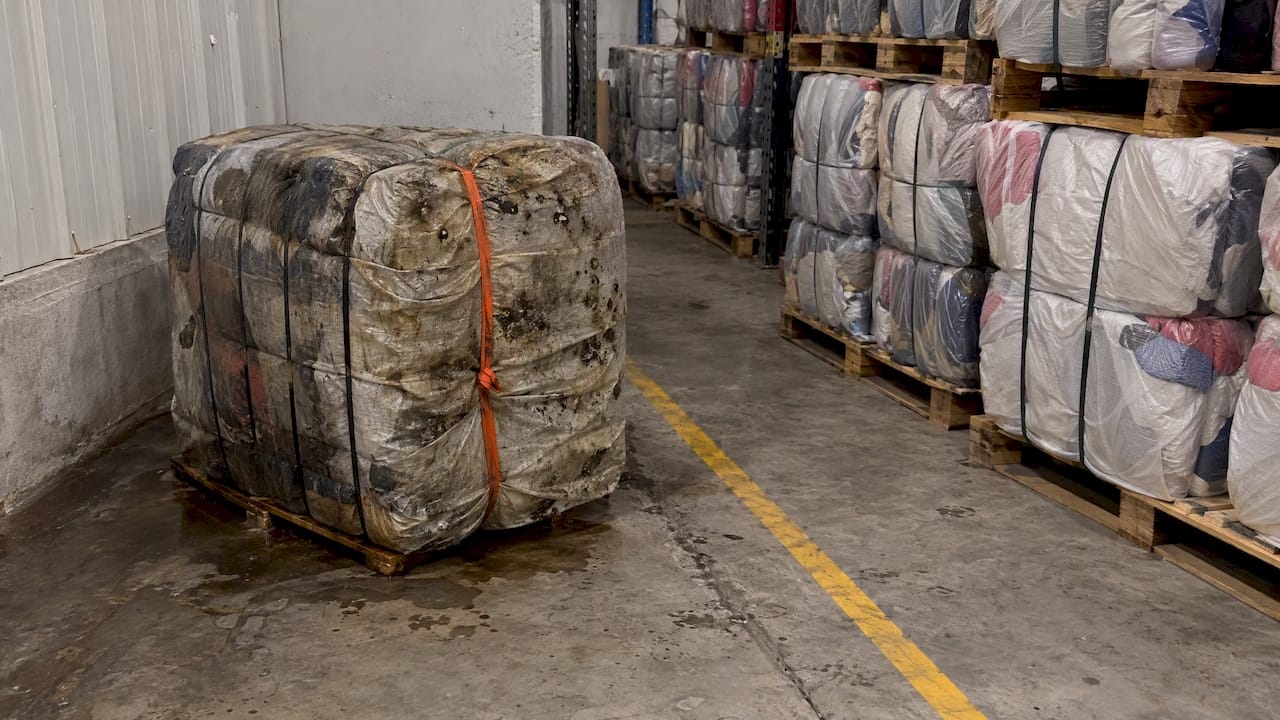
Moisture is the quiet destroyer. A damp bale grows mold, smells, and spoils neighbors. The rule is blunt: isolate the bale, do not stack it with dry stock, and document it with photos before any claim. A moisture limit should be written into the contract. Buyers often ask a supplier what happens when moisture goes above a stated figure, and whether there is a recourse clause for misgraded bales. If your agreement is silent, you have no leverage.
Footwear
Shoes bring their own hygiene question. Our buyer’s compliance guide to disinfecting used shoes for resale covers that in detail.
Grades and tolerances: where most disputes begin
There is no globally harmonized grading system for second-hand textiles. The EEB and ECOS paper above says stakeholders are pushing for common quality grades, and the UNCTAD brief says Grade A should rest on criteria such as appearance, condition, fashion, functionality and durability. Until that exists, you write your own.
A workable grade specification names:
| Item | What to define |
|---|---|
| Grade label | What A, B and C mean in words and photos |
| Category and season | Summer, winter, mixed; men, women, kids |
| Acceptable defects | Stains, holes, missing buttons, per grade |
| Foreign material | Maximum share, and what counts |
| Moisture | Maximum level and test method |
| Bale weight | Nominal weight and tolerance |
| Remedy | Credit, replacement or return, with a claim window |
Category-specific examples help. See how grade splits behave in sportswear bale grades, in kids clothing grading, and in vintage footwear grading. The clauses that make these terms enforceable are in our 45 kg bale checklist for used clothing contracts.
Turn contamination data into leverage
The trade press makes a point that many buyers miss: the best wholesalers use contamination data to educate suppliers, adjust pricing and phase out high-risk supply streams. Consistency matters more than perfect purity.
So log every inspection:
- Lot number, supplier, grade, date received.
- Result on each of the five sides.
- Sample contents versus packing list.
- Reject count and reason: foreign material, moisture, wrong grade, hazard.
- Action: accept, accept with credit, quarantine, reject.
After a few shipments the pattern shows. One supplier’s winter lots might run damp. One source may repeatedly include batteries. You can then negotiate with evidence instead of impressions.
Packing and transit protection
A clean bale can be ruined in transit. Machine strapping, tight wrap and correct container loading cut moisture ingress and bale damage. Our guide to CTU Code packing specs and machine strapping for used clothing buyers explains what to ask for, and our piece on bale specs for used clothing warehousing covers storage after arrival: keep bales off the floor, away from walls and leaks, and rotate stock first in, first out.
Contamination control is also a customs matter
In some markets, cleanliness is written into law. Kenya’s protocols for importing used textiles and footwear require suppliers to notify the contracted service providers in writing of their intention to export, and shipments must be accompanied by a fumigation or treatment certificate. Rules differ by country and change, so check the current text for your destination before ordering.
For other routes, see:
- Supplier certificates U.S. importers need for used clothing
- EU used clothing compliance 2025 to 2027
- Used clothing import bans in nine countries
- HTS 6309 and used clothing tariffs for U.S. importers
Misclassified or undocumented bales are a contamination risk of their own kind: they can be held at the port no matter how clean the clothes are.
A 30-minute receiving routine
For each arriving container, we suggest this order:
- Check seals and container condition before unloading. Photograph anything wet or damaged.
- Unload suspect or damp bales into the isolation area first.
- Match bale count and labels with the packing list.
- Inspect all five sides of a sample, then of any bale that looks off.
- Open the sample percentage you set for this supplier and compare contents with the list.
- Weigh a few bales. Record the results.
- Send the claim within the window in your contract, with photos, lot numbers and counts.
Skipping step 7 is the most expensive mistake. A claim sent after the window usually gets nowhere.
Our perspective
We export used clothing, shoes, bags, wiping rags and other second-hand goods from Poland to buyers in more than 40 countries. What we hear from buyers is rarely that a bale was filthy. It is that the bale did not match what they expected, and nobody had written down what they expected.
So we treat contamination as a documentation and process question as much as a cleaning question. Our packaging machinery lets us turn bales around quickly and consistently, and a 133,000 square foot warehouse gives us room to keep lots separate instead of mixing them. We aim to give buyers documented shipments, and we would rather resolve an issue in the first week than watch it become a lost customer.
Our advice to any buyer, ours or not: sample first, define grades in words and photos, put the remedy in the contract, and keep your inspection records. The records turn a complaint into a fact.
— rodrigues
Buying bales with fewer surprises
If you resell used clothing, shoes, bags or wiping rags in bulk, we can supply them in baled lots. Browse used clothing, used shoes and recycled industrial wiping rags, then contact us with your market, grade needs and target volumes. For first orders, we suggest starting with a sample lot you can inspect against the checklist above. Our overview of five vetting checks for sustainable wholesale fashion also shows how to judge any supplier, including us.
FAQ
What is contamination control in baled goods?
It is the process of preventing, detecting and removing unwanted material from bales, from trash and moisture to hazardous items such as batteries. It includes records that show what was found and what was done. In used clothing it also covers items that do not fit the buyer’s market.
How do you inspect a bale for contamination?
Look at all five visible sides for torn wrap, stains, odor, bulges and mislabeling, and write down what you find. Then open a sample and compare the contents with the packing list. Increase the sample for new suppliers or doubtful lots.
How much contamination is normal in used textiles?
It varies widely by source and grade. One trade report says mixed post-consumer textile loads can contain 15 to 30 percent non-recyclable material, and bale buyers should expect an agreed, written tolerance rather than an assumed one. Sorted, graded export bales are a different product from raw collection loads.
What should I do if I find a lithium-ion battery in a bale?
Stop handling the item, move it to a designated isolation area and store it away from stock. Do not crush or open it. Follow your facility’s safety plan and OSHA guidance, and contact your safety officer or local fire authority if the battery is swollen, hot or leaking.
Sources
- From Fast Fashion to Feedstock, Waste Advantage Magazine
- ESA Plastic Quality Standard
- OSHA: HCS applicability of lithium batteries
- ECOS and EEB: Redefining used textiles and textile waste
- UNCTAD brief on second-hand clothes in Uganda and Tanzania
- Washington State Ecology: Recycling Contamination Reduction Best Management Practices
- Protocols for importation of used textiles and footwear into Kenya