
Yes, bulk used shoes can be disinfected and made saleable, but only through a two-stage industrial workflow: mechanical cleaning followed by validated disinfection or fumigation, backed by traceable treatment documentation. Skip either stage and you’re either shipping contaminated inventory or shipping something customs won’t clear.
Before you accept a bale, insist on three things from any supplier:
- Consistent sorting and specification — shoes grouped by material, condition, and pair status, not a random jumble.
- A treatment or fumigation certificate, or PVoC/Certificate of Conformity evidence for the destination market.
- Sampling and QA on arrival, done by your own team, not just taken on faith.
Reject the shipment outright if any of those documents are missing, or if you spot pests, high moisture, or strong odors on opening.
Key Takeaways
Disinfecting used shoes for resale requires mechanical cleaning before disinfection or fumigation, plus traceable documentation to clear customs and pass buyer inspection.
| Point | Details |
|---|---|
| Two-stage process is mandatory | Mechanical cleaning must precede disinfection or fumigation, since dirt and organic matter block chemical treatment. |
| Documentation prevents rejection | Treatment certificates, PVoC/COC evidence, and sorting logs are what customs and buyers actually check. |
| Sorting drives quality | Grouping by material, color, and pair status before washing prevents damage and cross-contamination. |
| Receiving QA catches problems early | Check labels, moisture, odor, and certificates within 30 minutes of delivery, and quarantine anything that fails. |
| Msexpspzoo supplies documented inventory | Sorting, processing, and treatment records are available on request for buyers verifying shipments before purchase. |
Table of Contents
- What Does Disinfecting Used Shoes Actually Involve?
- What Documents Prove a Shoe Shipment Is Compliant?
- How Should You Inspect a Shoe Shipment on Arrival?
- How Do Wholesalers Process Bulk Shoes for Resale?
- How Do You Verify and Certify a Batch Before Dispatch?
- Can MS EXP SP Z O O Handle This at Scale?
- What the Compliance Paperwork Doesn’t Tell You
- How to Source Disinfected, Inspection-Ready Used Shoes
- Frequently Asked Questions
- Sources
What Does Disinfecting Used Shoes Actually Involve?
Disinfecting used shoes at industrial scale is a two-part job, and the order is not negotiable. Stage one is mechanical cleaning: de-dusting, brushing, machine washing, or dry-cleaning, matched to the shoe’s material. Stage two is chemical disinfection or fumigation, applied only after visible dirt, sweat residue, and organic debris are gone.
That sequencing matters more than most buyers realize. Hygiene specialists point out that surface disinfection alone doesn’t remove embedded contaminants, and it can fail outright if organic matter is still present, since organic residue neutralizes many disinfectant compounds before they reach the surface underneath. A disinfectant sprayed onto a dirty shoe is mostly reacting with dirt, not microbes.
A typical processing line runs in this order:
- Sort and group by material (leather, canvas, synthetic) and color to prevent cross-contamination and dye transfer.
- De-dust and brush to remove loose debris before any wet process.
- Wash or dry-clean according to material tolerance.
- Apply disinfectant or fumigant once surfaces are visibly clean and dry enough to absorb treatment evenly.
Suppliers typically use broad-spectrum surface sanitizers for general resale stock and reserve fumigation for shipments crossing borders with phytosanitary requirements. Sole-specific disinfection systems, borrowed from industries like food processing, are sometimes layered on afterward. They stop microbes from transferring between zones but were never designed to remove dirt on their own, which is exactly why sole disinfection units are treated as a supplementary hygiene step, not a substitute for washing.
Pro Tip: Ask a supplier what they wash before they disinfect, not just what chemical they use. A vague answer on the cleaning stage is a bigger red flag than a missing product name.
What Documents Prove a Shoe Shipment Is Compliant?
Paperwork is what separates a saleable bale from one sitting in a customs warehouse. At minimum, ask suppliers for:
- A fumigation or treatment certificate confirming what was applied, when, and by whom.
- PVoC or Certificate of Conformity documentation for markets that require pre-shipment inspection.
- Sorting logs and batch IDs that trace a given lot back to its processing run.
These documents do more than satisfy an inspector. They’re what separates “non-waste” from “waste” in the eyes of customs. UK guidance is explicit that used textiles and footwear must have contamination removed and be sorted into a consistent specification to qualify as non-waste products rather than waste. Kenya’s import protocols go further, requiring cleaning and fumigation at origin before baling, with certificates verifying both sorting and fumigation before goods clear customs.
The cost of skipping this step is not abstract. When Kenya lifted its earlier import suspension, authorities tied renewed access to mandatory origin-country treatment and importer registration, and non-compliant shipments faced rejection or penalties at the border. A bale without documentation isn’t just a compliance gap. It’s inventory that may never leave the port.
How Should You Inspect a Shoe Shipment on Arrival?
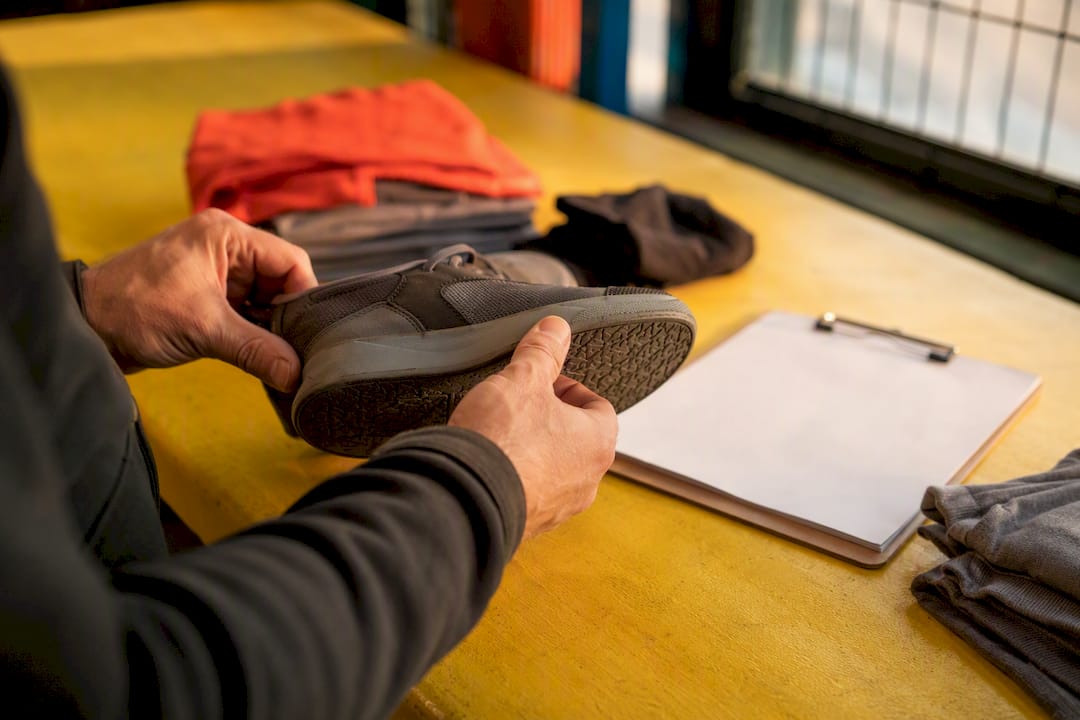
Run this checklist in the first 10 to 30 minutes after delivery, before the bale gets buried in your warehouse queue.
- Check bale labels and batch IDs against the paperwork you were sent before shipping.
- Verify the treatment certificate names a real chemical or fumigant, a date, and an issuing party, not a generic boilerplate line.
- Open the bale and scan for pair matching, visible contamination, mold spots, or pest activity.
- Check moisture and odor by hand and by nose. Damp shoes packed tight are a mildew risk regardless of what the certificate claims.
- Pull a sample set for closer surface inspection rather than relying on a glance at the top layer.
If any check fails, quarantine the bale and hold it separate from accepted stock until you’ve resolved the discrepancy with the supplier.
Pro Tip: Keep a rejection log with photos and dates. Patterns across shipments tell you faster than any single bad bale whether a supplier’s process is reliable.
How Do Wholesalers Process Bulk Shoes for Resale?
Consistent output starts before a shoe touches water. Sorting comes first:
- Separate by material — leather and suede need different handling than canvas or synthetic uppers, since heat and moisture tolerance vary widely.
- Group by color to prevent dye bleed during wet cleaning.
- Confirm pair status so matched sets stay together through the entire line.
Machine parameters need to match the material grouping, not a one-size setting. Industrial shoe-laundry operations typically run cooler wash cycles for delicate uppers and reserve higher-temperature, longer cycles for sturdier synthetics and rubber soles, a distinction documented in case studies of commercial shoe-washing equipment. Leather and suede generally get hand-cleaning or spot treatment instead of a machine cycle, since aggressive washing damages the material faster than dirt does.
Drying matters as much as washing. Rushed drying with tumble heat can warp soles or trigger color transfer between grouped pairs, while under-dried stock invites mildew during transit. Most industrial operations favor rack drying with controlled airflow, plus a final visual check for residual moisture before boxing.
None of this holds up without records. A defensible processing line logs:
- Batch ID for the lot
- Chemical lot number for the disinfectant used
- Operator ID
- Date and timestamp for each processing run
That level of detail is what lets a facility trace a QA failure back to a specific run and rework it, rather than scrapping an entire shipment on suspicion alone.
How Do You Verify and Certify a Batch Before Dispatch?
Verification before dispatch is what turns “we cleaned it” into something a buyer can trust on paper. A practical sampling approach pulls several units per hundred pairs or a random pair per bale for visual and surface inspection, escalating to closer testing if anything looks off.
An internal treatment statement should specify:
- The disinfectant or fumigant used and its concentration
- Contact time and temperature during treatment
- The date and batch it applies to
- Who signed off on the result
Third-party inspection, including PVoC certification, becomes worth coordinating whenever the destination market requires it or when a buyer specifically asks for independent verification rather than a supplier’s own paperwork. Given that countries have moved quickly to tighten import requirements after policy shifts, confirming current destination rules before finalizing a large order saves far more time than resolving a rejected shipment after the fact.
Can MS EXP SP Z O O Handle This at Scale?
Msexpspzoo runs this exact workflow out of a 133,000 square foot warehouse in Poland, shipping to more than 40 countries. Advanced packaging machinery keeps turnaround fast without cutting corners on sorting or processing.
- Sorting by material, color, and pair status happens before any wet process, matching the specification standards buyers need for non-waste classification.
- Processing documentation, including treatment records, is available on request.
- Long-term partners cite consistent quality and responsive support as reasons they keep reordering.
If you’re evaluating Msexpspzoo as a supplier, ask for samples and processing records before you commit to a bulk order. That’s a reasonable ask of any serious supplier, and one worth making before, not after, a shipment leaves the warehouse.
What the Compliance Paperwork Doesn’t Tell You
Most guidance on this topic treats documentation as the finish line. It isn’t. A certificate tells you a process happened; it doesn’t tell you whether that process was designed correctly in the first place. I’d argue the sorting stage, not the disinfection stage, is where most shipment problems actually originate. A supplier that groups shoes carelessly by material creates cross-contamination risk that no amount of downstream fumigation fully resolves, because the chemical is now trying to treat mixed leather, canvas, and rubber uniformly when each needs different contact times.
The conventional advice tells buyers to chase certificates. Better advice: chase process consistency, and treat the certificate as confirmation rather than proof. Ask suppliers how they group shoes before washing, not just what chemical they spray afterward. That single question filters out more unreliable suppliers than a stack of paperwork ever will, because sloppy sorting shows up in the finished inventory long before a lab result would catch it.
Buyers who build sampling into their own receiving process, rather than outsourcing all verification to a supplier’s paperwork, catch problems weeks earlier and reject far less finished inventory.
How to Source Disinfected, Inspection-Ready Used Shoes
Skip the guesswork on supplier reliability. Msexpspzoo processes used shoes through the same sort-clean-disinfect sequence covered above, with sorting logs, batch IDs, and treatment records generated on every run, not assembled after a buyer asks.
Msexpspzoo also coordinates third-party inspection when a destination market or buyer requires PVoC or Certificate of Conformity verification, so you’re not left scrambling for documentation after a shipment is already booked. If you’re buying in volume from a wholesaler, you already know how expensive a rejected bale is. This is the alternative: request a sample of processed used shoes before committing to a full order, and ask for processing records alongside it. Reviewing a real batch, complete with its paperwork, tells you more in ten minutes than any supplier’s sales pitch will.
Frequently Asked Questions
Does disinfecting used shoes remove all contamination on its own?
No. Disinfection only kills or reduces microbes on a surface that’s already clean. If organic debris or dirt remains, the disinfectant reacts with that material instead of the surface underneath, which is why mechanical cleaning has to happen first.
What’s the difference between disinfection and fumigation for used shoes?
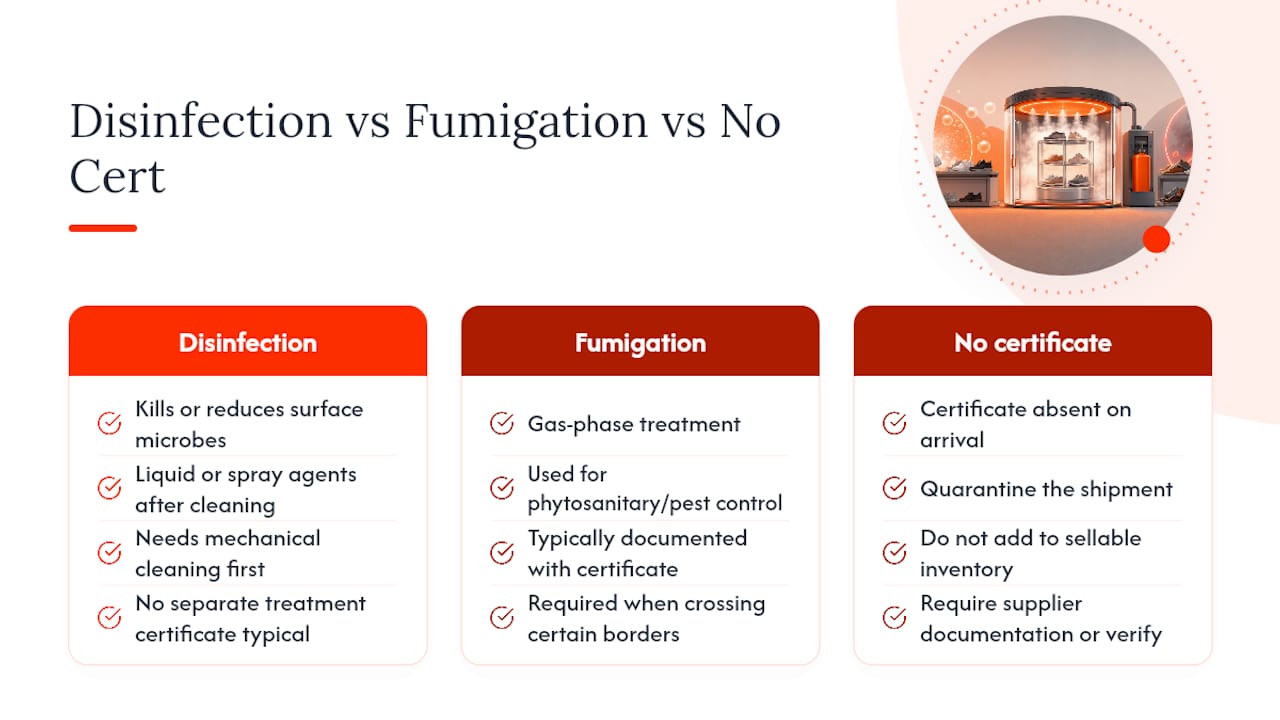
Disinfection targets surface microbes with liquid or spray agents after cleaning. Fumigation uses gas-phase treatment, usually required for phytosanitary or pest control purposes when shoes cross certain borders, and it’s typically documented with a separate treatment certificate.
Why do some countries require a fumigation certificate for used shoes?
Destination countries use these certificates to confirm treatment happened before goods entered their supply chain, protecting against pest introduction and verifying the shipment meets sanitary requirements. Kenya’s import protocols are a documented example of this requirement.
How can a buyer tell if a supplier’s sorting process is reliable?
Ask specifically how shoes are grouped by material and color before washing, and request sample batch IDs or sorting logs. A supplier that can’t answer clearly is a bigger risk than one whose disinfectant brand you don’t recognize.
What should happen if a shipment arrives without a treatment certificate?
Quarantine it. Don’t add it to sellable inventory until the supplier provides documentation or you complete your own verification, since reselling undocumented stock creates both a compliance risk and a quality risk.
Sources
- Gov
- Protocols for importation of used textiles and used footwear into Kenya (TRALAC)
- The role of cleaning and disinfection in hygiene – UKCPI
- KEBS lifts ban on used textile and footwear imports – Cotecna