
For bulk, durable goods like used clothing, wiping rags, or textiles, baling wins on space and cost. For fragile or retail-facing SKUs, box packing wins on protection and shelf presentation. The right call mostly comes down to three things: whether the product survives compression, whether it needs to look good on arrival, and how a carrier prices the shipment.
TL;DR:
- Baling is most cost-effective for bulk textiles and used clothing that tolerate compression, significantly reducing space and freight costs.
- Box packing offers better protection and presentation for fragile or shelf-ready products, but incurs higher handling labor and dimensional weight charges.
- Carrier pricing based on volume or dimensional weight favors baling for space savings, while boxes increase costs due to extra material and handling steps.
- Fragile or impact-sensitive items require boxes for structural integrity, whereas moisture protection can be managed with water-resistant wraps in both methods.
- For large-scale exports, operations should evaluate product durability, presentation needs, and carrier billing practices before choosing between baling and box packing.
Table of Contents
- Baling vs Box Packing: A Side-By-Side Look at the Tradeoffs
- What Drives Cost and Space Efficiency in Each Method?
- Which Method Protects Products Better?
- Equipment, Labor, and Throughput: What Each Method Actually Requires
- How Do the Two Methods Compare on Waste and Disposal?
- When Should You Use Baling vs Box Packing?
- What Baling at Scale Actually Looks Like
- Balancing Cost, Protection, and Sustainability
- Ready to Source Bulk Bales for Your Business?
- Sources
- FAQ
Baling vs Box Packing: A Side-By-Side Look at the Tradeoffs
Baling compresses goods into dense, wrapped units, usually held together with polypropylene strapping or a plastic wrap layer. Box packing puts products into rigid corrugated containers, often with dividers or void-fill to stop movement in transit. Each method solves a different problem, and the wrong pick shows up fast in freight bills or damage claims.
Baling advantages:
- Cuts occupied volume dramatically compared to boxed equivalents of the same product, which lowers per-unit freight and warehousing cost
- Uses less packaging material per unit shipped, since one wrap replaces dozens of individual boxes
- Water-resistant wraps protect against surface moisture during transport and outdoor staging
- Maximizes pallet and container density, a real factor when flexible packaging can replace corrugated in space-constrained shipping
Box packing advantages:
- Delivers mechanical protection through rigid walls that resist crushing and impact
- Stacks predictably on pallets and store shelves, which retail buyers expect
- Supports branding, barcoding, and easy individual-unit access without unwrapping a compressed mass
- Simplifies returns processing and spot-checking for quality control
The tradeoff cuts both ways. Compaction can damage anything with structure, seams, or electronics. Boxes, meanwhile, carry higher volumetric weight and more handling steps per unit, which adds labor cost even when the product itself ships fine.
What Drives Cost and Space Efficiency in Each Method?
Space is the first lever. A baled shipment of soft goods can occupy a fraction of the container space a boxed equivalent would need, because compression eliminates the air pockets that boxes inevitably carry. That directly lowers ocean, rail, and trucking cost per unit, since carriers price by volume or weight, whichever is higher.
Boxes flip that equation. Corrugated cases add dimensional weight, and most carriers now bill by DIM weight when it exceeds actual weight, a pricing structure DHL’s logistics guidance flags as a major cost driver for box-heavy shippers. Void-fill materials, extra warehouse footprint for staging, and more labor-intensive palletizing all stack onto that base cost.
To estimate which method wins for a given SKU and route, run through this quick checklist:
- Calculate the fill factor: how much of a pallet or container is actual product versus wasted space
- Check whether the carrier bills by actual weight or DIM weight for your typical shipment size
- Add handling labor: minutes per unit to bale versus minutes per unit to pack, tape, and palletize
- Compare total landed cost per unit, not just packaging material cost alone
Pro Tip: Don’t just measure material cost per unit. Track total handling time from staging to truck, since labor often outweighs the packaging materials themselves.
Which Method Protects Products Better?
Fragility decides this one more than anything else. Corrugated boxes resist vertical compression and impact better than compressed bales, which is why packaging industry guidance still recommends boxes for anything that needs structural integrity through multiple handoffs. Stack a pallet of boxed electronics five high, and the box walls carry that load. Stack the same load on baled goods that were never meant to bear weight, and you get crushed product at the bottom of the stack.
Baling works well specifically because textiles, used clothing, and industrial wiping rags tolerate compression without losing value. Vendor guidance consistently points to product fragility under compaction as the deciding factor, not general product category.
Environmental exposure matters too. Moisture and contamination risks apply to both methods, but they show up differently:
- Baled goods need water-resistant wrap or indoor storage to avoid degradation, since uncovered outdoor storage of compressed bulk goods can lead to real product loss
- Boxed goods need moisture barriers or liners in humid climates, since corrugated cardboard weakens when wet
- Temperature swings can loosen bale straps over time, so periodic tension checks matter in long-term storage
Equipment, Labor, and Throughput: What Each Method Actually Requires
Balers need floor space, three-phase power, and a maintenance schedule. Cycle times vary by machine size, but the bigger operational factor is ejection and forklift handling of finished bales, plus operator training on safe zones around the compression chamber. Skipping that training is where injuries happen.
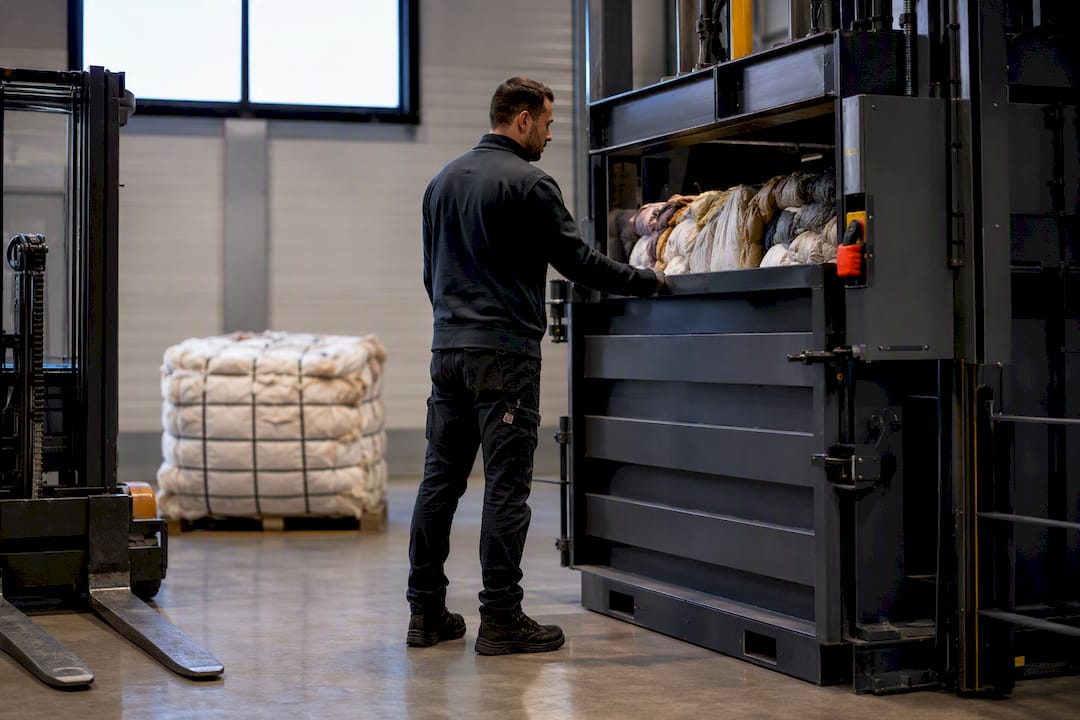
Box packing needs a different setup entirely: a packing line, staff trained on taping and void-fill application, a defined palletizing pattern, and staging space for outbound pallets before they load.
Recycling and disposal add another layer. Balers and shredders serve different downstream purposes: a baler consolidates recyclables for pickup, while a shredder generates internal packing material. Confirm which one your recycler or downstream buyer actually needs before investing in either.
- Balers: higher upfront equipment cost, lower per-unit labor once running
- Box packing: lower equipment barrier to entry, higher ongoing labor cost per shipment
- Recycling pickups: verify whether your partner wants baled material or loose material before choosing equipment
How Do the Two Methods Compare on Waste and Disposal?
Baled shipments typically generate less outbound packaging waste than boxed equivalents, since water-resistant wraps replace multiple layers of corrugated and filler that boxed shipments require. Boxes create their own waste stream: corrugated material, tape, and void-fill, all of which need separate handling if you want a clean recycling stream.
Contamination is the hidden cost on both sides. Mixed materials, wet cardboard, or plastic wrap tangled into a recycling load can knock down its resale value.
- Segregate waste streams at the source rather than sorting later
- Confirm your recycler’s specs before choosing wrap or box materials
- Track disposal costs per shipment, not just per year, to catch drift early
When Should You Use Baling vs Box Packing?
Match the method to the product category first. Used clothing and industrial wiping rags are the clearest case for baling, since they tolerate compression and the space savings are substantial. Fragile retail SKUs, electronics, or anything with a shelf-ready presentation requirement belongs in boxes. High-volume secondary markets often split the difference: bale for transport, then rebox at the destination market if local buyers expect individual units.
Before committing, answer three questions:
- Does the product survive compression without losing structural or resale value?
- Does it need retail-ready presentation on arrival, or is it going straight into bulk resale?
- Does your carrier price by actual weight or dimensional weight for this shipment size?
If you’re testing a switch, run a small pilot before rolling it out fleet-wide. Pack one batch each way, then measure pallet density, damage rate on arrival, handling time per unit, and total landed cost. Retailers wrestling with damage-driven returns can find more on reducing return-to-origin rates through better packaging choices in Oxedent’s guidance on cutting RTO.
What Baling at Scale Actually Looks Like
A company runs baling operations at scale, handling bulk volumes of used clothing, shoes, and industrial wiping rags through baling machinery designed for fast turnaround.
- Serves clients across 40+ countries from a single Poland-based operation, at Msexpspzoo
- Uses baling machinery to compress and wrap goods quickly, aiming to keep turnaround times short for high-volume buyers
- Operates from warehouse space sized to support supply across various used goods categories
That combination of machinery and warehouse capacity is what makes baling practical at export volume rather than just in a single facility’s back room.
Balancing Cost, Protection, and Sustainability
The honest tradeoff is this: baling wins on cost and space almost every time your product tolerates it, but the moment fragility or presentation enters the picture, boxes earn their higher price tag. Track cost per pallet, damage rate, and fill factor before deciding, not after.
— rodrigues
Ready to Source Bulk Bales for Your Business?
If you’ve been weighing baling against box packing for your own supply chain, the next question is where to actually source baled goods at volume. Some suppliers offer bulk bales of used clothing, shoes, and industrial wiping rags, using baling machinery aimed at fast turnaround even on large orders.
Wholesalers and resellers working the secondhand market get a supplier that already runs baling at export scale, with 133,000 square feet of warehouse space behind every order and shipping coverage to more than 40 countries. Whether you need wholesale used clothing for a resale operation or recycled industrial wiping rags for an industrial buyer, the bales arrive ready to move. Request a quote today and get pricing for your next bulk order.
Sources
- The 2026 guide to damage-free packaging, high-performance materials & top partners — Packaging World Insights
- Bale or box? Know the differences between flexible packaging and cardboard boxes — Indumak (blog)
- Cardboard shredder vs baler vs compactor guide — Select Pack Tech
- The benefits of cardboard and corrugated boxes for packaging — DHL Logistics Insights
FAQ
Is Baled Cardboard Worth Anything?
Yes. Baled cardboard has resale value to recyclers, though the exact price depends on grade, contamination level, and local market demand, so confirming your recycler’s specs before baling protects that value.
What Does “Box Packing” Mean?
Box packing means placing products into rigid corrugated containers, often with dividers or void-fill material, to protect items from impact and compression during handling and transit.
What Does Baling Cardboard Mean?
Baling cardboard means compressing flattened cardboard into dense, strapped units using a baler, which reduces volume for storage or shipment to a recycling facility.
Why Do Farmers Use Round Bales Instead of Square Bales?
Round bales shed water more effectively in outdoor storage and require less labor to form, though square bales stack more densely for transport and indoor storage, a tradeoff that mirrors the space-versus-protection decision in commercial packaging.
Should I Choose Baling or Box Packing for Used Clothing Exports?
Baling is the standard choice for bulk used clothing and textiles, since the product tolerates compression well and baling maximizes container density for international shipping.