
For margin-focused resellers, premium “VIP” branded bales are the smarter starting point. Standard thrift bales only pay off if you already have staff and space to sort volume at scale. Bales typically ship at 45kg, 100kg, 450kg, or full container loads, priced per kilogram or per bale on FOB terms. Before any deposit changes hands, demand three things: unpacking video, a written condition-grade declaration, and an itemized packing list.
TL;DR:
- Premium VIP bales typically cost more per kilogram but provide better condition consistency and brand recognition, reducing authentication risks.
- Buyers should request unpacking videos, condition-grade declarations, and itemized packing lists before purchasing to minimize disputes and spotting damage early.
- Landed costs often exceed the initial per-kilogram price once freight, duties, insurance, and customs fees are included, so modeling multiple scenarios is essential.
- Structuring orders with clear written agreements, milestone payments, and sample inspections helps mitigate risks and ensure product quality.
- Suppliers with advanced packaging technology and warehouse capacity are less likely to damage inventory and can deliver orders on schedule, especially for fast turnaround needs.
Table of Contents
- What Does a Handbags Bale Mix Actually Include?
- How Do You Judge Bale Condition Before You Buy?
- What Does Landed Cost Really Look Like?
- How Do You Structure the Order Itself?
- Why the Right Supplier Infrastructure Matters More Than Buyers Realize
- Ready to Request a Handbag Bale Quote?
- Sources
- FAQ
What Does a Handbags Bale Mix Actually Include?
A “handbags bale mix” is a bulk lot of secondhand purses and bags compressed and wrapped for export, sorted loosely by condition and sometimes by brand tier. The market for used handbag bales splits into three practical categories, and knowing which one fits your business model matters more than chasing the lowest price per kilo.
Standard mixed thrift bales carry the widest range of quality, from wearable totes to bags destined for parts or rag recycling. They move at high volume and low price, which suits flea market vendors and anyone with the labor to sort a 100kg lot by hand. Premium “VIP” branded bales cost more per unit but arrive with a tighter quality band and recognizable labels, which is why they tend to hit the best balance of margin and authentication risk for boutique and online resellers. Archival or luxury bundles sit at the top: higher reward, but they demand real authentication discipline before resale.
- Standard thrift bales: 45kg to 450kg, priced per kg, best for buyers with sorting capacity
- Premium VIP bales: often sold per kg at a premium rate or per bale, tighter condition mix
- Archival/luxury bundles: smaller counts, priced per piece or per bale, the highest authentication risk
Piece counts vary by handbag size, but a 45kg bale commonly yields a substantial number of bags depending on style mix. Most overseas suppliers publish minimum order quantities that scale from a single sample bale up to multi-ton container orders, so ask early whether a smaller trial run is even on the table.
How Do You Judge Bale Condition Before You Buy?
Condition grading is where most disputes start, and it’s also the easiest thing to fix before you ever wire money. A published grading scale, like the 10-point condition system Glampot uses for preloved bags, gives buyers and sellers a shared vocabulary instead of vague terms like “good” or “gently used.” When both sides work from the same grade definitions, returns and disputes drop sharply.
Run through this sequence before committing to a bale:
- Ask for the supplier’s grading scale and get the grade breakdown in writing for the specific bale you’re quoting.
- Request high-resolution photos of at least a dozen random items, not just the “hero” pieces used in marketing.
- Get full-pile unpacking video. Watching an entire bale get opened on camera catches damage that still photos hide.
- Ask for an itemized packing list showing brand mix, style categories, and estimated grade split.
- For any lot claiming branded or designer content, require sample-item authentication through a third-party service or an in-house specialist before final payment.
Buyers who insist on full unpacking video paired with a small random sample inspection see far fewer disputes down the line, a pattern consistent across bulk secondhand sourcing generally.
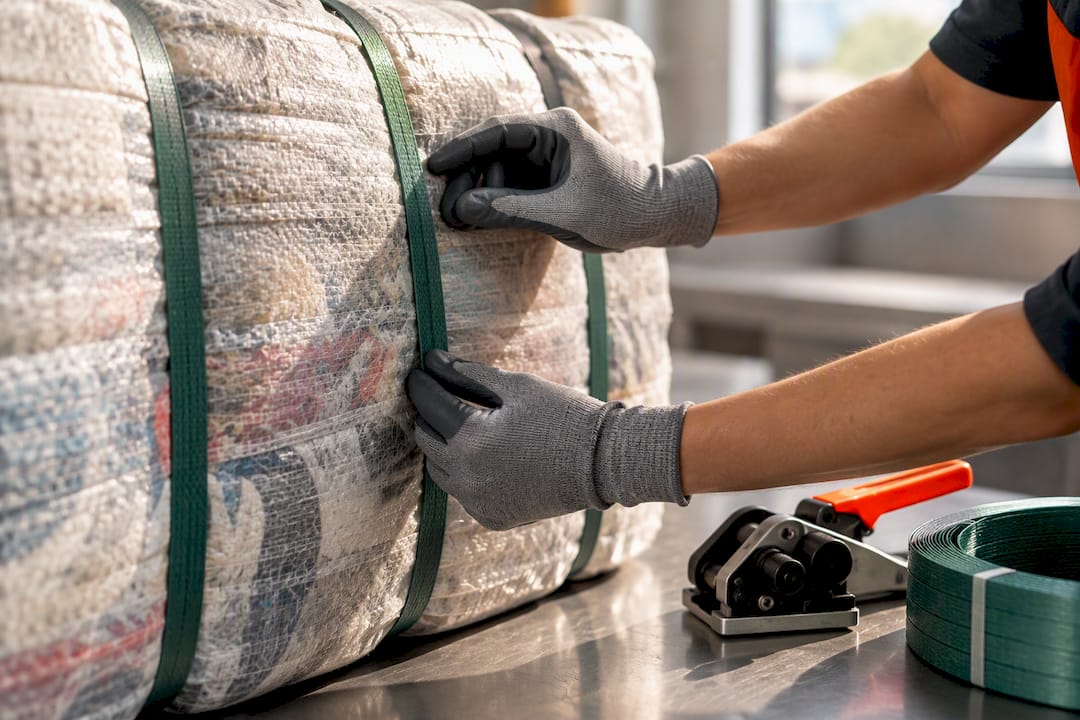
Packaging matters just as much as grading. Poor baling technique, whether from a worn baler or rushed compression, is a known cause of inventory damage in bulk secondhand goods, and in some bulk contexts improper baling has been linked to inventory losses of 20 to 30 percent. Ask suppliers directly what baling equipment they run and whether bags are reconditioned or inspected before wrapping.
Pro Tip: Never accept “grade A” as a standalone claim. Ask the supplier to point to specific photos or video timestamps that match their own grade definition for that lot.
What Does Landed Cost Really Look Like?
Landed cost is the true price of a bale once it clears your own warehouse door, and it’s almost always higher than the per-kg number on the listing. The full formula needs to account for product cost, international freight, insurance, import duties, customs clearance fees, and local delivery, and skipping any one of those line items is how a cheap-looking bale turns into a break-even shipment.
FOB (Free On Board) pricing means you own the goods and the shipping risk once they leave the supplier’s port. CIF (Cost, Insurance, Freight) means the seller has already bundled freight and insurance into the quote. FOB usually looks cheaper on paper but shifts more logistics work onto you.
A few line items to build into every quote before you accept it:
- Ocean or air freight, which varies wildly by lane and season
- Marine insurance, typically a small percentage of declared cargo value
- Import duties and any applicable VAT or sales tax at destination
- Customs brokerage and clearance fees
- Local trucking or last-mile delivery to your warehouse
Running landed cost math before accepting an MOQ changes what actually looks like a good deal. A per-kg price that seems like a bargain can turn into your most expensive lot once freight, duties, and inspection labor get added on top, so model two or three landed-cost scenarios before you commit to volume.
Palletizing bales and consolidating multiple bales into one container shipment usually cuts per-unit freight cost meaningfully. Build a contingency line into your budget too. Customs inspections, repacking requirements, and port delays are common enough that a bale without one is the exception, not the rule.
How Do You Structure the Order Itself?
Once you’ve picked a bale type and run the landed-cost numbers, the order itself comes down to locking details in writing and protecting your payment. A verbal agreement on “good quality VIP bale” means nothing if a dispute happens later.
- Get a formal sales quote specifying total weight, grade breakdown, packing list format, lead time, and the exact Incoterm (FOB, CIF, or another variant).
- Start with a paid sample bale or a small batch of sample pieces rather than jumping straight to a container order, especially with a new supplier. Reputable suppliers commonly offer sample or minimum-weight options precisely for this reason.
- Set an acceptable defect tolerance in writing (for example, no more than 10 to 15 percent below the declared grade) before the sample ships.
- Confirm how bales will be baled and packaged for transit, and ask for reconditioned or inspected packaging rather than reused sacks with unknown history.
- Structure payment with a deposit tied to milestones (production, loading, arrival) rather than paying the full amount up front, and use verified platform payments or escrow where the supplier offers it.
This same discipline applies whether you’re sourcing handbags or negotiating bulk wholesale terms in almost any other category. Get the paperwork right before the money moves.
Why the Right Supplier Infrastructure Matters More Than Buyers Realize
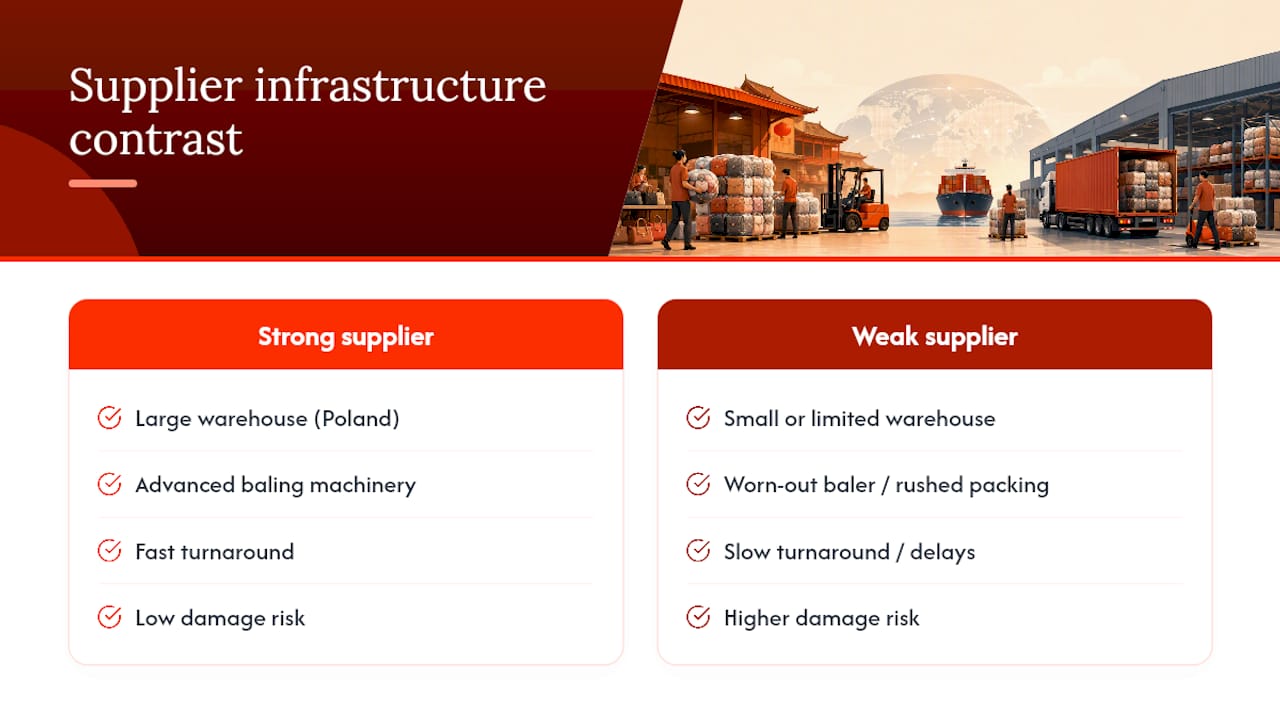
Most buying guides focus on grading scales and freight math, and those matter. What gets skipped is supplier infrastructure itself, the packaging equipment, warehouse capacity, and turnaround speed that determine whether your order actually arrives on schedule and in the condition promised.
A supplier operating from a large warehouse in Poland and shipping internationally employs advanced baling machinery to enable faster turnaround on secondhand goods. That matters directly to handbag bale buyers: a supplier with real packaging technology behind it is less likely to hand you a bale damaged by a worn-out baler or a rushed compression job. Beyond used purses and bags, the same infrastructure supports used clothing and bric-a-brac categories, which gives resellers running multi-category storefronts a single point of contact instead of juggling several suppliers across time zones.
— rodrigues
Ready to Request a Handbag Bale Quote?
Skip the months of trial and error most new resellers spend testing unreliable overseas suppliers. Msexpspzoo gives buyers a direct path: request your condition grade, unpacking video, and packing list up front, and you’re already ahead of most first-time bale buyers who skip that step entirely.
Start by asking for an FOB quote on a sample bale so you can verify grading claims before scaling to a full container order. Confirm lead time and pallet packing details in the same conversation, since that’s where damage risk and shipping delays usually hide. With a large warehouse and extensive shipping experience, the supplier is built to handle both a single trial bale and recurring container schedules without turnaround delays common among smaller suppliers. Browse current used purses and bags inventory and submit a quote request to get grading details and pricing for your next order.
Sources
The market segmentation and pricing data referenced throughout this guide breaks down bale types and buyer personas in more depth. Glampot’s condition grading scale is worth reviewing before your first order, and the landed cost calculation guide walks through the math step by step. For packaging and baling risk, see the bulk bag and sack reconditioning overview.
- Used Hand Bags Bale Market Trends 2026
- How Glampot Grades Condition | Preloved Bag Grading Scale Explained | Glampot
- What is landed cost and how to calculate it
- Used Bulk Bags and 1 Ton Sacks | Custom Packaging Products
FAQ
What Is the Hottest Handbag Style Right Now?
Practical, worn-in leather silhouettes like totes and slouchy shoulder bags are moving fastest at resale right now, largely because they hold up to daily use and photograph well for online listings. That shift toward durable leather styles is one reason premium VIP bales, which skew toward recognizable branded pieces, tend to resell faster than mixed thrift lots.
Where Can I Buy Bulk Purses Wholesale?
Bulk purses are typically sourced through overseas wholesale exporters who sell handbags by the bale rather than the piece, quoted per kilogram or per bale on FOB terms. Msexpspzoo sells used purses and bags in bulk formats and ships internationally, with pricing and grade details available on request through the product page.
Where Is the Best Place to Source Designer-Style Bulk Bags?
Sourcing branded bulk lots safely means working with suppliers who provide grading documentation and support authentication, not just the lowest per-kg price. Premium VIP branded bales generally offer the better risk-to-margin ratio here compared to archival luxury bundles, which demand more authentication rigor per item.
What Is the Most Affordable Way to Stock Luxury-Style Bags?
Buying by the bale rather than by the piece is the most cost-effective way to stock branded-style inventory, since per-unit cost drops sharply at bulk weight. Standard thrift bales offer the lowest entry price, but premium VIP bales usually deliver better resale value per dollar spent once sorting time and defect rate are factored in.
How Long Does a Typical Bale Order Take From Quote to Delivery?
Timelines vary by supplier and shipping method, but a realistic order cycle runs from initial quote and sample review through production, loading, and freight transit before customs clearance and local delivery. Confirming lead time in writing at the quote stage, alongside the Incoterm and packing details, is the single biggest factor in avoiding unexpected delays.