
CREAM grade delivers selectively sorted, resale-ready used clothing with minimal defects and steady brand presence, making it the strongest fit for curated boutiques, online vintage resellers, and anyone chasing higher per-item margins over sheer volume. It is a trade term, not a certified standard, so the grade is only as good as the supplier’s sorting discipline. Verify condition claims with sample orders and video checks before you commit to a full pallet.
TL;DR:
- Most CREAM grade clothing offers minimal defects such as stains or torn buttons but may include small blemishes like light pilling, which are normal.
- The condition of CREAM garments depends heavily on the supplier’s sorting discipline; verifying with sample orders and videos is essential before large purchases.
- CREAM tends to have a broader brand mix and slightly lower quality consistency than First Grade, making it suitable for bulk or discount resale channels.
- Supplier scale, automation, and clear communication significantly impact order consistency, turnaround speed, and defect rates, so choose larger, professional operations.
- Starting with small trial boxes and detailed inspections helps assess a supplier’s sorting quality and avoid losing margins on unverified bulk orders.
Table of Contents
- What Does “Cream Grade” Mean in Wholesale Used Clothing?
- CREAM vs. First Grade: Practical Resale Differences
- How to Choose the Right CREAM Grade Stock
- Packaging, Shipping, and Payment Terms for Wholesale CREAM Orders
- What to Expect From a High-Capacity, Reliable CREAM Supplier
- Typical Box, Pallet, and Trial Order Formats
- Typical Pricing Ranges and Cost Breakdowns for CREAM Orders
- How Long Does a CREAM Grade Order Take From Placement to Delivery?
- Supplier Evaluation Criteria and Red Flags to Watch For
- An Operational Read on Buying CREAM, Not Just Defining It
- How to Request CREAM Grade Stock From Msexpspzoo
- Sources
- FAQ
What Does “Cream Grade” Mean in Wholesale Used Clothing?
CREAM grade refers to used clothing that sorters have pulled out for its condition, not its brand alone. Buyers should expect garments with minimal staining, intact zippers and buttons, and a general look that needs little more than a steam or a quick check before it goes on a rack or gets photographed for an online store. There is no government body or global textile authority that certifies the term, which means one exporter’s CREAM box can look meaningfully different from another’s. That is the entire reason a sample order matters more here than in almost any other wholesale category.
Suppliers typically break CREAM stock into sub-mixes rather than shipping one undifferentiated pile. Common breakdowns include:
- Seasonal mixes — winter coats and knitwear separated from summer dresses and tees, so buyers aren’t paying to store off-season inventory.
- Gender and category splits — women’s, men’s, and kids’ lines sorted separately, often with further splits for outerwear, denim, and casual wear.
- Category-specific runs — dedicated boxes of denim, dresses, or knitwear for resellers building a niche assortment.
- Branded content variance — some CREAM lots lean toward recognizable mall and fast-fashion labels; others are unbranded but still in strong condition.
A practical way to think about defects: a small interior tag stain or light pilling on a sweater sleeve is normal and expected in CREAM. A broken zipper, a visible tear across the chest, or a mildew smell is not, and it’s grounds for a claim if it shows up in volume. Listings that describe CREAM grade bales by pack weight and mix type give you a starting point, but the description only means something once you’ve seen product from that specific supplier.
CREAM vs. First Grade: Practical Resale Differences
CREAM and First Grade (often called Grade A) sit close together, but they are not interchangeable, and treating them that way is a common way new buyers lose margin. First Grade tends to skew toward more consistent designer or premium branding and a tighter tolerance for wear. CREAM casts a slightly wider net: excellent condition remains the baseline, but brand mix runs more varied and the price per kilogram usually sits lower as a result.
Here’s how that plays out by channel:
- Boutique resale — First Grade often wins here because buyers expect a curated, brand-forward rack.
- Online curated stores — CREAM works well because photography and individual listing hide minor brand inconsistency while still showing strong condition.
- High-volume discount resale — CREAM’s lower per-unit cost supports thinner margins across more units.
CREAM does not guarantee every piece is designer, and it does not guarantee zero defects across an entire box. Suppliers sort by eye and by hand, and even a well-run operation will let the occasional borderline item through. Smart resellers plan for that instead of being surprised by it.
Pro Tip: Order a small CREAM batch alongside a First Grade sample from the same supplier before you scale either one. Comparing them side by side tells you more about that supplier’s sorting standard than any product description will.

Many established resellers blend grades deliberately, running First Grade for a flagship online listing and CREAM for a secondary discount channel, which spreads risk and keeps both margin tiers filled without doubling supplier relationships.
How to Choose the Right CREAM Grade Stock
Picking the right CREAM lot is less about finding a “perfect” supplier and more about matching a specific mix to your resale channel and running the right checks before money changes hands.
Start with these selection criteria:
- Condition standard. Ask the supplier to define what “cream” means in their own sorting process, in writing if possible.
- Category and size split. Confirm whether the box is mixed sizing or grouped, since a curated boutique needs different sizing depth than a bulk reseller.
- Seasonal relevance. Match the mix to your selling window; winter coats arriving in July tie up storage for months.
- Brand frequency. Ask what percentage of the lot typically carries recognizable labels versus unbranded stock.
- Odor and moisture check. Request confirmation that stock has been dried and stored properly, since musty odor is one of the most common complaints in used clothing resale.
Before placing a full order, put these questions to the supplier directly: Can they provide recent photos or video of an actual CREAM bale, not a stock image? Do they offer a sample or trial box at reduced volume? What is the exact pack weight, and does the label on the bale match the invoice? What happens if a delivered box doesn’t match the agreed grade?
A sensible scaling plan looks like this: start with one trial box, evaluate sell-through and defect rate over a few weeks, then scale to a larger order only once you know how that specific supplier’s CREAM performs against your actual customers. Jumping straight to a pallet-sized order on a new supplier is the single most common way resellers lose money in this category.
When your delivery arrives, run an inspection checklist before it goes to storage: count and weigh the box against the invoice, spot check a percentage of items for stains and tears, check care labels for fiber content where it affects your pricing, and separate anything repairable into its own pile rather than mixing it back into resale-ready stock. Photograph any discrepancies immediately.
Pro Tip: Keep a simple spreadsheet logging defect rate per supplier per order. After three or four orders, that log tells you more about real quality consistency than any sales pitch will.
Packaging, Shipping, and Payment Terms for Wholesale CREAM Orders
Most CREAM stock moves in one of two formats: standard boxes of typical industry weight for trial and mid-size orders, or palletized loads for buyers scaling into container volume. The box weight and mix format is standard across most listings in this category, which makes it easier to compare suppliers on price per kilogram once you know exactly what’s inside each box.
How a supplier packs a box tells you a lot before you even open it. Folded, sealed, and clearly labeled boxes generally mean less prep time on your end and point to a more organized sorting operation behind the scenes.
Practical terms worth negotiating on every order:
- Video inspection before shipment, especially on a first order with a new supplier.
- Partial payment structures, such as a deposit with balance due against a confirmed packing list.
- Clear Incoterms, so you know exactly where responsibility for freight and duties shifts from supplier to buyer.
- Written claims policy, covering what happens if defect rates exceed an agreed threshold.
Advanced sorting and packaging machinery genuinely shortens lead time on the supplier side, since automated packing lines process volume faster than manual sorting alone. That operational detail matters more than it sounds. Suppliers running that equipment can typically confirm pack weights and turn a confirmed order into a shipped box in a shorter window than those relying entirely on manual processes. If a dispute arises, document it with photos or video within the window the supplier specifies, and keep the original packing list. A reasonable supplier resolves a legitimate claim with a credit or replacement on the next order rather than a drawn-out argument.
What to Expect From a High-Capacity, Reliable CREAM Supplier
Warehouse scale and equipment aren’t just marketing details. They translate directly into how consistently a supplier can deliver the same CREAM standard order after order. MS EXP SP Z O O operates from 133,000 square feet of warehouse space in Poland and ships to more than 40 countries, backed by advanced sorting and packaging machinery that supports faster turnaround on bulk apparel orders. Long-term partners have pointed to consistent quality and dependable communication as reasons they keep reordering rather than shopping around.
That scale matters because it reduces two of the biggest risks in this category: inconsistent grading between orders and slow turnaround that ties up your cash flow. Before you commit volume to any supplier, ask for a trial box, request video verification of an actual CREAM bale, and get a written packing list on every shipment. Those three requirements cost you nothing and eliminate most of the risk that comes with buying used clothing sight unseen.
Typical Box, Pallet, and Trial Order Formats
CREAM stock ships in a few standard formats, and knowing which one fits your stage of business saves you from either overpaying for flexibility or overcommitting on volume too early.
A typical box remains the entry point for most resellers testing a new supplier or a new category mix. It’s small enough to inspect thoroughly in an afternoon and cheap enough that a bad batch doesn’t sink your budget. Mixed seasonal boxes bundle categories like tops, bottoms, and light outerwear together, which suits a reseller who wants variety in a single listing batch rather than a deep run of one category.
Trial batches, sometimes a fraction of a standard box, exist specifically for first-time buyers who want to see a supplier’s sorting standard before committing to real volume. Treat a trial batch as due diligence, not as a representative sample of every future order. One trial box tells you about consistency only when you compare it against a second and third order from the same supplier.
Once you’ve validated a supplier through trial orders, pallet-level purchasing becomes the more economical route, since price per kilogram typically drops as order size increases. Pallets suit buyers who have existing sell-through data and storage capacity to match. Jumping to pallet volume before you’ve validated the supplier’s CREAM standard is the fastest way to end up with inventory you can’t move.
Typical Pricing Ranges and Cost Breakdowns for CREAM Orders
Pricing in this category runs on a simple logic: price per unit weight generally decreases as order volume increases, and CREAM generally prices below First Grade because the brand mix is broader and the condition tolerance is slightly wider. Beyond that general pattern, published price points vary too widely by supplier, region, and category mix to quote a single reliable range here, which is exactly why a sample order matters before you commit to volume pricing.
A useful way to build your own cost picture is to break down the total landed cost into its real components rather than looking at the per-kilogram price alone. That total includes the base product cost, freight (which shifts heavily depending on Incoterms and destination), import duties or taxes where applicable, and your own labor cost for sorting, steaming, and photographing before resale.
Margin planning works best when you calculate cost per garment rather than cost per kilogram, since a box heavy on coats and heavy knitwear will weigh more per item than a box of summer dresses, even at the same CREAM standard. Divide your total landed cost by an estimated item count from a trial box, then use that real number, not the advertised per-kilogram price, to set your resale pricing and margin targets. Suppliers who resist providing an estimated item count per box weight are giving you one less data point to plan around, which is worth factoring into your evaluation.
How Long Does a CREAM Grade Order Take From Placement to Delivery?
A typical CREAM order moves through four stages: quote confirmation, sorting and packing, shipping, and delivery inspection. The length of each stage depends heavily on order size and destination, but the pattern is consistent across suppliers.

Quote confirmation usually takes a day or two once you’ve specified your mix, weight, and category preferences. Sorting and packing is where warehouse capacity and machinery make the biggest difference. A supplier running automated packing lines can confirm and prepare a standard box order considerably faster than one relying on fully manual sorting, particularly during high-demand seasons when order volume spikes across the industry.
Shipping time depends almost entirely on destination and mode: air freight moves faster at a higher cost, while ocean freight for palletized orders takes longer but keeps per-unit shipping cost down for larger volumes. Cross-border customs clearance adds its own variable, especially for buyers importing into countries with stricter apparel import documentation requirements.
Once the shipment lands, budget time for your own inspection process before stock hits your sales floor or online listings. Rushing this step to save a few days is how defective items end up in front of paying customers instead of getting caught at the door. Building a realistic timeline around these four stages, rather than assuming instant turnaround, is what separates buyers who scale smoothly from those who run into cash flow gaps waiting on delayed inventory.
Supplier Evaluation Criteria and Red Flags to Watch For
The gap between a reliable CREAM supplier and a disappointing one usually shows up in how they answer questions before you’ve paid, not after.
A trustworthy supplier will readily provide recent photos or video of actual CREAM bales, not stock photography pulled from a catalog. They’ll quote a specific pack weight and stand behind it on the invoice. They’ll offer some form of trial or sample order rather than insisting on full-pallet minimums from a first-time buyer. And they’ll have a written, specific answer when you ask what happens if a delivered box doesn’t match the agreed grade.
Red flags worth taking seriously: a supplier who refuses any form of video verification, vague or shifting answers about pack weight and mix composition, pressure to commit to large volume before you’ve seen a single sample, and no clear claims or dispute process in writing. Wholesale product listings that clearly state pack weights and mix types upfront tend to correlate with suppliers who run a more disciplined sorting operation overall, since that level of specificity requires actual process behind it.
Also worth checking: does the supplier have documented long-term partners or repeat buyers, and can they speak to warehouse capacity and shipping reach in concrete terms rather than vague marketing language. A supplier confident in their sorting standard has no reason to dodge specifics.
An Operational Read on Buying CREAM, Not Just Defining It
Most explanations of CREAM grade stop at definition: better condition, fewer stains, cleaner presentation. That’s true but incomplete, and it leaves buyers unprepared for the part that actually determines whether an order makes money. The real variable isn’t the grade label. It’s whether the specific supplier behind that label sorts consistently, order after order.
Conventional sourcing advice tends to underweight operational proof: warehouse scale, packing machinery, documented turnaround. These get treated as background credibility rather than buying criteria. That’s backwards. A supplier’s ability to pack a confirmed weight and ship on a predictable schedule affects your cash flow and your storage costs just as much as the condition of the garments themselves.
If there’s one thing to prioritize first, it’s this: treat the trial box as a diagnostic tool, not a formality to rush past. Compare defect rate, pack weight accuracy, and communication responsiveness across at least two suppliers before committing real volume. The grade tells you what to expect. The supplier’s process tells you whether you’ll actually get it.
— rodrigues*
How to Request CREAM Grade Stock From Msexpspzoo
Some wholesalers reduce the guesswork that usually comes with sourcing CREAM stock by leveraging extensive warehouse capacity and advanced packing machinery that keeps turnaround fast on bulk orders.
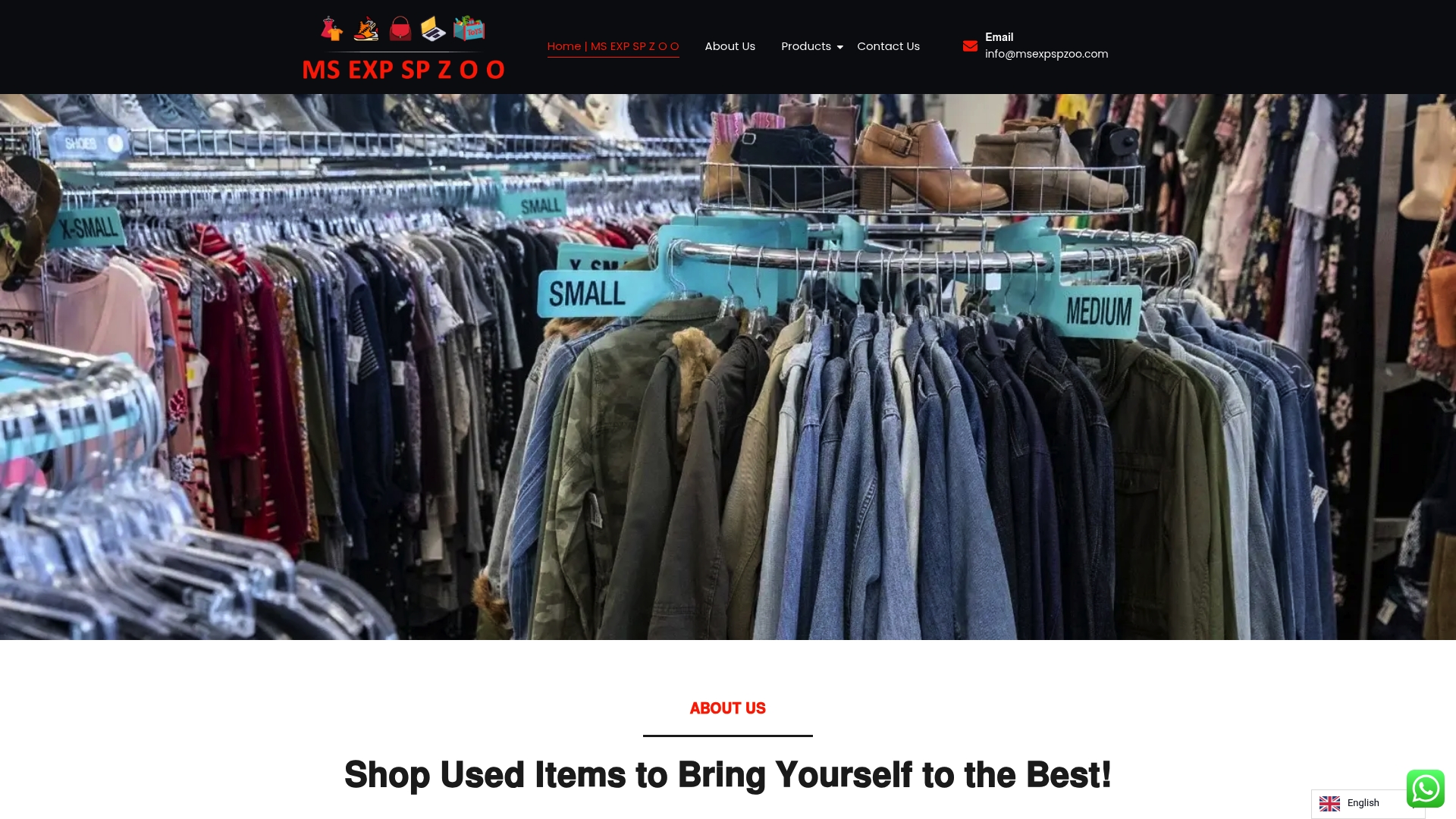
Msexpspzoo supplies bulk used clothing in a range of category and seasonal mixes, alongside used shoes and recycled industrial wiping rags for buyers building out a broader wholesale assortment. Shipping runs to more than 40 countries, and the company’s track record with long-term partners reflects consistent quality and dependable communication on repeat orders.
To get a quote or request a sample, reach out through the used clothing page and specify your target mix (seasonal, category, or brand-frequency preference), your desired box or pallet weight, and whether you’d like a trial box before committing to a larger order. Having those details ready when you inquire speeds up quoting considerably and gets you a real answer instead of a generic price list.
Sources
FAQ
What Does “Cream” Mean in Used Clothing?
Cream refers to selectively sorted used clothing in strong, resale-ready condition, with minimal stains, intact fastenings, and a presentation close to display-ready. It’s a trade term rather than a certified industry standard, so quality still depends on the individual supplier’s sorting process.
Where Can I Buy Cream Grade Clothing?
You can source cream grade clothing directly from wholesale exporters that specialize in sorted used apparel, including Msexpspzoo, which ships bulk boxes and pallets worldwide. Always request a trial box or sample order before scaling to a larger purchase from any new supplier.
What Is the 3-3-3 Rule for Clothing?
The 3-3-3 rule is a personal capsule wardrobe method, not a wholesale grading standard, so it doesn’t apply directly to bulk sourcing decisions. It generally refers to building a small wardrobe from a limited number of pieces across a set period, which is unrelated to how suppliers grade used clothing lots.
What Clothing Brand Has the Highest Quality?
There’s no single brand that defines highest quality across the used clothing wholesale market, since quality in this category depends on garment condition and fabric, not brand alone. Buyers evaluating cream lots often use fabric and material claims, such as those on Merino wool product pages, as a proxy for individual garment value inside a mixed assortment.
Can I Order a Sample Before Buying Cream Grade in Bulk?
Yes, most established suppliers offer a trial or sample box before you commit to pallet-level volume, and it’s the single most effective way to verify a supplier’s actual sorting standard. Ask for recent photos or video of real bales, not stock imagery, before placing that first order.