Toy bale grading is the way a supplier sorts used toys into lots by condition, completeness and category before pressing them into bales. Unlike clothing, there is no single industry scale. A grade only means something once it is defined in writing: what share of the bale is sellable, what is missing or broken, and which items were removed for safety reasons. This guide shows you how to read a grade, what to inspect on arrival, and what to demand from any supplier, including us.
A quick note if you landed here by accident: searches for this phrase are often crowded with farm hay bales and toy tractors. This article is about used toys sold wholesale in bales, for resellers, market traders and importers.
TL;DR
- A toy grade is a promise about condition, completeness and sellable percentage. Get all three defined in writing, because letters like A, B or C mean different things at different suppliers.
- A bale is a shipping unit, not a quality measure. Weight tells you freight cost, not what is inside.
- Safety sits outside grading. A toy in perfect condition can still be illegal to sell if it is recalled or fails lead and small-parts rules in your market.
- Hard toys, soft toys and bric-a-brac behave differently in a bale. Grade and inspect them separately.
- Buy a paid sample first, open it, count, and compare the result with the written spec before you commit to a container.
Table of Contents
- Why toy grading is not clothing grading
- What a toy grade should tell you
- A bale is a container, not a quality mark
- Grading hard toys, soft toys and bric-a-brac
- Safety is not a grade
- What to inspect when a bale arrives
- Perspective: how we think about toy grades
- Put it in the contract
- Buying used toys from us
- FAQ
- Sources
Why toy grading is not clothing grading
If you already buy used clothing, you know the logic: pieces are sorted by wear, stains and resale potential. We explain that approach in our guide to how used clothing bale grades work. Toys follow a different logic.
Fabric wear is not the main question. For toys, the questions are:
- Is it complete? A puzzle with missing pieces, a figure without its accessories, a playset with half its parts: all look fine in a photo and sell badly.
- Does it work? Anything with a mechanism, sound or light needs a function check.
- Is it clean and intact? Cracks, sticky residue, mold smell, chewed edges and heavy marker damage cut resale value fast.
- Is it safe to sell where you operate? This is a legal question, not a cosmetic one, and we cover it below.
A clean-looking toy with dead electronics or missing parts is not a first-grade item, whatever it looks like on the shelf. That is the single most useful rule to carry into any negotiation.
What a toy grade should tell you
Because there is no universal standard, treat any grade label as a blank form that the supplier must fill in. A usable toy grade specification answers these points.
| Spec item | What to ask | Why it matters |
|---|---|---|
| Category | Hard toys, soft toys, mixed, or bric-a-brac? | Each category has a different margin, cleaning cost and failure rate |
| Sellable share | What percentage should be resale-ready on opening? | Sets your real cost per sellable piece |
| Completeness | Are sets with missing parts excluded? | Avoids paying freight on unsellable pieces |
| Function | Are battery or electronic items tested, or removed? | The riskiest items for returns and complaints |
| Exclusions | Which items are pulled (recalled, broken, damaged, unhygienic)? | Shows the supplier is actually sorting |
| Bale weight and size | Net weight, bale dimensions, pieces per bale (estimate) | Lets you calculate landed cost |
| Labeling | Weight, category and origin marked on each bale | Needed for customs and inspection |
For weights, the same arithmetic we use for garments applies: a bale’s weight must be converted into a rough piece count before you can compare offers. Our article on converting clothing bale weights to pieces shows the method. For toys, piece counts swing even more because a kilo of plastic cars and a kilo of plush animals contain very different numbers of items.
A bale is a container, not a quality mark
Buyers often treat the bale as if it carried information. It does not. Even in hay, where the word comes from, one source states plainly that one bale is not a unit of measurement and that pricing should rest on actual scale weight. The same applies to toys: a 45 kg or 100 kg bale tells you transport volume and nothing about contents.
Two practical consequences follow.
- Price per kilo is meaningless without a grade. Two suppliers can quote the same per-kilo price on very different contents.
- Weigh and label. Import protocols for used textiles and footwear in Kenya, for example, expect each bale to be legibly labeled with weight, category and origin. Toys are not covered by that particular document, but the labeling habit is a good benchmark for any bale you accept, and it makes customs conversations easier.
Grading hard toys, soft toys and bric-a-brac
Bale composition matters, so grade each family on its own terms.
Hard toys
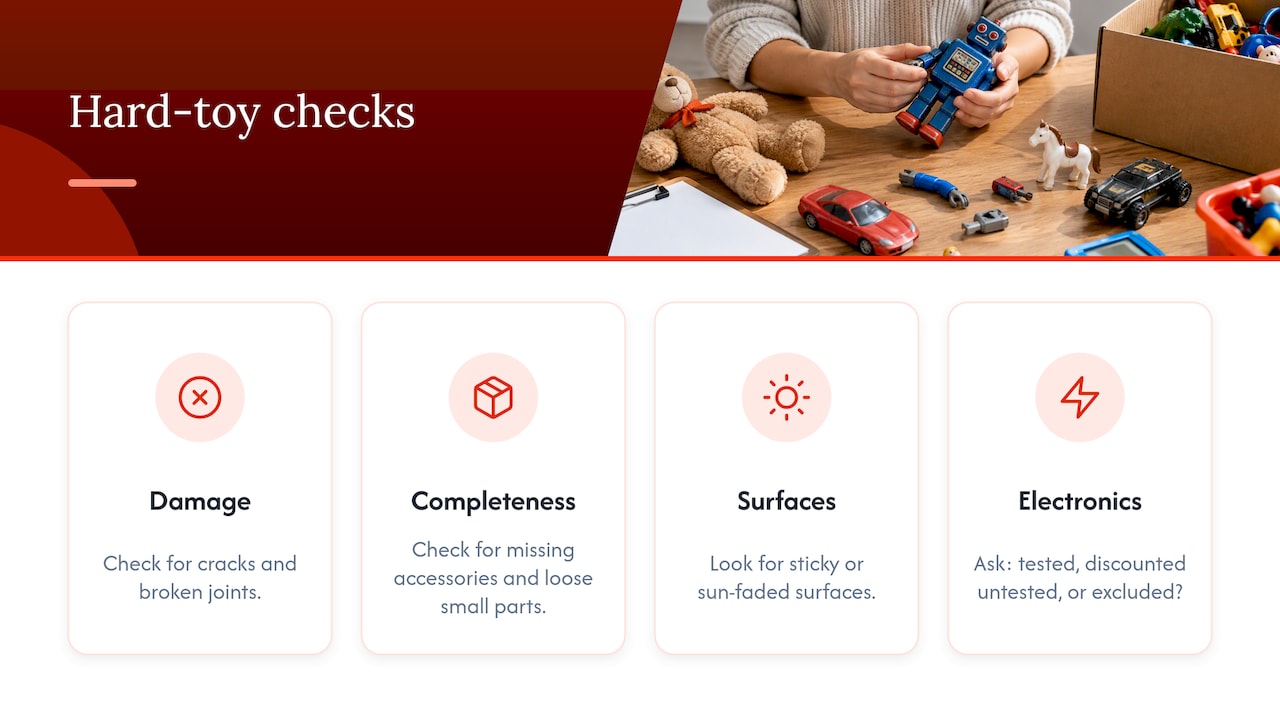
This covers plastic and wooden items: action figures, building blocks, toy vehicles, playsets, ride-ons and similar. Check for cracks, broken joints, missing accessories, sticky or sun-faded surfaces, and loose small parts. Items with electronics deserve their own line in the spec, since they are the likeliest to fail. Ask whether they are tested, sold untested at a discount, or excluded.
Our used hard toys category is where this kind of stock is handled.
Soft toys
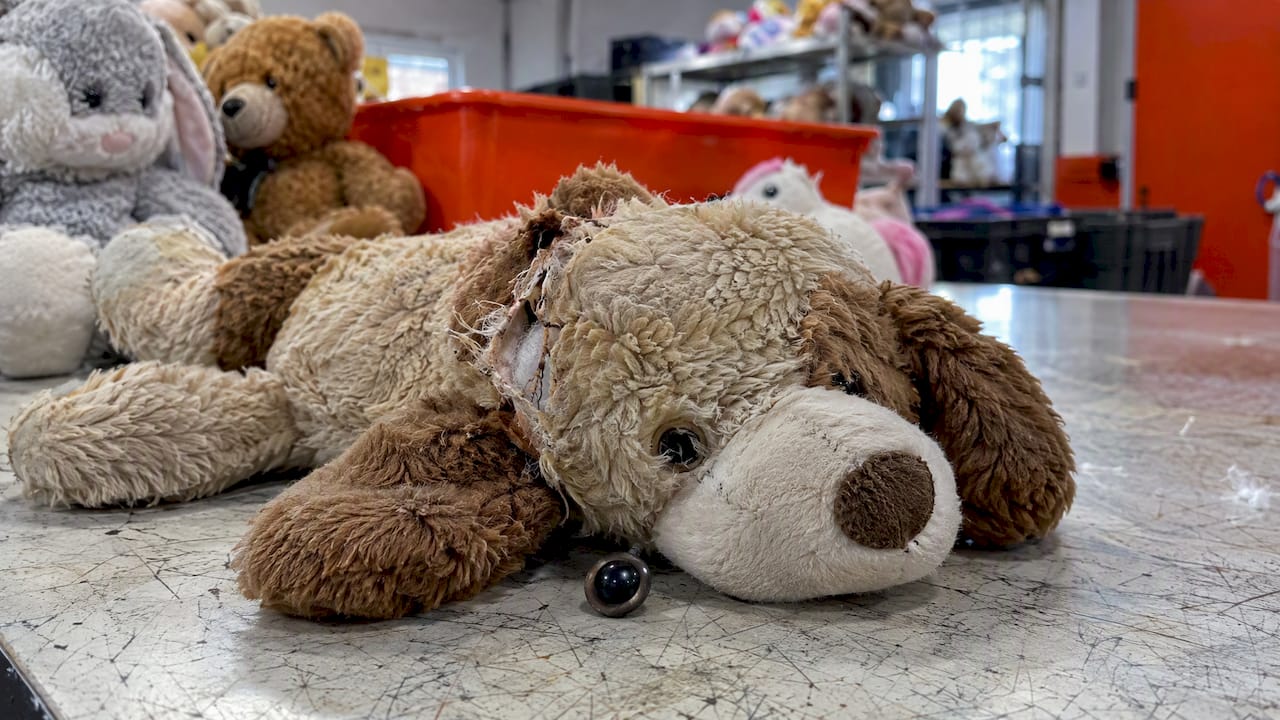
Plush and stuffed toys are judged by cleanliness, odor, seam integrity, stuffing condition and eyes or noses that could detach. A soft toy with a loose plastic eye is a safety problem for young children, not just a defect. Ask how the supplier handles hygiene and what happens to items with stains or smell. You can see our range at used soft toys.
Bric-a-brac
Mixed household and decorative items are the hardest to grade because the contents are varied by design. Here the useful spec is the exclusion list and a clear statement of what the bale does not contain. Look at bric-a-brac as a separate buying decision with a separate inspection routine, not as filler added to a toy lot.
Safety is not a grade
This is where many first-time buyers get hurt. Condition grading says how a toy looks and works. It says nothing about whether you may legally sell it.
In the United States, the Consumer Product Safety Commission’s guide for resellers is direct on several points. Selling a recalled product is a violation of federal law, so having recalled items in inventory is a problem even if you never sold one. The same guide says children’s products may not exceed 100 parts per million of total lead in any accessible component, and it notes that the agency does not require resellers to test their products. That last point cuts both ways: you are not forced to run lab tests on every lot, but you are still responsible for what you sell.
Other markets have their own rules. Toy safety frameworks such as EN71 in Europe and ASTM F963 in the United States are outlined in a toy safety requirements brochure from TÜV SÜD, and they cover physical hazards, flammability and warnings among other things. If you export on to a third country, check that country’s rules, not just the one where the bale was packed.
What this means for grading:
- Age matters. Advocacy research on toy safety warns that production date and product history can matter more than appearance. Older painted or plastic toys may not meet current limits even when they look excellent.
- Small parts and magnets. Items with detachable small parts, strong magnets or accessible button batteries need special attention if they are meant for young children.
- Recalls. Ask the supplier how recalled items are screened out, and check the recall database of your own market for the brands that dominate your lot.
If you are selling in the United States, speak with a qualified product-safety or customs adviser about children’s product rules before you place a large order. For resellers in other countries, the equivalent is your national consumer safety authority or customs broker.
What to inspect when a bale arrives
A good grading spec is only useful if you test it. Use a repeatable routine.
- Check the outside. Weight, labels, bale integrity, wrapping damage, moisture or odor at the seams.
- Weigh it. Compare with the documented net weight.
- Open one or two representative bales, not the best-looking one. Photograph the contents as they come out.
- Sort into piles: sellable, needs cleaning, needs repair, incomplete, unsafe or non-compliant, and waste.
- Count and calculate the share in each pile against the spec.
- Test a sample of functional items with fresh batteries.
- Record everything. Photos, counts and weights are your evidence if a claim is needed.
One caution. Take your sample from several places in the bale. Compression packs the best items on top for display only if someone arranges them that way, and you want to know the lower layers too.
The same discipline is described for garments in our article on mixed bale grading and the four grades to check before paying, and the contamination checks in bale contamination control apply equally to toys: mold, pests, liquids and foreign material travel from one item to the whole bale.
Perspective: how we think about toy grades
We pack used goods for buyers in many countries, and our view is simple: a grade is only as good as the document behind it.
What we have learned from running a large warehouse of 133,000 square feet and working with importers and market traders is that disputes rarely start with bad intent. They start with vague words. One buyer hears ‘good condition’ and expects every set to be complete; the supplier means that nothing is visibly broken. A written spec closes that gap.
So we encourage buyers to do three things with us or anyone else:
- Ask for the category, bale weight, labeling and exclusions in writing before payment.
- Start with a sample lot, open it, and compare it with the spec.
- Tell us what your market sells. A trader who resells soft toys at weekly street markets needs a different lot than one who supplies shops with sorted, hard toys.
We would rather lose a first order because the spec was strict than win it with a promise nobody can check. Our packaging machinery helps us turn bales around quickly, but speed is no substitute for a clear description of what is inside.
— rodrigues
Put it in the contract
Grading language belongs in your purchase terms, not in a chat message. A short checklist:
- Category and description of contents
- Net weight per bale and number of bales
- Written exclusions (recalled, damaged, unhygienic items)
- Sellable-share expectation and how it is measured
- Inspection window after arrival and how claims are filed, with photos
- Documentation for customs: packing list, origin, labeling
- Payment structure that fits the risk
We cover this approach for garments in our 45 kg bale checklist for used clothing contracts, and the payment side in payment terms that protect you. Most of it carries over to toys without change.
One more practical point: calculate landed cost per sellable piece, not per kilo. Freight, duties, cleaning, discarded items and your own handling all go into that number. Our method for handbags in landed cost on 45 kg handbag bales works the same way for toys.
Buying used toys from us
We sell used goods by the bale to businesses only: retailers, resellers, wholesalers, importers and market traders. We do not sell to individual shoppers. For toys, you can start with used hard toys or used soft toys, and tell us your target market, bale size and what your customers buy. We will describe what we can supply and how it is packed and documented. Prices are not published on the site, so contact us through our main page to ask for a quote.
If you also trade in other categories, we handle used clothing, used shoes and used purses and bags, which can be combined into one shipment to reduce freight per item.
FAQ
Is there an official grading standard for used toy bales?
Not one we can point to. Grades such as A, B and C are set by each supplier, so the same letter can mean different things. That is why you should ask for the sellable percentage, the exclusion list and the completeness rule in writing.
Can I sell used toys in the US without testing them?
The CPSC’s guide for resellers states that the agency does not require resellers to test their products. You must still avoid recalled items and follow limits such as the 100 ppm lead cap for children’s products. For a large import, ask a product-safety adviser or customs broker to review your lot.
How many toys are in a 45 kg bale?
It depends entirely on the category. A bale of plush toys and a bale of small plastic vehicles will differ greatly in piece count. Ask the supplier for an estimated range for your category and verify it by counting a sample.
Should I buy a mixed bale or a single-category bale?
If you are testing a new market, a mixed bale shows you what sells. Once you know your customers, single-category bales give a more predictable grade and simpler pricing. Either way, the exclusions and sellable share should be specified.
What should I do if a bale does not match its grade?
Stop sorting for sale, photograph the bale and its contents, weigh and count the piles, and contact the supplier within the inspection window in your contract. Clear records make a claim much easier to settle.
Sources
- Hay Bale Weight Calculator, Hay Tools
- Protocols for importation of used textiles and used footwear into Kenya, tralac
- Resellers Guide to Selling Safer Products, CPSC
- Toy safety requirement, TÜV SÜD
- Trouble in Toyland 2021, PIRG