
Sneaker bales are graded by condition, usually into three tiers: near-new (Cream or Grade A), visibly worn but wearable (Grade B) and heavily worn or damaged (Grade C). The catch is that no universal standard defines those labels. Each exporter sets its own, so the grade on a listing tells you less than the evidence behind it: net weight, pair count, size split, sole condition and a pre-shipment video or sample. This guide shows how to read a grade, what to check before you pay and how to compare offers on equal terms.
TL;DR
- Grades A, B and C are the exporter’s own labels. Judge a bale by its measurable condition, not by its letter.
- Ask for net weight, pair count, size breakdown, sole and upper condition, and a video or physical sample before committing.
- Mixed-grade bales carry a share of material that cannot be resold as footwear, so price them with that loss built in.
- Destination rules (Kenya’s pre-export verification, India’s restrictions, EU sorting documentation) can stop a shipment whatever the grade says.
- Start with a trial order, then scale once the sample matches the delivery.
Table of Contents
- How sneaker bale grading works
- Why the same letter means different things
- The four zones to inspect on every sneaker
- What is actually in a mixed bale
- Pricing: what you can and cannot compare
- How to verify a supplier before you pay
- Compliance can override the grade
- Our perspective
- Where to buy sneaker and shoe bales
- A sensible first order
- FAQ
- Sources
How sneaker bale grading works
A sneaker bale is a compressed, sorted lot of used athletic footwear sold by weight. After collection, shoes are sorted by type (athletic, casual, boots, children’s), paired, checked and assigned a grade. The bale is then packed and shipped. The quality of that sorting step decides whether the bale makes money for you.
The trade commonly uses three tiers:
| Grade | Typical description | What it means for resale |
|---|---|---|
| Cream / Grade A | Near-new or lightly worn, intact soles, clean uppers, no structural defects | Sells at the highest price per pair; suits brand-focused retail and online resale |
| Grade B | Visible wear, scuffs, some sole abrasion, still fully functional | The volume tier for market stalls and price-sensitive buyers |
| Grade C | Heavy wear, minor defects, repair or refurbishment needed | Low price; useful only if you can repair, or sell into very price-driven channels |
Many suppliers also use a fourth bucket for end-of-life items. Those pairs have no resale value as shoes and are headed for recycling or disposal.
Exporters commonly attach tread-depth percentages to these tiers, for example 85% or more remaining on Grade A and a lower band for Grade B. Treat those as a supplier’s own benchmark, not a rule. One seller’s “Grade A” can be another’s “Grade B”, and a number printed on a spec sheet only counts if someone actually measured it.
Why the same letter means different things
Grading is shaped by who buys. A UNCTAD brief on second-hand clothing in Uganda and Tanzania, based on a survey of 54 importers, describes quality in terms of appearance, condition, fashion, functionality and durability, judged against what local customers want. A pair that is excellent stock in one market can be slow in another because of style, size range or climate.
For you, that means three things:
- Define the grade in your own words. Write down what you will accept: sole wear, midsole yellowing, odor, missing insoles, mismatched pairs.
- Match brands and styles to the market. A clean bale of unwanted styles still sits on the shelf.
- Compare suppliers on specifications, not labels. Two “Grade A” offers at different prices are rarely the same product.
Our own breakdowns of how grades behave in other categories show the same pattern. See our guides to used clothing grading and sportswear bale grades, where the sellable share falls sharply from one grade to the next.
The four zones to inspect on every sneaker
When you open a sample, check the same four zones on every pair. It keeps your judgment consistent and gives you a way to dispute a delivery.
Outsole and midsole
Look for tread depth, flattened heels, cracked or crumbling foam and separation between sole and upper. Cracking midsoles are a classic hidden defect, especially on older pairs: they look fine on the shelf and fail within weeks. Grade B can tolerate cosmetic sole wear. It should not tolerate a sole that is coming apart.
Upper
Check for tears, stained mesh, peeling coatings, fraying at the toe box and heavy creasing. Dirt that washes out is a cleaning job. Torn or delaminated material is a downgrade.
Interior
Insoles, linings and heel counters tell you how much a pair was worn. A torn lining or a collapsed heel makes a shoe uncomfortable, which hurts resale however good it looks outside. Odor is a real defect too. Ask how the exporter treats and ventilates stock before packing.
Pairing and sizing
A lone shoe is worthless. Ask what share of the bale is matched pairs and what the size distribution looks like. Bales dominated by one narrow size band can be hard to sell through, however clean the shoes are.
What is actually in a mixed bale
Mixed-grade lots are cheaper per kilo, but they hide more uncertainty. The UNCTAD brief’s sampling of imported second-hand clothing found that mixed-grade bales typically contained a few percent of material that was not resalable as intended, including rags and textile waste. That study covers clothing, not shoes, but the principle carries over: the lower the sorting discipline, the more unsellable weight you pay for.
Here is a simple way to check whether a mixed bale makes sense. Suppose you buy a bale and a given share is unsellable. Your real cost per sellable pair is the bale price divided by the pairs you can actually sell. Run that number for each offer. A bale that looks 15% cheaper per kilo can cost more per sellable pair once rejects, repairs and slow sizes are counted.
Pricing: what you can and cannot compare
Bales are sold by weight and grade, not by a fixed pair count, and public listings show a wide spread. Per-pound and per-kilo prices differ by origin, grade, brand mix and order size, and many listings quote prices that exclude freight, duties and inspection. A UNCTAD study of the Ugandan market found supply from the UK was 14% more expensive than from China, which shows that origin alone moves cost, before quality is even considered.
So when you collect quotes, put them in one table:
- Price per kilo or pound, and the Incoterm (FOB, CIF or other)
- Bale weight and packaging (sacks, bales, vacuum packed)
- Estimated pairs per bale and size split
- Grade definition in writing
- Payment terms and who bears the cost of a shortfall
Payment structure matters as much as price. Our guide to payment terms for used clothing explains how splits can protect you while a first order proves itself.
How to verify a supplier before you pay
Reliability in this trade comes from process and documentation. EuRIC, the European recycling federation, publishes specifications for the handling and sorting of textiles that describe sorting as a complex, multi-step process aimed at reuse first. Use that as a model for the questions you ask a footwear supplier.
A seven-point checklist
- Sorting process. Who sorts, in how many stages, and how are rejects removed? Human inspection at several stages is the norm worth looking for; speed claims alone are not.
- Written grade definition. Not “Grade A” but what defects are allowed.
- Pre-shipment evidence. A video of the actual bale being opened, or a physical sample from the same lot.
- Manifest. Net weight, estimated pair count, brand and type mix.
- Packing. Bale weight, strapping, moisture protection.
- Documentation. Certificates, treatment records and the paperwork your destination requires.
- Complaint handling. What happens if the delivery does not match the sample?
The absence of pre-shipment verification or a clear sorting protocol is the biggest warning sign, whatever the supplier calls its grades. If a seller will not show you a sample or a video, you are being asked to pay for an assumption.
The same logic applies to resale businesses in general. A guide to wholesale business best practices makes the point that supplier vetting and inventory reliability decide whether a reseller’s margins hold, and a footwear bale is no exception.
Compliance can override the grade
A flawless Grade A shipment still fails if it is stopped at the port. Rules differ by destination, so check the current requirements before you finalize an order.
- Kenya. Used textiles and shoes are subject to physical examination and certification under the Pre-export Verification of Conformity (PVoC) requirements.
- India. Used goods are a restricted import, and an Indian customs circular makes clear that unauthorized imports of restricted items can be confiscated and penalized.
- European Union. The revised Waste Framework Directive entered into force in October 2025 and sharpens the line between reusable textiles and waste, which affects the paperwork that must travel with exports from EU countries.
If your goods need treatment, read our compliance guide to disinfecting used shoes. For a map of restrictions by country, see used clothing import bans. If you import into the United States, our guide to supplier certificates U.S. importers need covers the documents that help you avoid holds.
UNCTAD experts also argue that policy focused on better sorting and upcycling works better than blanket bans. For a buyer, the practical lesson is that clean sorting and clear documentation are what keep a trade route open.
Our perspective
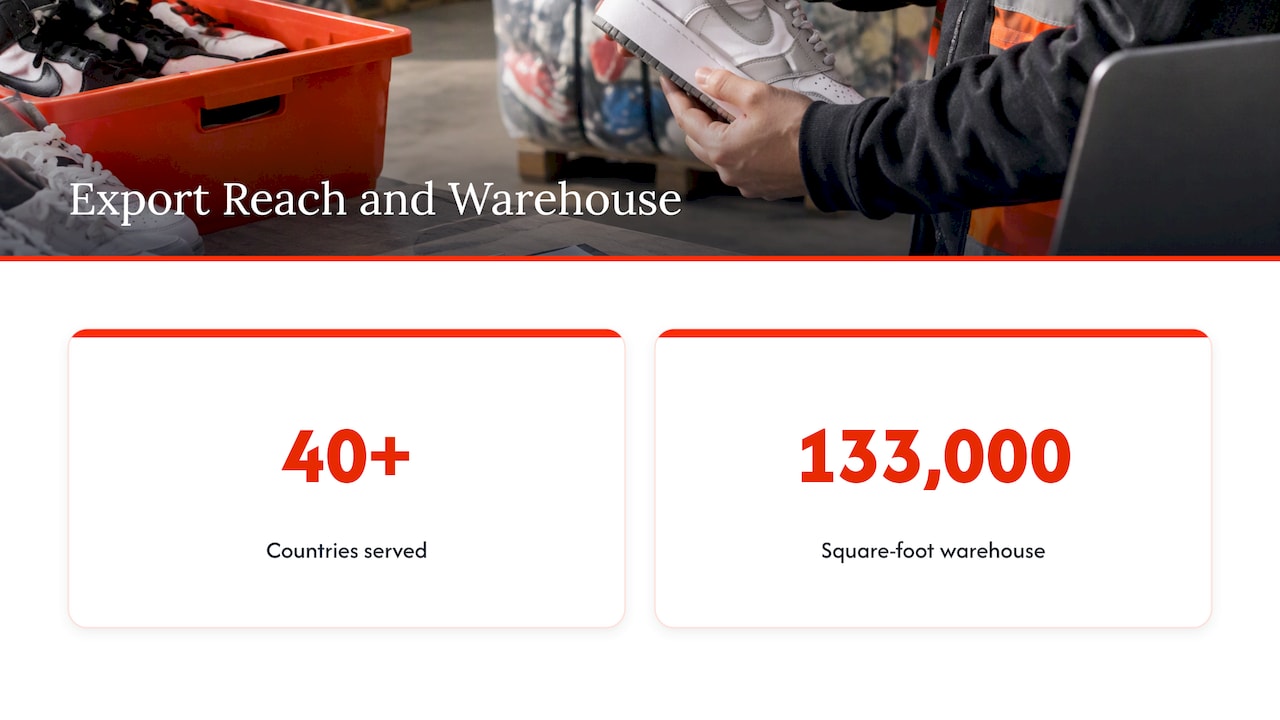
We export used clothing, shoes, bags and other second-hand goods from Poland to buyers in more than 40 countries, and the same complaint comes up in this trade again and again: the bale did not match the picture. Our view is that a grade is a promise, and a promise needs proof.
We use advanced machinery in packaging, and that is where speed belongs: pressing, wrapping and turning bales around quickly so a shipment does not wait in the queue. Quality judgment is a different job. Machines make a bale faster; they do not tell you whether a midsole will crack. We would never ask a buyer to trust speed as a substitute for inspection, and we would not trust a supplier who did.
What we think a serious buyer should insist on is simple. Ask for the grade in writing. Ask for the manifest. Ask to see the goods before they ship. A supplier that welcomes those requests has nothing to hide, and one that dodges them has told you what you need to know. With a warehouse of 133,000 square feet, we can hold a broad range of stock, so you can match a lot to your market instead of settling for whatever is left.
— rodrigues
Where to buy sneaker and shoe bales
If you resell footwear, our used shoes range is the place to start. We supply shoes in bulk bales for retailers, wholesalers, importers and market traders, packed on advanced machinery and shipped worldwide. Send us your target market, preferred grade description and volume, and ask for a sample or video before your first order. You can also compare formats with our used clothing bales, or read how vetted warehouses quote export orders in our guide to used footwear export quotes.
A sensible first order
Start small enough that a bad bale will not hurt, but large enough to be representative. A workable sequence:
- Request the written grade definition and a sample video from the exact lot.
- Confirm destination documentation and treatment requirements.
- Agree payment terms that let you verify the first delivery.
- On arrival, open several bales and sort a counted portion by your own zones: sole, upper, interior, pairing.
- Record your sellable percentage and compare with the sample.
- Reorder only if the result matches. If it does not, send the evidence the same day.
Vintage and collectible footwear grades along different lines again. Our piece on the three zones that decide vintage footwear grades is worth reading before you buy older stock. If you are building a sustainable line more broadly, our vetting checks for sustainable wholesale fashion apply here too.
FAQ
What are the different grades of sneakers?
Most sellers use three: Cream or Grade A for near-new pairs, Grade B for visibly worn but functional pairs and Grade C for heavily worn or damaged pairs that need repair. A fourth, end-of-life category covers pairs with no resale value. The definitions are each exporter’s own, so always get them in writing.
What is a B grade sneaker?
A Grade B sneaker is fully wearable but shows clear use: scuffs, moderate sole wear, light staining or creased uppers. It should not have broken soles, torn uppers or serious odor. It sells well in price-driven markets where function matters more than appearance.
How much is one bale of shoes?
There is no single price, because bales are sold by weight and grade and the cost depends on origin, brand mix, bale size and freight terms. Public listings show a wide range, so compare quotes on price per kilo or pound, the Incoterm, grade definition and estimated pairs. We do not publish fixed prices for our bales; contact us with your volume and target market for a quote.
How can I tell if a Grade A claim is real?
Ask for a video of the actual bale being opened or a physical sample from the same lot, plus a manifest with weight, pair count and size split. Check sole wear, uppers, interiors and pairing yourself. If a supplier refuses, treat the grade as unverified.
Sources
- UNCTAD brief on second-hand clothes in Uganda and Tanzania (2024)
- EuRIC handling and sorting specifications for textiles (2021)
- Kenya protocols for importation of used textiles and footwear
- India customs circular on restricted imports
- European Commission: revised Waste Framework Directive enters into force
- UNCTAD: seizing opportunities in the circular economy of textiles