
A mixed bale is a trade lot that blends items from several grades and categories, so you should expect a share of immediately sellable pieces alongside repairable and low-value ones. Plan for screening and sorting costs before you price your resale. EuRIC and the Textile Recycling Association set the industry reference points.
TL;DR:
- Grade labels are trade shorthand, not universal standards, so get each tier defined in writing and confirm whether premium pieces were removed before pricing.
- Draw samples from the top, middle, and bottom of several bales; a single pile can hide variation across the shipment.
- A European sorting center found 74.9–79.8% of incoming textiles reusable, but that result describes one facility’s input, not the yield of a finished mixed bale.
- Before payment, request the grading rubric, collection details, and uncropped photos of 5–10% of the lot, then define rejection thresholds and inspection rights in the contract.
Table of Contents
- 1. What “mixed” means in trade and which bale formats to ask for
- 2. How the grade tiers differ: crème, A, B and C
- 3. How graders judge condition and how sampling should work
- 4. What a mixed bale realistically yields
- 5. A buyer’s checklist for verifying grading before you pay
- 6. Industry standards that reduce your risk
- 7. Why we say sample first, then sort
- 8. Mixed bales from our warehouse, with samples you can check first
- FAQ
- Sources
1. What “mixed” means in trade and which bale formats to ask for
In wholesale, “mixed” describes an assortment: garments from different categories and different quality levels pressed together. That is different from a single-category bale (say, only denim) or a hand-sorted lot where a grader has already pulled items to a defined standard. When a seller writes “mixed grade” on a listing, you should read it as “the spread is wide, so ask what the spread is.”
Format matters because it drives shipping cost, inspection effort and landed cost. Buyers commonly ask for these specifics:
- Bale weight: Bale sizes vary, and a stated weight lets you calculate cost per kilo and per piece.
- Strapping: machine-strapped bales hold shape through handling, and loose or uneven straps are an early sign of rushed packing.
- Vacuum versus non-vacuum packing: vacuum packing cuts volume and freight cost but makes opening the bale for inspection a bigger job. Our guide on preventing port holds on vacuum-packed used clothing covers what customs officers tend to check.
- Covering and labeling: a clean outer wrap, a tag and a stated content description make a lot easier to inspect and clear.
Packaging standards in other textile trades show why this is more than cosmetics. The cotton industry’s guide for bale standards defines Grade A and Grade B packaging conditions and explains that exposed lint, contamination or damaged packaging can lead to rejection. Clothing bales follow different rules, but the logic carries over: how a bale is wrapped tells you how carefully it was handled. For a deeper look at strapping and packing conventions, see our piece on CTU code packing specs and machine strapping.
2. How the grade tiers differ: crème, A, B and C
Grade names are trade shorthand, not a universal legal standard, so always ask a supplier to define each tier in writing. These are the definitions most buyers work with:
- Crème (premium): the highest-quality reusable items, often branded, current-looking or in near-new condition. Many sellers pull crème out before packing standard bales.
- Grade A: strongly sellable pieces with minimal wear, clean, intact and ready for retail with little or no preparation.
- Grade B: acceptable but lower in retail value, with light fading, minor pilling or small repairs that you can handle.
- Grade C (mixed): worn, stained, repairable or low-value items. This is the tier that typically fills the bottom of a mixed bale, and some of it ends up in recycling or wiper-rag streams.
The crème question deserves a direct conversation. The Textile Recycling Association’s specifications for charity shop clothing and textiles warns that separating crème items before sale devalues a bale, which makes transparency about crème content a standard negotiation point. If a bale is described as “mixed” and the crème has already been removed, your sample will look weaker than the original collection did, and your price should reflect that.
Fiber type and garment construction shift grades too. A heavily worn cotton T-shirt grades differently from a wool coat with the same wear, because resale value, repair options and recycling routes differ. Knits stretch and pill, denim hides wear better, and outerwear with working zippers holds value. Footwear and bags follow their own condition logic, which we cover in our used shoes and used purses and bags categories.
3. How graders judge condition and how sampling should work
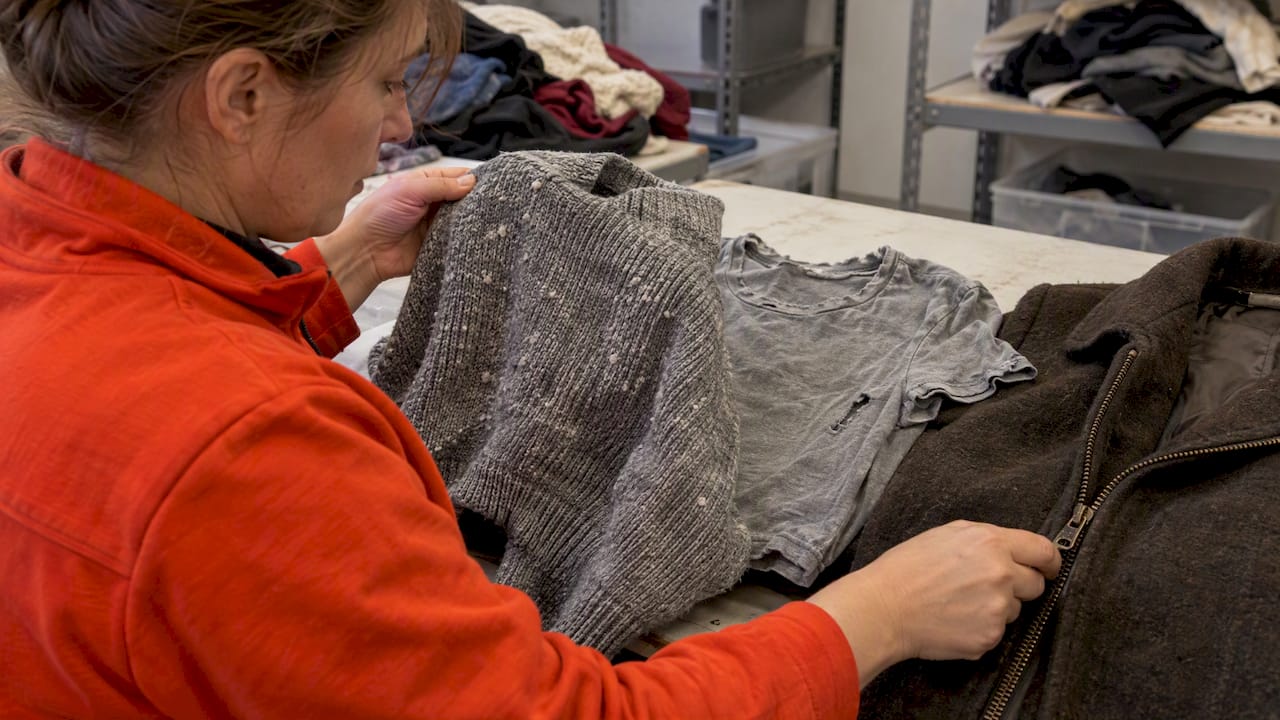
Graders work garment by garment, and they look for the same handful of problems every time. A trained eye checks for:
- Stains: set-in marks, underarm discoloration and grease spots that will not wash out.
- Tears and holes: seam failures, frayed hems and fabric damage.
- Odor: mustiness, smoke or chemical smells that signal storage problems.
- Repairs and missing parts: absent buttons, broken zippers, detached linings.
- Contamination: foreign debris, wet or moldy items, or non-textile material mixed in.
- Footwear signs: sole separation, heel wear, deformed uppers and interior damage.
Manual sorting remains the standard. EuRIC’s handling and sorting specifications state that manual inspection by trained professionals is mandatory, and its wider guidance describes high-quality sorting as full separation of reusable fractions from lower-quality materials and foreign debris. Sorting is a craft, and sorters usually need months of training before their calls become consistent.
Automated tools help with composition but not with the final reuse decision. The Sorting for Circularity Europe report shows that NIR-based Fibersort can sort large volumes by fiber type for recycling feedstock, but it cannot replace the manual checks that reuse markets require.
Pro Tip: Ask for your sample to be drawn from the top, middle and bottom of several bales rather than from one convenient pile, because pieces placed on top are rarely a fair picture of the whole.
Pre-removal of crème skews any sample toward the lower tiers, so ask whether crème was pulled before you judge what you see. Our walkthrough on sample-first checks for original and graded clothing shows how resellers run this step.
4. What a mixed bale realistically yields
No honest supplier can promise one yield for every mixed bale, and a fixed percentage on a spec sheet should make you ask questions. What you can do is understand what moves the number.
The best published reference we cite is a material-flow analysis of a European textile sorting centre, which found that 74.9–79.8% of received textiles were reusable. It also documented declining quality and a growing recyclable share between 2015 and 2017. That figure describes one sorting centre’s input, not a finished mixed bale, so treat it as context rather than a promise. Your own range should come from your supplier’s sample and your resale channel.
Factors that push yield up or down:
- Collection origin: door-to-door charity collections in affluent suburbs tend to produce higher-condition, lower-contamination bales than municipal drop-off bins, which is why buyers often ask where a lot was collected.
- Season: winter bales carry heavier items and a different wear profile than summer bales.
- Category: kids’ clothing often turns over fast but can carry stains, denim holds up well, and sportswear varies widely. Our breakdown of sportswear bale grades shows how wide that spread can get.
- Contamination: wet, moldy or non-textile material lowers usable weight and can contaminate otherwise good pieces.
Budget for what comes after delivery as well: extra sorting time, minor repairs, cleaning, and disposal or recycling of pieces you cannot sell. Reject rates matter here, and our guide on cutting reject rates in bales with AQL checks explains how buyers keep them in check.
5. A buyer’s checklist for verifying grading before you pay
Run these steps in order, and keep every answer in writing:
- Ask for the grading rubric and any documentation on how sorters are trained. A supplier who cannot describe its tiers cannot be held to them.
- Request head-of-bale photos and packing tags, plus uncropped photos of 5–10% of the lot. Look for consistent wrapping, readable labels, and garments that match the stated category. For bags, photos buyers need to assess clean designer handbags show what a useful image set looks like.
- Ask where and how the goods were collected, because origin and method predict contamination and condition.
- Agree on an AQL-style acceptance rule and put the rejection threshold into the contract, so a failed sample has a defined consequence.
- Escalate when needed: call for an independent inspection if samples and shipped goods diverge, and refuse the shipment if the contract’s threshold is breached.
Warehouse conditions also affect what arrives, so see what to demand in used clothing warehousing specs. If you plan to import, check the rules for your market first, starting with our overview of whether you can legally import used clothing for resale.
6. Industry standards that reduce your risk
The advice above rests on documented practice, not trade folklore. EuRIC’s position papers call for separating reusable fractions from recycling streams and foreign materials, and for documenting sorting performance. The same handling and sorting specifications list recommended figures of roughly 310–360 kg/h for pre-sorting and 60–190 kg/h for fine screening. Those numbers show why trained sorters matter and why sampling should be standardized rather than improvised. Automated NIR sorting adds composition data, but reusability still needs human judgment.
7. Why we say sample first, then sort
Our warehouse and machinery let us pack bales quickly. In our experience two habits protect buyers most: always see sample proof before you commit, and always budget for sorting on your side, because even a well-graded mixed bale needs work before it reaches the rail. If you want to discuss your requirements, contact our team and we will walk you through them.
— rodrigues
8. Mixed bales from our warehouse, with samples you can check first
We supply bulk used clothing and related categories to buyers internationally, and our packing line is built for fast turnaround. Send us your target grade, bale size and destination to discuss your requirements before you order. Our customer support team handles the details, so start by requesting a specification sheet on our used clothing page.
FAQ
How many T-shirts are in a 100 pound bale?
The count depends on fabric weight, size mix and grade, so no single number applies to every bale. Lightweight cotton tees pack more pieces per pound than heavier or mixed-garment lots. Ask your supplier for an estimated piece count based on a weighed sample of the specific category.
What does “1 bale” mean in used clothing?
A bale is a compressed, strapped and wrapped package of used goods sold by weight. Bale sizes vary, so confirm the exact weight and packing method before ordering.
Where can I buy Y2K bales?
Y2K-style bales are usually sold by wholesalers who sort for era and category, such as vintage or branded lots. Our team can discuss sourcing for vintage items; contact us through our used clothing page to ask about availability and samples.
How should I read a supplier’s mixed-grade claim?
Treat it as a starting point for questions, not a quality guarantee. Ask for the grading rubric, collection origin and photos of a 5–10% sample, then compare what you see with what was promised.
Sources
- July 2 0 2 1 ( v 1)
- Full length article Evaluation of a European textile sorting centre: Material flow analysis and life cycle inventory
- SORTING FOR CIRCULARITY EUROPE
- A GUIDE FOR COTTON BALE STANDARDS