
For resellers who need export-ready bales or curated used-clothing inventory, the fastest route is an export-focused wholesaler rather than a general liquidation marketplace. Msexpspzoo fits that lane directly, with export-ready bale packing and fast turnaround built for international buyers. Read on for the category breakdown and a vetting checklist before you switch suppliers.
TL;DR:
- Export wholesalers like Msexpspzoo specialize in shipping bulk bales with consistent weight, strong packaging, and customs-ready documentation for international buyers.
- Verifying manifest accuracy, condition grading, and export logistics support is crucial to avoid costly surprises when switching suppliers.
- Location near major ports significantly impacts freight costs and delivery speed, especially for export-focused operations.
- Buyers should rate suppliers on manifest clarity, condition grading, shipping support, and references, with scores below 12 indicating a need for further questions.
- The best supplier choice depends on matching your business model to the supplier’s operations rather than simply choosing the lowest price or most popular platform.
Table of Contents
- What Are the Main Premierwholesaler Alternatives?
- How Do Sourcing Categories Differ in Practice?
- What Should You Check Before Switching Suppliers?
- Why Msexpspzoo Fits Export-Focused Resellers
- The Real Question Isn’t Which Supplier Is Best
- Ready to Source Export-Ready Bales?
- Sources
What Are the Main Premierwholesaler Alternatives?
Resellers looking for wholesale supplier alternatives generally land in one of five buckets. Each one solves a different problem, and none of them is universally “better.” The right pick depends on your order size, how much verification work you’re willing to do yourself, and whether you’re shipping domestically or across borders.
- Export wholesalers sell packed bales by weight and category, built for buyers moving inventory internationally. This is where Msexpspzoo operates, alongside other used-clothing and pallet exporters.
- Liquidation marketplaces and exchanges list pallets and truckloads from retailers, usually with manifests and photos attached. FindLiquidation is a working example of this category, with searchable listings and supplier reviews.
- Pallet brokers and auctions move inventory through timed bidding, often with pickup-only logistics that favor local buyers.
- Supplier directories and B2B marketplaces don’t sell inventory themselves. They connect you to sellers, sometimes for free. Wholesale Central charges no commission to browse listings, which makes it a solid first stop for price-sensitive buyers doing their own legwork.
- Direct-retailer liquidation programs sell returns and overstock straight from the source, usually in pallet or truckload minimums with strict eligibility rules.
Shopify’s rundown of small-business wholesale suppliers breaks these categories down further and matches supplier type to business model, which is worth a look if you’re still deciding where to focus.
Where does an export wholesaler like Msexpspzoo fit into this? It sits closest to the direct-retailer and liquidation categories in terms of bulk volume, but it’s built specifically for cross-border logistics: bale weight consistency, customs-ready documentation, and packaging density that survives ocean freight. That’s a different problem than sourcing a single truckload for a regional flea market, and it’s why “best wholesale platform” questions rarely have one right answer.
How Do Sourcing Categories Differ in Practice?
Each category comes with its own expectations for lot size, documentation, and buyer protection. Here’s what to actually expect once you start requesting quotes.
-
Export wholesalers. Bales typically run by weight (commonly measured in kilograms or pounds depending on the origin country) and by category, such as mixed clothing, shoes, or vintage. Packaging matters more than people assume: dense, machine-pressed bales ship cheaper per unit and survive handling better than loosely packed ones. Msexpspzoo uses advanced packaging machinery for exactly this reason, running a large warehouse that keeps turnaround fast even during demand spikes. Buyers should ask for sample photos and confirm export documentation before committing to a full container.
-
Liquidation marketplaces and exchanges. These platforms live and die on manifest quality. A manifest lists what’s actually in the lot, item by item or category by category, along with condition grades (new, refurbished, salvage, and so on). Some platforms hold an inspection window before payment clears, which functions like informal escrow. Others charge a commission on top of the lot price, so the sticker number isn’t the real cost. FindLiquidation’s directory is useful here because it aggregates supplier reviews, which helps you spot sellers whose manifests don’t match what shows up.
-
Pallet brokers and auctions. Timing drives everything. Auctions close fast, and pickup logistics often fall on the buyer, which eats into margin if you’re not local to the warehouse. Condition variability is the real risk: a pallet described as “shelf-pulls” can still include damaged boxes mixed in, so bidding blind on price alone is a common way to erode margin before the truck even leaves the lot.
-
Supplier directories and B2B marketplaces. These are discovery tools, not sellers. FitSmallBusiness’s roundup lists platforms like Faire, Alibaba, and SaleHoo alongside Wholesale Central, and explicitly recommends matching supplier type to your business model rather than picking whichever platform ranks first in search. A boutique buyer sourcing 50 curated units has almost nothing in common with a discount store buying 5,000 mixed units, even if both start their search on the same directory.
-
Direct-retailer liquidation programs. Eligibility usually requires a business license and sometimes a minimum purchase history. Lot definitions matter a lot here: “overstock” (unsold new inventory) behaves very differently in resale than “returns” (used or opened items with unpredictable condition). Some retailers only sell in full truckloads, which locks out smaller buyers entirely.
Pro Tip: Before you request a quote from any category, ask specifically whether the lot is sold “as-is” or with a documented condition grade. That one question filters out a large share of suppliers who won’t survive a repeat order.
One detail that gets overlooked: location near major shipping ports changes everything about logistics cost and speed. A supplier profile for Premier Wholesaler on FindLiquidation notes its Miami base serves both domestic resellers and international export buyers, which underscores how much port access shapes freight timelines regardless of which wholesaler you choose. If you’re comparing alternatives, ask every candidate supplier where they ship from and what that means for your specific destination country.
What Should You Check Before Switching Suppliers?
A supplier switch fails for predictable reasons, almost always tied to skipped verification steps. Run through this list before you place a first order with any alternative:
- Ask for a manifest or category breakdown, not just a total weight or unit count.
- Confirm condition grading terms in writing (new, refurbished, salvage, mixed).
- Request current photos of an actual lot, not stock images from a catalog.
- Check whether sample or trial orders are available before a full container commitment.
- Get return and refund terms in writing, including what happens if the manifest is wrong.
- Confirm shipping and freight options, including whether the supplier handles export documentation.
- Ask about customs support for your destination country specifically.
- Look for verified buyer reviews, not just testimonials on the supplier’s own site.
- Request two or three references from active buyers in a similar business to yours.
Red flags cluster around the same handful of issues: no real photos, manifests that use vague category names like “assorted goods,” no answer on shipping support, and references that can’t be verified independently. Any one of these alone might be a minor gap. Two or more together usually means walk away.
How you weight these criteria depends on your business model. A boutique reseller cares most about condition grading and sample availability, since a single bad lot damages a curated brand fast. A volume reseller cares more about consistent pricing and turnaround speed, since margin comes from throughput, not per-item quality. An international exporter needs to weight shipping and customs support heaviest, because a supplier with no export experience can turn a good deal into a stalled container at a border.
A simple scoring method works well here: rate each supplier 0 to 5 on manifest clarity, condition grading, shipping support, and reference verification, then add the scores. Anything below 12 out of 20 deserves more questions before you commit real money. Buyers who insist on manifests and photos consistently report fewer unpleasant surprises when the pallet actually arrives, which is really the whole point of vetting in the first place.
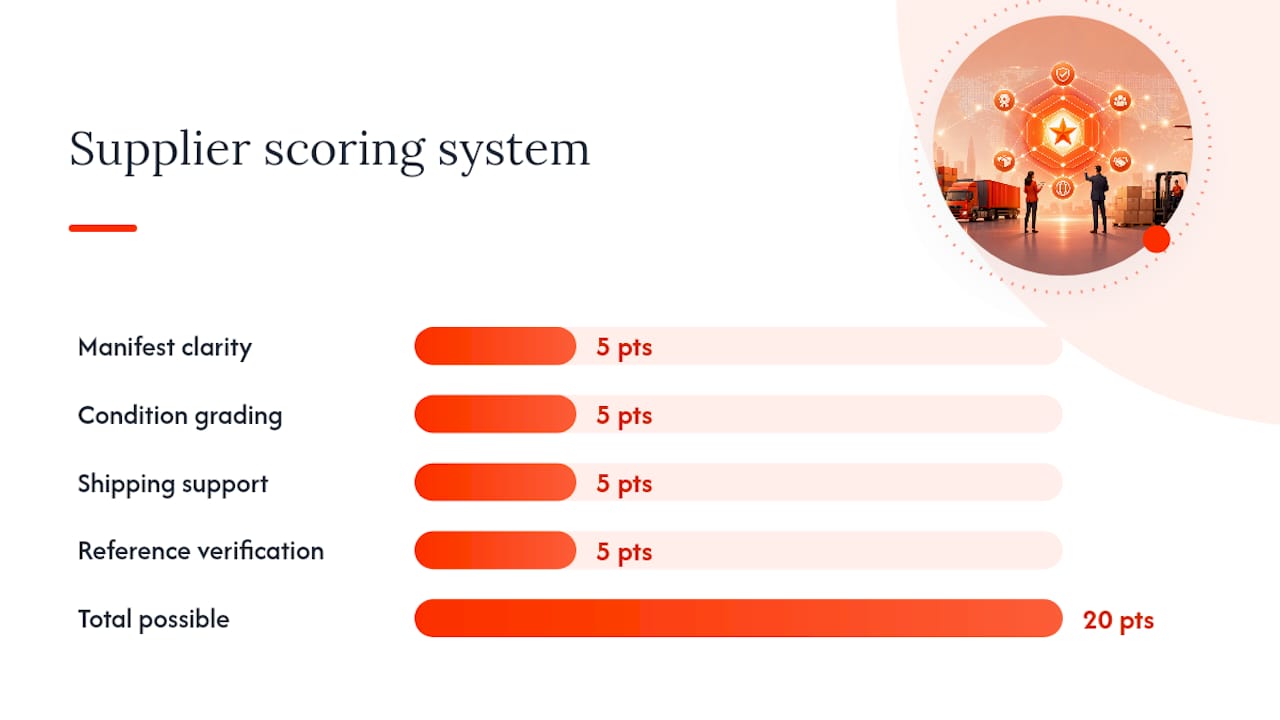
Anything scoring 15 or above is worth a trial order. From there, request an inspection or freight quote before scaling to full container volume.
Why Msexpspzoo Fits Export-Focused Resellers
An export wholesaler operating out of Poland and shipping internationally fits the category resellers should consider when Premier Wholesaler doesn’t meet their shipping needs or product mix. A large warehouse allows for a wide range of used clothing, shoes, purses, industrial wiping rags, and vintage goods to be supplied without delays often experienced by smaller operations during peak demand.
Advanced packaging machinery helps pack bales by weight and category with consistent density, which can speed customs clearance and keep freight costs more predictable for exporters. That’s a different value than a domestic pallet broker offers, and it’s exactly what buyers running used clothing programs or used shoes resale operations tend to need most.
Some long-term partners note trustworthiness and consistent product quality as reasons for repeat orders rather than frequently switching suppliers.
Buyers running organized pallet shipments or building export-ready clothing programs across multiple countries are the clearest fit here. If you’re evaluating whether Msexpspzoo belongs on your shortlist, the company’s main site has current contact details for quote requests.
The Real Question Isn’t Which Supplier Is Best
The conventional advice on this topic treats “best alternative” as a single answer, as if one platform should win for every reseller. That’s backwards. The research here points somewhere else entirely: the deciding factor isn’t the supplier’s name, it’s whether your business model matches how that supplier operates.
A boutique buyer chasing curated vintage lots has nothing to gain from a truckload broker built for volume discount stores, and a high-volume exporter loses money treating a single-pallet auction site like a primary supply line. What gets underrated in most guides is manifest and packaging quality. Buyers who skip that step end up re-vetting suppliers every few months, which costs more in wasted time than any commission fee ever would.
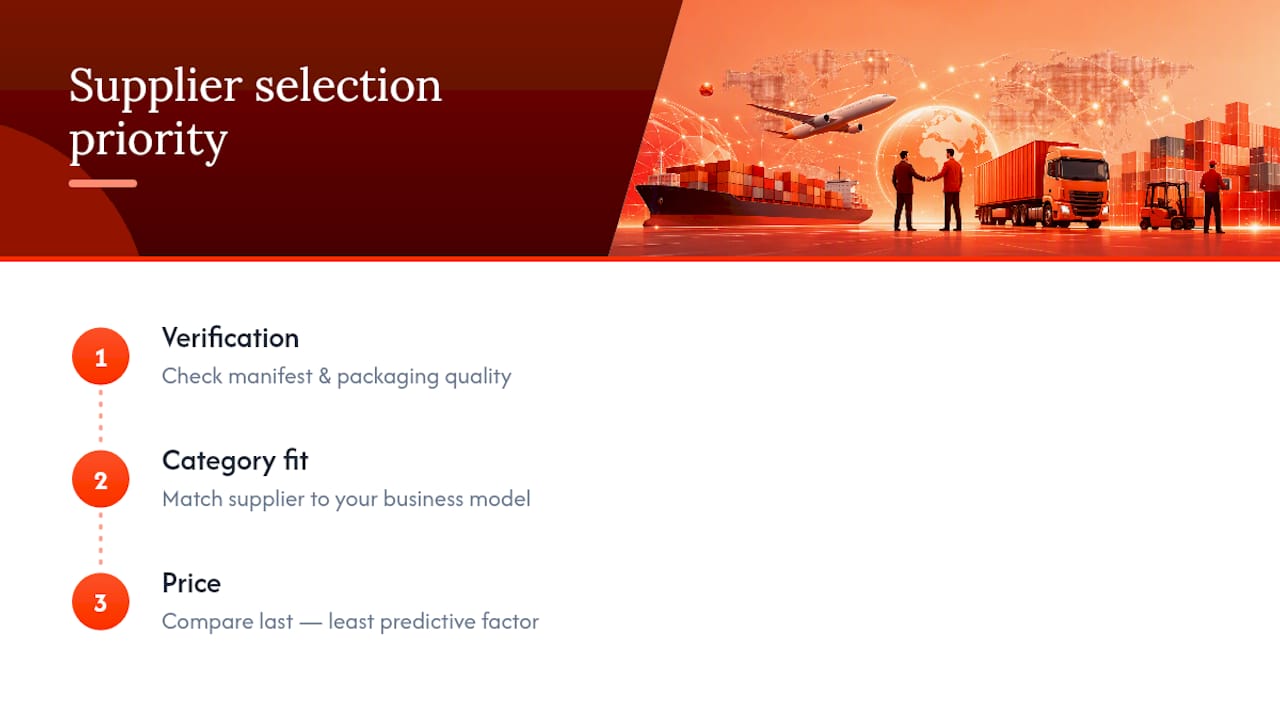
Prioritize verification first, category fit second, and price last. Price is the easiest variable to compare and the least predictive of whether a supplier relationship actually lasts.
— rodrigues
Ready to Source Export-Ready Bales?
This type of exporter suits resellers who need consistent bale weight, export documentation, and reliable freight timelines rather than brokers handling one-off pallet auctions. Operating from a warehouse in Poland, bales are packed to maintain density and category sorting, aiming to improve customs clearance consistency and margin predictability.
That consistency matters most if you’re scaling past a single container a month, or if you’ve been burned by manifests that didn’t match what actually showed up on the dock. Whether you’re building out a used-clothing resale line or diversifying into used purses and bags, request a quote through the used clothing bale page and get a real freight estimate before you commit to your next full order.
Sources
A handful of directories and explainers are genuinely worth bookmarking if you’re actively vetting suppliers right now.
- Wholesale Central
- Best wholesale suppliers for small businesses — FitSmallBusiness
- Best Small Business Wholesale Suppliers (2026) – Shopify
- Find Liquidation – Buy Liquidation Truckloads | Reviews & Supplier Directory