
Most commercial used-clothing shipments clear customs without issue under HS code 6309.00, but a handful of markets restrict or ban the trade outright, and small paperwork errors cause most of the delays that do happen. The single move that prevents most headaches is to confirm the exact 8 to 10 digit tariff code and destination-specific controls with a licensed broker before you book transport, then build your invoice and packing list around that answer.
TL;DR:
- Confirm the exact HS code and destination controls with a licensed broker before booking to avoid reclassification delays and penalties.
- Ensure all shipment documents—invoice, packing list, transport document, and certificates—are precisely matched to prevent customs exceptions.
- Be aware that countries like India and Indonesia impose strict restrictions or bans, requiring verification of current rules each shipment.
- Know that customs clearance involves pre-arrival filing, full declaration, duty assessment, inspection, and release, with potential delays at inspection stages.
- Use detailed, consistent documentation templates from trusted suppliers and brokers to reduce the risk of customs issues and shipment delays.
Table of Contents
- What HS Code Applies to Used Clothing Shipments?
- What Documents Do You Need for a Commercial Clearance?
- Which Countries Restrict or Prohibit Used Clothing Imports?
- How Does the Customs Clearance Process Actually Work?
- What Should Go on Your Pre-Shipment Checklist?
- How Does a Reliable Supplier Reduce Customs Risk?
- Why Prevention Beats Cleanup on Every Shipment
- How to Source Compliant Bulk Used Clothing
- Where to Verify Rules Before You Ship
- Sources
What HS Code Applies to Used Clothing Shipments?
Worn clothing and other used textile articles fall under HS code 6309.00 in the Harmonized System. That six-digit base is universal, but almost no country stops there. Customs authorities append two to four extra digits to separate categories like worn footwear, industrial rags, or mixed textile bales, and those extensions often carry different duty rates or trigger different permit requirements.
This matters because a shipment classified under the wrong extension can get flagged for reclassification, which means a hold, a reassessment, and sometimes a penalty. Before you ship, check:
- The Harmonized Tariff Schedule maintained by the USITC, which lists US duty rates and chapter notes for used and worn articles.
- Your destination country’s own tariff portal, since local statistical suffixes vary from the US version.
- The World Customs Organization’s HS guidance for the international base code if you’re shipping to a market without an easily searchable online portal.
A five-minute call to a customs broker who works your destination country routinely saves days of demurrage later.
What Documents Do You Need for a Commercial Clearance?
Every commercial used-clothing shipment needs a paper trail that matches, item for item, across every document. Mismatched weights or descriptions between the invoice and the packing list are one of the leading causes of customs exceptions worldwide.
- Commercial invoice. Itemized by category (mixed clothing, shoes, bags), with quantities, unit values, and total value stated in a consistent currency.
- Packing list. Bale counts, weights, and contents that reconcile exactly with the invoice.
- Bill of lading or air waybill. The transport document customs uses to confirm the shipment matches what was declared.
- Importer identification. Your Tax ID, EORI number, or equivalent, correctly formatted for the destination.
- Supporting certificates. Fumigation certificates, PVoC (proof of conformity) documents, or sanitary certificates where the destination requires them.
On valuation, customs generally applies the transaction value principle: what you actually paid, not a guess. CBP’s own guidance confirms used clothing imported for resale carries the same duty and marking obligations as new clothing, based on declared value. Undervaluing bales to shave duty is one of the fastest ways to trigger an audit.
Which Countries Restrict or Prohibit Used Clothing Imports?
Rules swing hard from one market to the next, and treating every destination as if it works like the last one is how shipments get stuck at the port. A country-by-country rules index covering commercial used clothing shows most jurisdictions allow the trade with conditions, several restrict it heavily, and a small number ban it outright.
A few patterns worth knowing before you quote a buyer:
- India frequently restricts or prohibits commercial used-clothing imports outside specific licensed categories. Confirm current licensing status before you commit to a shipment.
- East African states (Kenya, Tanzania, Uganda, Rwanda) take mixed approaches. PVoC certification and fumigation are common requirements, and enforcement intensity varies by port and by season.
- The EU and US generally permit used clothing under HS 6309 but apply hygiene, marking, and valuation rules on top of standard duty. CBP treats the goods the same as new apparel for entry purposes.
- Indonesia has implemented outright bans on commercial secondhand clothing imports in recent years. Treat any Indonesia-bound quote as a red flag until you verify current status directly.
- Mexico has seen carrier and customs holds on used-clothing loads. Secure written permit confirmation or broker sign-off before the container leaves origin, not after.
None of this is exhaustive, and rules shift. What holds steady is the principle: verify per shipment, per destination, every time.
How Does the Customs Clearance Process Actually Work?
A modern clearance runs through five predictable stages, and knowing where delays actually happen lets you plan around them instead of reacting to them.
- Pre-arrival entry summary. Filed before the vessel or flight arrives, this gives customs early visibility into what’s coming and lets them flag anything for review before the goods physically land.
- Full declaration. Your broker submits the complete package: invoice, packing list, transport document, and any certificates, tied to the HS code you confirmed earlier.
- Duty assessment and payment. Most administrations calculate duty on a CIF basis (cost, insurance, freight), so your declared value needs to reflect the full landed cost, not just the goods.
- Inspection, if flagged. Triggers include valuation inconsistencies, classification mismatches, sanitary concerns, or plain random sampling. Digitized clearance workflows have sped up routine entries but haven’t eliminated physical inspection for flagged loads.
- Release. Goods move to the importer once duty clears and any inspection closes out clean.
Pro Tip: Build in buffer time for your first shipment to any new destination. Storage and demurrage fees stack up fast once a container sits past its free days, and a first-time inspection almost always takes longer than a routine one.
What Should Go on Your Pre-Shipment Checklist?
Run this before you book transport, not after the container is already moving:
- Confirm the full 8 to 10 digit HS code with a licensed broker in the destination country.
- Write itemized descriptions that include material or fiber content where the destination requires it.
- Document genuine transaction value using receipts, purchase contracts, or comparable used-market pricing.
- Secure any required fumigation, sanitary, or PVoC certificates and attach them to the declaration package.
- Double-check that your importer-of-record details (EORI, Tax ID) match across every document.
Pro Tip: Keep one master template per buyer and update it shipment to shipment rather than rebuilding paperwork from scratch each time. Repeat mismatches between old and new filings are exactly what draws a broker’s attention, and not in a good way.
How Does a Reliable Supplier Reduce Customs Risk?
The documentation habits of your supplier matter as much as your own filing. A reliable supplier ships bulk used clothing, shoes, bags, and related goods internationally, using mechanized baling equipment across a large warehouse to keep turnaround fast and bale contents consistent from order to order.
Ask any supplier, Msexpspzoo included, for a detailed commercial invoice, an accurate packing list, and a written handling or fumigation statement before the shipment leaves. For repeat orders, set up a standing template with your supplier and your broker so each new shipment reuses the same verified structure instead of starting from zero. That consistency is what actually keeps a shipment moving instead of sitting on a dock.
Why Prevention Beats Cleanup on Every Shipment
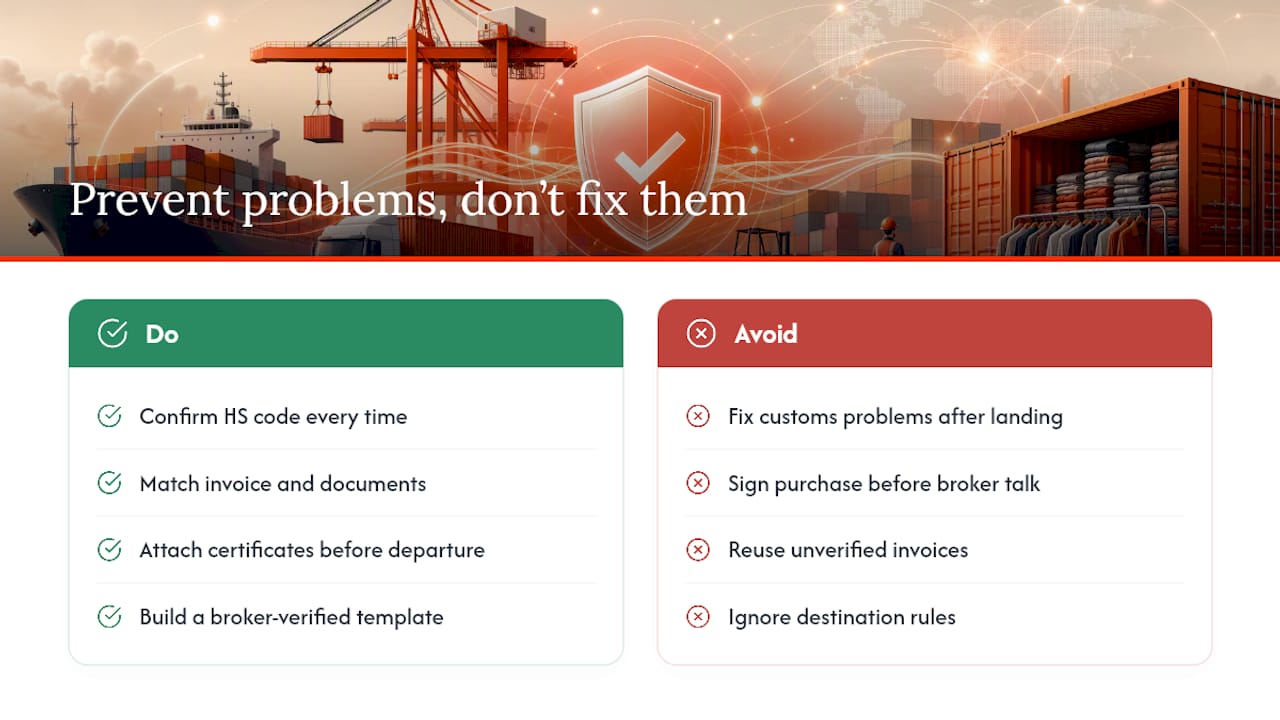
Fixing a customs problem after the container lands always costs more than preventing it. A misclassified HS code or a mismatched invoice doesn’t just delay one shipment. It flags your importer profile for closer scrutiny on the next one too.
The importers who move bulk used clothing without drama aren’t the ones with the best luck. They’re the ones running the same verified checklist every time: HS code confirmed, documents matched, certificates attached before departure. Build that template once with a broker who knows your destination market, and reuse it on every order. If you’re setting one up for the first time, start the broker conversation before you sign the purchase contract, not after the goods are packed.
— rodrigues
How to Source Compliant Bulk Used Clothing
The gap between a shipment that clears smoothly and one that sits in a bonded warehouse usually comes down to what the supplier hands you before the container ever leaves. Some suppliers build their bales with that in mind: consistent packaging from their facility, detailed documentation on request, and export experience across many countries that means your broker isn’t the first person to see paperwork from the supplier.
If you’re sourcing bulk used clothing for resale, request a quote and ask directly for the invoice and packing list format Msexpspzoo uses on international orders, so your broker can confirm the HS code and controls before you commit to a container. Start on the used clothing wholesale page to see current lots and request documentation for your destination market. Buyers sourcing footwear alongside apparel can check the used shoes wholesale page for matching bulk lots and labeling details relevant to import declarations.
Where to Verify Rules Before You Ship
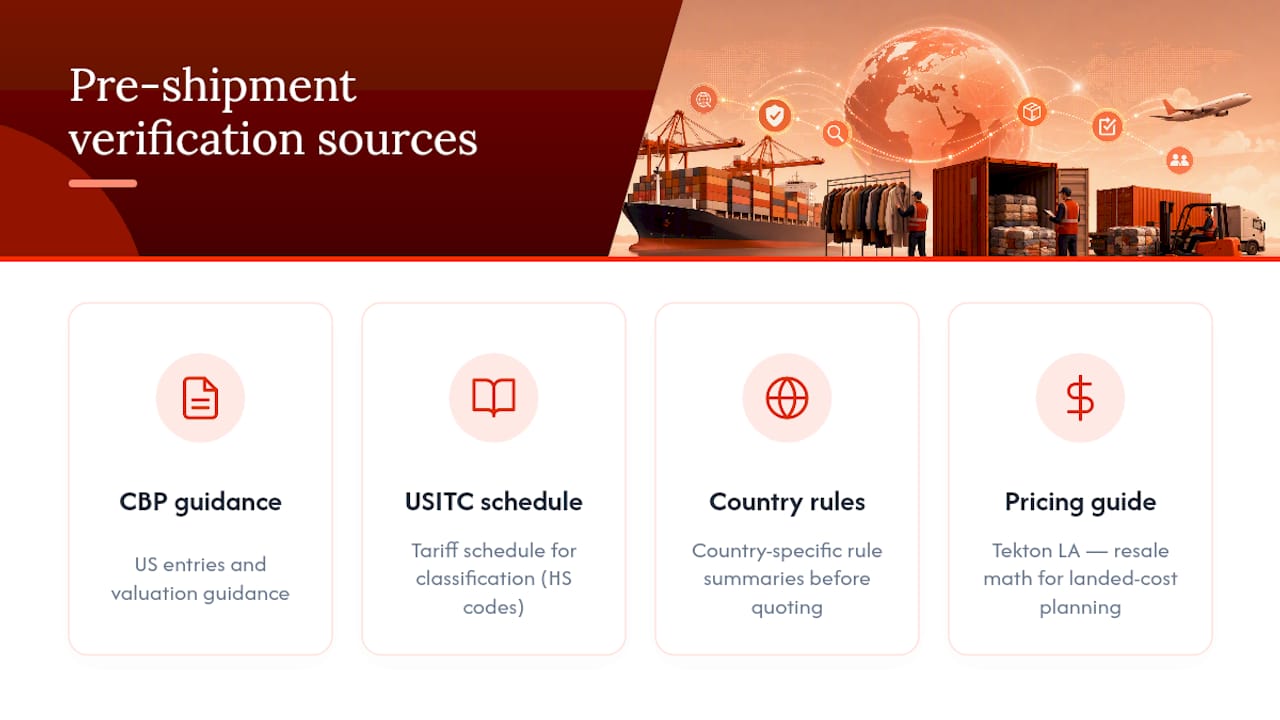
Check CBP’s guidance for US entries and valuation, the USITC tariff schedule for classification, and country-specific rule summaries before quoting any buyer. For margin planning once goods clear, Tekton LA’s pricing guide covers resale math worth reviewing alongside your landed-cost figures.
Sources
- What are the requirements to import used or worn clothing into the United States? — CBP
- Harmonized Tariff Schedule — USITC
- Used Clothing (Commercial) — Customs Rules — Goods Across Borders
- The Complete Customs Clearance Process in 2026: Step-by-Step Guide — FreightAmigo
- HS code used clothing — Interwf