
Wholesale used clothing in 2026 runs at approximate price ranges per kilo by bale grade, with Premium plus lots often priced highest among the categories. Three variables move that number more than anything else: grade quality, origin, shipping, and tariff exposure, and how much verification the supplier allows before you pay. Before you wire a deposit, request a video bale opening and a sample shipment, then run your own landed cost calculation against the quoted price.
TL;DR:
- Grade B bales typically sell for 40 to 60 percent of Grade A prices, while Grade C prices are around 10 to 20 percent, affecting profit margins.
- Verifying bale quality through live videos, timestamped photos, and sample shipments helps prevent losses from misgraded merchandise, especially on orders above $5,000.
- Starting with Grade A or Grade A/B mix bales and using third-party inspections reduces the risks associated with grading inaccuracies and quality inconsistencies.
- Payment should be protected by small deposits, escrow, or trade assurance, with caution advised when suppliers push for full upfront payment or offer prices far below market rates.
Table of Contents
- What Do Grade A, B, C, and Premium Bales Cost in 2026?
- How Do You Calculate Total Landed Cost and Set a Resale Price?
- What Quality Checks Should You Require Before Paying?
- Which Order Configuration Fits Your Business?
- What Payment Terms and Red Flags Should You Watch For?
- How MS EXP SP Z O O Reduces Buyer Risk
- How to Place Your First Order with Msexpspzoo
- Where to Verify Pricing and Tariff Data
- Sources
What Do Grade A, B, C, and Premium Bales Cost in 2026?
Grading terminology varies slightly by exporter, but the industry has settled on a fairly consistent hierarchy. Premium plus bales contain near-perfect garments, often barely worn overstock or returns, with almost no staining or damage. Grade A, sometimes called “cream,” holds clean, wearable clothing with minor cosmetic wear. Best value or Grade A/B mix blends solid A-grade pieces with a smaller share of items showing more visible wear. Grade B is fully rewearable but carries noticeable faults, small tears, pilling, or fading. Grade C is largely unsaleable as clothing and typically gets diverted into wiping rags or fiber recycling.
Price tracks that hierarchy closely. Grade B commonly sells at 40 to 60 percent of Grade A pricing, while Grade C lands closer to 10 to 20 percent of the Grade A rate. That gap matters when a supplier quotes you a “great deal” on mixed inventory. If the price looks like Grade A but the ratio looks like Grade B, someone is padding the margin at your expense.
Representative 2026 per-kg ranges:
- Premium plus: $4.00 and up, often sold by the piece for vintage or branded lots rather than by weight
- Grade A (cream): $1.80 to $3.50
- Grade A/B mix: $1.20 to $2.20
- Grade B: $0.90 to $1.60
- Unsorted/mixed: $0.40 to $0.60
Pro Tip: Ask for the exact grading criteria in writing before you agree to a price. A one-page grading sheet with photo references protects both sides when a dispute comes up later.
Bale weight conventions also shift your real cost per kilo. Standard export bales run 45 to 55 kg, though some suppliers compress to 90 to 100 kg for ocean freight efficiency. A supplier quoting a lower per-kg price on a heavier, denser bale may still cost more once you factor in the freight rate per container, since fewer bales fit per container than you’d expect from the weight math alone.
How Do You Calculate Total Landed Cost and Set a Resale Price?
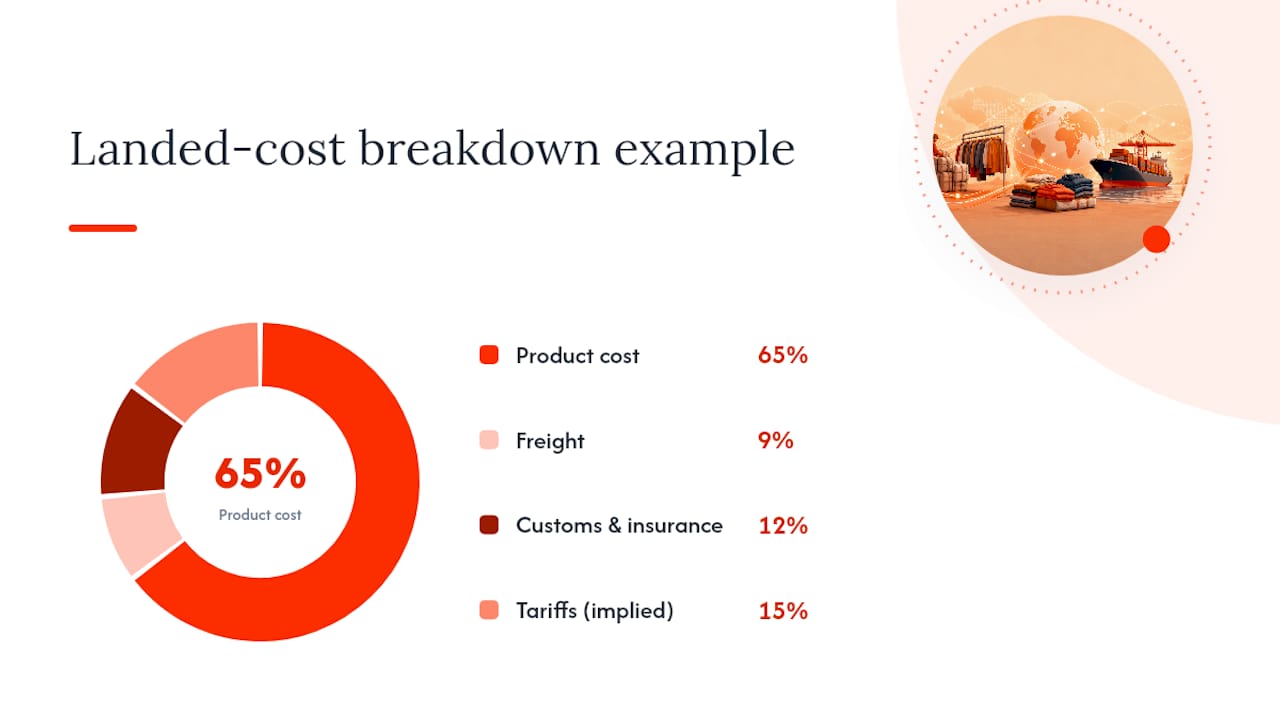
Your landed cost is never the quoted per-kilo price. It’s that price plus every step between the supplier’s warehouse and your shelf, and skipping this math is how new importers lose their first shipment’s margin before they’ve sold a single item.
Cost components to include:
- Product cost (per-kg price times bale weight)
- Sorting and disinfection fees, if not already included
- Export packing and palletizing
- Freight (sea, air, or courier, depending on order size and urgency)
- Import tariffs and customs duties
- Cargo insurance
- Customs clearance and brokerage fees
- Domestic transport from port to warehouse
- Storage costs while inventory awaits sorting or sale
Here’s a simplified worked example using illustrative numbers. Say you buy a 500 kg Grade A bale lot at $2.20 per kg, landing your product cost at $1,100. Add $150 for ocean freight and handling, $200 for customs clearance and insurance, and a tariff bill that depends heavily on destination. Tariff rates for used clothing vary widely by country and product classification, so treat that line as a variable to confirm with your own customs broker rather than a fixed number. If your total landed cost comes out near $1,700 for 500 kg, that’s $3.40 per kilo. At an average garment weight of roughly 0.4 kg, you’re looking at about $1.36 per piece before sorting labor and resale markup.
Freight mode and tariff exposure swing that number more than anything else in the formula. Air freight might cut delivery time from six weeks to five days, but it can triple the per-kg shipping cost. Sort yield, meaning how many pieces in the bale are actually resalable, determines whether your per-piece cost holds or balloons once you account for the fraction you’ll discard or rag out. A resource like Oxedent’s guide on pricing ecommerce products is worth reviewing once you’ve nailed down landed cost, since setting the resale price is a separate exercise from calculating what you paid.
What Quality Checks Should You Require Before Paying?
Misgraded bales are the single biggest way buyers lose money on used clothing, and the fix costs almost nothing compared to the loss. Build these checks into every quote request, not just your first order.
- Live video of the bale being opened, not a pre-recorded or stock clip
- Timestamped photos showing multiple layers of the bale, not just the top
- A written grading sheet specifying the criteria used to sort that lot
- A sample shipment of 20 to 40 pieces before committing to a full container
- Ratio sampling, where you or an inspector count grade distribution across several opened bags
For orders above $5,000, a third-party inspection from a firm like SGS, Intertek, or Bureau Veritas typically costs $150 to $300. That’s a small fraction of what a misgraded 20-foot container can cost you in lost resale value, and it gives you an independent, documented basis for a dispute if the goods don’t match the description.
Pro Tip: Write the inspection and regrade terms directly into your purchase contract, including the acceptance window and who pays for a re-inspection if the first result is disputed.
Which Order Configuration Fits Your Business?
The configuration you choose determines both your entry cost and how much sorting labor you’ll need on your end.
- Grade A only: Highest cost per kg, lowest sorting burden, best for boutique resellers or online sellers who need consistent quality without in-house sorting staff.
- Grade A/B mix: Middle cost tier, moderate sorting need, a common starting point for resellers testing a new supplier relationship.
- Grade B only: Lower cost, higher sorting labor, works well for buyers serving price-sensitive markets with existing warehouse staff.
- Unsorted/mixed bales: Lowest cost per kg by far, but requires real sorting infrastructure and staff, since quality inside the bale is unpredictable.
- Pick-your-own: Highest control, usually only available for smaller lots or in-person sourcing trips, and rarely practical for container-volume buyers.
New entrants should start with Grade A or a Grade A/B mix and lean on third-party inspection for their first two or three orders. Established resellers with sorting staff and storage space can scale into Grade B or unsorted bales once they trust a supplier’s grading consistency, since that’s where the real margin upside sits.
What Payment Terms and Red Flags Should You Watch For?
Cash protection matters as much as price on a first order with a new supplier.
- Pay a smaller deposit, often 30 percent, on a first order, and reserve larger upfront percentages for suppliers you’ve worked with repeatedly.
- Use escrow or a trade assurance service when the supplier supports it, especially for orders over $5,000.
- Treat any price far below market for the claimed grade as a warning sign, not a bargain.
- Walk away from suppliers who refuse video verification or push for full payment before shipment.
- Confirm remedy terms in writing before you pay: partial refunds for misgraded ratios, a defined regrade process, and who covers return freight if the dispute goes that way.
How MS EXP SP Z O O Reduces Buyer Risk
Sourcing bulk clothing across borders means trusting a supplier you may never meet in person. The supplier operates a large warehouse and ships to many countries, backed by packing machinery built to keep bale turnaround fast during demand spikes. That scale supports the verification steps this guide recommends: video bale opening, sample shipment, and written grading criteria, delivered without the delay smaller operations often struggle with.
— rodrigues
How to Place Your First Order with Msexpspzoo
If you’re ready to move past research and get a real quote, this supplier ships bulk bales of used clothing, shoes, purses, industrial wiping rags, and vintage goods worldwide, with the packing speed to turn around orders faster than many smaller exporters can manage. Before you commit, request three things from any supplier, including this one: a live video bale opening, a small sample shipment, and a written grading sheet that matches the grade you’re quoted.
Start by sending a quote request with your target grade, order volume, and destination country, and ask about initial inspection options if you’re placing your first order. A clean request looks like this: product category, grade preference, order weight in kg, destination port, and whether you want a sample shipment before committing to full volume. Head to the used clothing wholesale page to submit that request, or check the used shoes category if footwear is part of your order mix.
Where to Verify Pricing and Tariff Data
For grading standards and inspection cost benchmarks, see the Alibaba wholesale guide. For market scale context, review The Business Research Company’s secondhand market report. For fulfillment cost planning, see Jam 4 Apparel’s fulfillment guide.
Sources
- Used Clothing Wholesale on Alibaba.com: Quality, Compliance & Global Market Guide 2026 – Alibaba.com Seller Blog
- Second-hand product global market report — The Business Research Company