
Reject rate is the share of pieces in a bale that cannot be sold through your intended resale channel, whether due to damage, contamination, or poor market fit. Acceptable ranges vary widely by grade: tight pre-graded Grade A lots run low, Grade B carries moderate waste, and unsorted or mixed bales can run far higher. When a quote lands above the range for its stated grade, the right move is to sample further before accepting the full shipment.
TL;DR:
- Suppliers’ declared reject rates must be compared against industry benchmarks and verified through sampling based on ISO 2859-1 standards.
- Rejected textiles often get repurposed into wiping rags, recycled feedstock, or downcycled, emphasizing the importance of negotiating reject price adjustments.
- High reject rates may arise from collection source, fiber blends, physical damage, or market mismatch, especially in municipal or unsorted collections.
- Pre-shipment documentation, clear contractual AQL clauses, and sample inspections are key to minimizing disputes and managing reject rates effectively.
Table of Contents
- Typical reject-rate benchmarks and what they mean for margins
- Common causes of rejects in used clothing bales
- How reject rate is measured: sampling and AQL basics
- Grading systems and what to expect from each
- How to reduce reject rate and recover value from rejects
- A worked example: scale and packaging as reject-rate controls
- What experienced buyers get wrong about reject rate
- How MS EXP SP Z O O can help you source lower-reject bales
- FAQ
- Sources
Typical reject-rate benchmarks and what they mean for margins
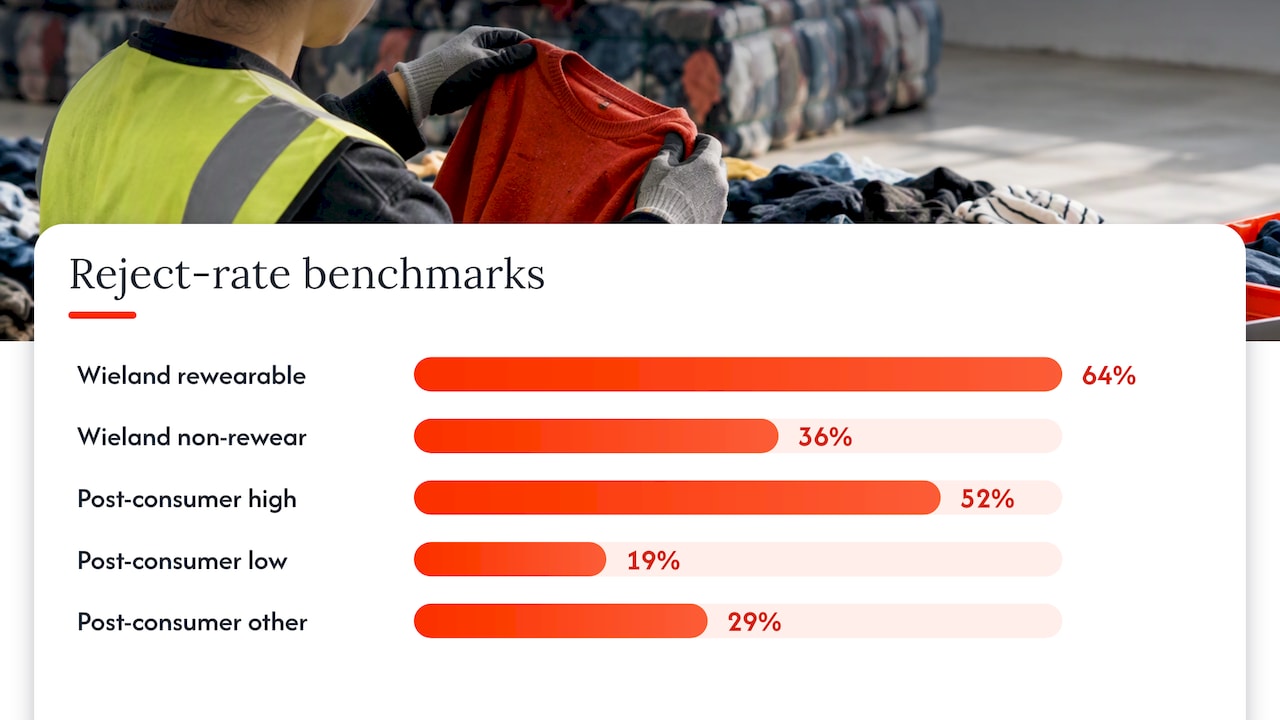
Reject percentages translate directly into revenue, so it pays to run the math before you commit to a container. Manual sorting research at Wieland Textiles found that post-consumer collections sorted out to roughly 64% rewearable garments and 36% non-rewearable material, a useful baseline for unsorted or lightly sorted lots. A separate sample analysis of post-consumer textile waste found about 52% high-quality fiber garments and 19% lower-quality fiber blends, with the remainder split between other categories and non-allowed items. Pre-graded Grade A bales sit well above these pooled averages because the sorting work has already stripped out the worst material.
Consider a 50 kilogram bale priced for resale as Grade A. If the actual reject rate comes in low, nearly the full weight converts to sellable stock. If the same bale behaves like an unsorted lot and rejects closer to a third of the pieces, your effective cost per sellable kilogram rises sharply and the margin you priced in disappears before you’ve sold a single item.
Quick checks worth running on any quote:
- Ask for the declared reject rate and grade, then compare it against the ranges above for that grade.
- Calculate sellable weight by multiplying bale weight by the expected pass rate, then price per sellable kilogram rather than per gross kilogram.
- Flag any quote where the declared reject rate for a “Grade A” label looks closer to unsorted benchmarks.
Common causes of rejects in used clothing bales
Rejects rarely come from one source. Understanding where they originate helps you choose suppliers and write specs that actually reduce waste rather than just documenting it.
- Collection stream: curbside and municipal collection mixes textiles with contamination and non-wearable items far more than charity drop-off points, and unsorted lots carry more home textiles than pre-graded ones.
- Fiber blends: garments with mixed or lower-quality fibers are harder to grade consistently and more likely to fail resale standards, a pattern reflected in the roughly 19% lower-quality fiber share found in post-consumer sorting research.
- Physical damage: heavy staining, tears, and broken hardware (zippers, buttons, clasps) push otherwise sellable garments into the reject pile.
- Market-fit mismatch: sizing, seasonal weight, and style conventions that work in one destination market can fail entirely in another, turning a technically sound garment into dead stock.
Home textiles mixed into clothing bales are a frequent, avoidable driver of rejects, since they usually belong in a separate category entirely.
Pro Tip: Ask suppliers for a category breakdown (men’s, women’s, children’s, footwear, home textiles) before you buy, not after the bale arrives.
How reject rate is measured: sampling and AQL basics
Buyers rarely inspect every piece in a bale, so the industry relies on statistical sampling instead. ISO 2859-1 sets out the Acceptable Quality Level framework used to convert a target defect percentage into a sample size and a pass or fail threshold for a given lot. In practice, that means you decide in advance what reject rate you’re willing to tolerate, then pull a defined number of pieces and count defects against that threshold rather than guessing from a handful of items.
A workable inspection sequence for a 50 to 100 kilogram bale looks like this:
- Define your acceptable reject rate for the grade you’re buying, based on the benchmarks above.
- Pull a representative sample size tied to an AQL inspection level rather than a handful of pieces from the top of the bale.
- Sort the sample into pass, borderline, and reject categories using written criteria for stains, tears, hardware, and fiber type.
- Calculate the sample’s reject percentage and compare it against your threshold.
- If the sample fails, require re-sampling from a different section of the bale or request a third-party pre-shipment inspection before accepting the full order.
This workflow turns a vague complaint about “too many rejects” into a documented, repeatable check you can apply to every shipment.
Grading systems and what to expect from each
Grade labels mean different things depending on the supplier, so the label alone isn’t a specification. Treat it as a starting point and ask for the numbers behind it.
- Grade A: the cleanest tier, with minimal staining or damage and the lowest reject rates of any bale type; expect a tight breakdown by category and condition.
- Grade B: wearable but with visible wear, minor staining, or dated styling; reject rates run moderately higher than Grade A and should still be documented.
- Grade C and recut: heavily worn or damaged goods sold at a lower price point specifically because a larger share is destined for downcycling rather than direct resale.
- Unsorted or mixed lots: the widest variability and the highest reject rates, closer to the 36% non-rewearable share found in manual sorting studies.
Smaller, pre-graded bales in the 45 to 55 kilogram range reduce this variability compared with 100 kilogram unsorted lots, which is one reason many suppliers have shifted toward them as sorting economics and import rules have tightened. Whatever grade you buy, ask for a declared stain and tear percentage, footwear content, and home textile share up front.
How to reduce reject rate and recover value from rejects
Lowering your reject rate starts before the bale ships, not after it arrives.
- Require pre-sorting documentation: ask suppliers to declare source type (charity, curbside, municipal) and provide photos of representative bale contents before you commit.
- Write AQL clauses into contracts: specify the sample size, inspection level, and acceptable defect percentage so a dispute has a documented standard to point to.
- Use holdbacks and conditional acceptance: pay a portion on shipment and the remainder once a sample passes inspection on arrival.
- Set defined penalties: agree in advance what happens (credit, replacement, discount) when a lot exceeds its declared reject rate.
Rejected material isn’t automatically a loss. Much of it converts into industrial wiping rags, shredding feedstock for recycling, or dedicated low-grade resale lots priced for that purpose. Textiles unsuitable for reuse are often downcycled or disposed of entirely, so specifying what a supplier is permitted to do with your rejects protects you from surprise disposal costs down the line.
Pro Tip: Negotiate a separate, lower price per kilogram for the expected reject fraction instead of pricing the whole bale as if every piece will sell.
A worked example: scale and packaging as reject-rate controls
Operational scale and handling consistency affect reject rate just as much as the raw material going into a bale. We operate from a large warehouse, a scale that lets us hold broad category inventory and move it through advanced packaging machinery quickly rather than letting bales sit and absorb moisture or handling damage before shipment. Faster turnaround from sort to shipment reduces the window in which contamination, moisture damage, or mishandling can push a technically Grade A bale toward higher rejects on arrival.
A supplier-spec checklist worth copying into your own purchase orders:
- A sample bale or representative photos before full order confirmation.
- A written category breakdown by garment type, footwear content, and home textiles.
- A declared stain, tear, and hardware-defect percentage.
- An agreed AQL sample size and acceptance threshold written into the purchase terms.
What experienced buyers get wrong about reject rate
Most disputes over reject rate happen because neither side agreed on a sampling method before the bale shipped. One workable fix: when a lot arrives disputed, pull a fresh small sample under both parties’ observation rather than arguing over the original claim. Holdbacks and conditional acceptance resolve far more disputes than threats of cancellation ever do.
Red flags that justify walking away from a future shipment:
- A supplier who won’t commit to a written grade definition or sample size.
- Reject rates on arrival that consistently exceed the declared grade by a wide margin.
- Refusal to allow a third-party or buyer-observed re-sample on a disputed lot.
— rodrigues
How MS EXP SP Z O O can help you source lower-reject bales
We supply used clothing and used shoes bales shipped worldwide from our Poland warehouse, backed by advanced packaging machinery that supports faster turnaround and more consistent handling from sort to shipment. That consistency is a practical lever against the moisture and handling damage that drive up reject rates on long international shipments.
Before placing an order, ask us for a sample bale, a documented category breakdown, and an AQL sample plan written into your purchase terms, the same specs this guide recommends asking of any supplier. If you’re ready to move forward, request a tailored quote on our used clothing page or explore our recycled industrial wiping rags line as a recovery channel for lower-grade material.
FAQ
What is a good reject rate for a used clothing bale?
A good reject rate depends on the grade you’re buying: tight Grade A lots should run low, Grade B moderately higher, and unsorted lots considerably higher still, based on sorting studies like the Wieland Textiles manual sort. Always compare the declared rate against the grade label rather than accepting the label alone.
How is reject rate calculated or measured in a bale?
Reject rate is measured by pulling a representative sample from the bale, sorting it into pass and fail categories against written criteria, then calculating the fail percentage. The ISO 2859-1 standard provides the sampling and acceptance framework most buyers reference for sample size and thresholds.
What causes high reject rates in used clothing bales?
High reject rates usually trace back to collection stream (curbside versus charity), fiber blends, physical damage like staining or tears, and market-fit mismatches in sizing or style. Unsorted municipal collections tend to carry the highest rates for these reasons.
What happens to rejected items from a bale?
Rejected textiles that can’t be resold are often converted into industrial wiping rags, used as recycling feedstock, or in some cases downcycled or disposed of, as noted in EU textile export analysis. Buyers can offset this loss by negotiating separate pricing for the expected reject fraction.
Can buyers negotiate reject rate terms with suppliers?
Yes, buyers can write acceptable quality level clauses, holdbacks, and conditional acceptance terms directly into purchase contracts. These terms give both sides a documented standard to reference if a shipment’s reject rate is disputed on arrival.
Sources
- FiberSort manual sort percentages (Wieland Textiles manual sort)
- ISO 2859-1: Sampling procedures for inspection by attributes
- LCA-based assessment of the management of European used textiles
- Analysis of European post-consumer textile waste for automated sorting
- EU exports of used textiles — EEA analysis