
A winter mix runs heavy: coats, sweaters, and multilayer jackets that pack dense and sell slow but at higher unit value. A summer mix runs light: T-shirts, shorts, and dresses that compress efficiently and turn over faster at lower margins per piece. The right call depends on your market’s climate, your storage capacity, and how fast you need inventory to move. Grading level (Crème, B, or C) matters as much as the season, and often more.
TL;DR:
- Buyers should verify fiber composition, especially the cotton to synthetic ratio, because heavier synthetics in winter mixes can hinder recycling and resale options.
- Proper sorting skill impacts bale quality and grade accuracy, with crème grade offering a small, high-value portion, mainly used for boutique resale.
- Blended seasonal mixes provide more flexibility and reduce storage risks, especially when market timing and supplier reliability are uncertain.
- Requesting detailed bale specifications, packing lists, and sample images from suppliers helps prevent ordering wild, poorly sorted mixes with high non-textile contamination.
- Bulk shipments from large warehouses with mechanized packaging can offer faster turnaround times and consistent quality, crucial for seasonal inventory planning.
Table of Contents
- Winter Mix vs Summer Mix: What’s Actually in the Bale
- Grading, Sorting Skill, and What They Do to Bale Value
- How to Choose Winter vs Summer Mix for Your Market
- Sample Bales, Packaging, and Reducing Order Risk
- Blending Seasonal Mixes to Balance Inventory Risk
- Sustainability Trade-Offs Buyers Should Weigh
- A Buyer’s Take on Season-Specific vs. Blended Purchasing
- Source Seasonal Mixes Directly From Msexpspzoo
- Sources
- FAQ
Winter Mix vs Summer Mix: What’s Actually in the Bale
The term “winter mix” refers to a specific category in sorting facility inventories: garments tagged by weight, layering function, and seasonal use. Sorting operations use season as one of several routing attributes, alongside fibre type and condition, to decide whether an item goes to reuse, export, or recycling.
A winter mix typically contains:
- Wool and synthetic-blend coats, often double-shell construction
- Puffer and shell jackets with insulation layers
- Sweaters, cardigans, and fleece pullovers
- Long-sleeve layering pieces and heavier denim
These items increase bale weight fast. A coat can weigh three to five times what a T-shirt weighs, so a winter bale reaches its target weight with far fewer individual pieces. That changes your per-kilo garment count and your resale math. Buyers restocking for cold-climate markets need to plan for lower piece counts per bale and higher packing volume relative to weight, since bulky outerwear compresses less efficiently than flat cotton goods.
A summer mix typically contains:
- T-shirts, tank tops, and polo shirts
- Shorts, light skirts, and sundresses
- Thin cotton blouses and short-sleeve casualwear
- Swimwear and lightweight athletic pieces
Summer garments compress tighter, so a bale of the same weight yields more individual pieces. Cotton tends to dominate summer assortments, while winter mixes lean more heavily on polyester blends and synthetic insulation. That fibre split matters downstream: cotton-heavy lots have more straightforward resale and recycling paths, while blended winter pieces are harder to recycle at end of life.
Grading, Sorting Skill, and What They Do to Bale Value
Grade determines where a bale can sell, and grade is not a marketing term. It reflects actual sorting decisions made garment by garment, usually by hand.
Crème is the top tier: near-new condition, current styling, minimal wear. It is scarce by design. Industry LCA research puts crème-grade material at roughly 5% of collected textiles, with B-grade and C-grade volumes making up the bulk of what wholesalers actually handle. That scarcity is why crème commands premium pricing and moves fastest into Western European vintage and boutique resale channels.
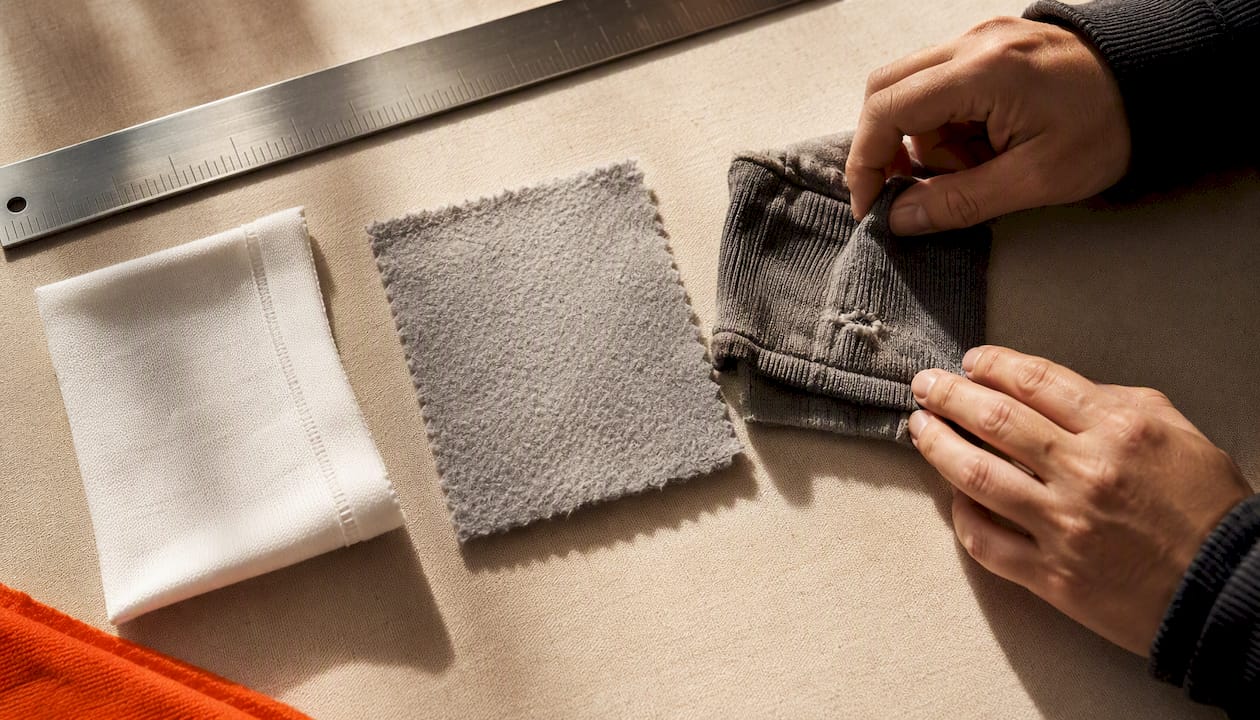
B-grade covers solid, wearable, mainstream stock. Some fading, some pilling, nothing structurally wrong. This is the workhorse grade for general retail and market trading across most regions.
C-grade means visible wear, missing buttons, small tears, or dated styling. It still has resale value in price-sensitive markets and often feeds into wiping rag production or fiber reprocessing when garment reuse isn’t viable.
Sorting skill is what separates a clean grade from a mislabeled one. Graders typically need up to six months of on-the-job training before reaching full proficiency, since grading is still a manual, judgment-heavy process. A skilled sorter catches a hidden stain or a mislabeled fibre blend before it reaches your bale; an undertrained one doesn’t.
Quick value framework:
- Crème winter or summer mix: premium price, fast turnover in developed markets, low volume
- B-grade: steady margin, broadest market fit, predictable resale
- C-grade: lowest per-unit price, higher volume needed to hit margin targets, strong fit for rag conversion or fiber recycling
How to Choose Winter vs Summer Mix for Your Market
Matching mix to market isn’t guesswork if you run through the same checks every time you evaluate an offer.
- Match season to climate reality. A distributor selling into a market with a short, mild winter doesn’t need heavy Crème outerwear sitting in a warehouse for ten months. Match the mix to your actual selling window, not the calendar season where the goods were collected.
- Verify fibre composition before you commit. Ask for a breakdown of cotton versus polyester versus blends. Research on donated textiles shows cotton often makes up around half of collected material in some sample sets, with polyester and blends filling much of the rest. Heavy synthetic blends resell fine but recycle poorly, which matters if any part of your business model relies on downstream fiber recovery.
- Request full bale specifications. Get the weight, compression ratio, a packing list, and the supplier’s stated allowance for non-textile contamination before you buy sight unseen.
- Confirm sample policy and lead time. Know whether the sample you’re shown represents the actual production run, and how long turnaround takes once you place an order.
- Ask pointed questions about sorting method. How is the material collected? Is it pre-sorted or a wild mix? Collection method has a measurable effect on downstream quality, and suppliers who can answer this clearly are usually the ones running tighter operations.
Pro Tip: Ask every new supplier for a packing list on the first order, even a small one. A vague or inconsistent packing list is the clearest early warning that grading discipline is loose.
Red flags include suppliers who can’t specify grade percentages, resist showing a representative sample, or quote a single flat price regardless of season or grade.
Sample Bales, Packaging, and Reducing Order Risk
A sample bale only protects you if it’s actually representative of the production run, not a curated best case pulled for the buyer. Ask suppliers directly whether sample bales come from the same sorting batch as the order you’re placing.
Mechanized packaging matters more for seasonal timing than most buyers assume. A supplier running efficient baling equipment out of a large warehouse can turn around a fresh winter mix order right as cold-climate demand spikes, instead of making you wait weeks while the previous fashion mix works down. That speed advantage compounds when you’re restocking multiple markets on staggered seasonal cycles.
Shipping considerations differ sharply by season:
- Winter bales need attention to compression consistency. Overpacked coats and jackets can develop crush damage or moisture retention in transit if packaging isn’t handled correctly.
- Summer bales compress and stack efficiently, but thin fabrics show creasing and require careful humidity control to avoid mildew during longer transit windows.
Build risk protection into the contract itself, not just the relationship. Useful terms include a holdback percentage pending inspection, a third-party inspection clause for large orders, and a clear written definition of what counts as unacceptable non-textile contamination. Wild, unsorted mixes have shown 22 to 31% non-allowed content in sampled analyses, compared with roughly 1% in pre-sorted fractions. That gap alone justifies paying more for pre-sorted stock.
Blending Seasonal Mixes to Balance Inventory Risk
Buying purely seasonal is a bet on timing you don’t always control. A blended approach spreads that risk across the calendar instead of concentrating it in one narrow selling window.
A common strategy: stock a heavier winter ratio ahead of your market’s cold season, then shift toward summer-weighted lots two to three months before demand turns. That overlap period matters because customer demand rarely flips overnight. Layering pieces, light jackets, and transitional garments sell across both windows, so a mix with 15 to 20% “shoulder season” stock can smooth out slow weeks between peak winter and peak summer buying.
For traders serving multiple regions or climates at once, blending by destination works better than blending by calendar. A market trader supplying both a temperate coastal region and a colder inland area might split orders: pure summer mix for one route, blended stock for the other. That avoids sitting on unsold heavy coats in a market where winter barely dips below 50°F.
Storage cost is the real constraint here. Heavy winter goods take up more warehouse volume per unit of resale value than compressed summer stock does. If your storage space is limited, a tighter blend with faster turnover beats hoarding a full season’s worth of bulky outerwear on the chance demand arrives on schedule.
Sustainability Trade-Offs Buyers Should Weigh
Sourcing decisions here carry real environmental weight, not just commercial risk. Industry tracking suggests downstream usage of collected textiles splits roughly into 45% reused as apparel, 30% into wiping rags, 20% reprocessed into fiber, and 5% unusable. Where your seasonal mix lands in that split depends heavily on grade and fibre composition, not just season.
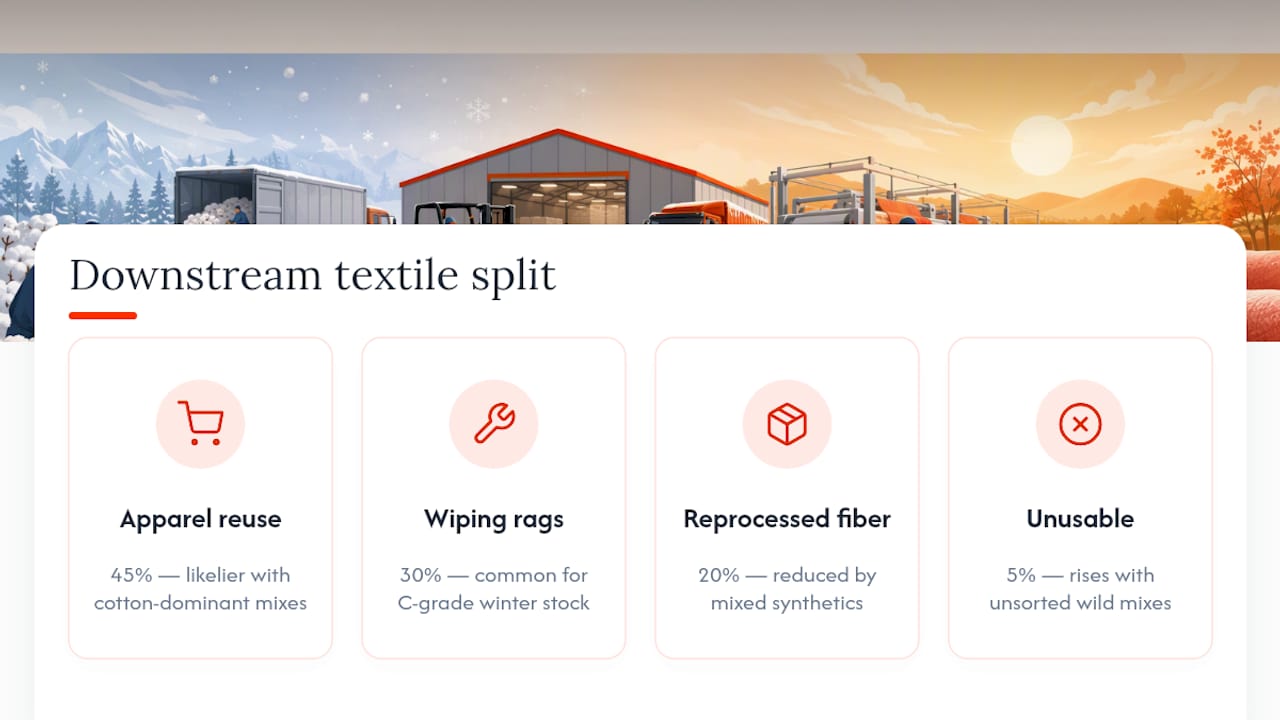
Cotton-dominant summer mixes generally have cleaner recycling and reuse pathways than heavily blended winter outerwear, since synthetic insulation and mixed-fibre shells are harder to break down for fiber reprocessing. Buying C-grade winter stock knowing it’s destined for rag conversion isn’t a failure. It’s a legitimate, lower-impact use for material that won’t move as resale apparel.
Buyers can influence outcomes upstream, too. Specifying collection and sorting requirements when working with a supplier, rather than accepting whatever comes off a generic collection stream, has been shown to improve reusable and recyclable material quality at the source. That’s a meaningful lever if your business has any sustainability commitments to customers or regulators, since the alternative, unsorted wild mixes, produces far more unusable waste that ends up landfilled or incinerated regardless of what you originally intended to do with it.
A Buyer’s Take on Season-Specific vs. Blended Purchasing
Buying pure seasonal mixes makes sense when you have storage capacity and confidence in your market’s timing. A trader serving a sharply defined cold season gets better margin from a dedicated winter mix than from watered-down blended stock.
Most operations don’t have that certainty, though. Blended purchasing costs a little margin but buys flexibility, and flexibility is worth more than most buyers admit when demand shifts early or a shipment lands late.
The variable that decides which approach works is supplier reliability. A supplier with fast, mechanized packaging and real warehouse capacity, like Msexpspzoo’s 133,000-square-foot facility in Poland, can turn around either strategy without leaving you exposed for weeks.
— rodrigues
Source Seasonal Mixes Directly From Msexpspzoo
You’ve seen what separates a clean bale from a wild mix. Direct shipping from a large warehouse can reduce costs and increase order consistency, supplying buyers worldwide.
Whether you need a winter-heavy assortment ahead of cold season or a fast-turning summer lot, Msexpspzoo’s mechanized packaging keeps turnaround short instead of leaving you waiting weeks for a container. The used clothing line covers both seasonal categories with documented packing, and buyers combining footwear with apparel can add used shoes to the same order. Lower-grade fractions don’t go to waste either. C-grade material converts cleanly through the recycled industrial wiping rags category, so nothing in your order sits unsold. Request a sample bale, ask for the full spec sheet, or get a direct quote through Msexpspzoo before your next seasonal order window closes.
Sources
- LCA-based assessment of the management of European used textiles
- Analysis of European post-consumer textile waste for automated sorting
- Characterisation of textiles donated to selected Canadian thrift stores (Wasman, 2026)
FAQ
What’s the main difference between winter and summer mix?
A winter mix is dominated by heavy garments like coats, jackets, and sweaters, while a summer mix is mostly light pieces like T-shirts, shorts, and dresses. The difference shows up directly in bale weight, piece count, and how tightly the material compresses for shipping.
What does Crème grade mean in a used clothing bale?
Crème is the top quality tier, meaning near-new condition with current styling and minimal wear. It’s the scarcest grade, making up roughly 5% of collected textiles industry-wide.
Is it better to buy a blended mix or a pure seasonal mix?
It depends on your storage capacity and how confident you are in your market’s timing. A blended mix costs a little margin but reduces the risk of sitting on unsold seasonal stock if demand shifts.
How can I tell if a bale comes from a wild mix instead of a pre-sorted batch?
Ask for a packing list and check the supplier’s stated non-textile contamination rate. Analysis of unsorted material found 22 to 31% non-allowed content compared with roughly 1% in pre-sorted fractions, so a vague or missing packing list is a warning sign.
Does Msexpspzoo offer both winter and summer clothing mixes?
Yes, Msexpspzoo supplies seasonal assortments of used clothing with documented packing and fast turnaround from its Polish warehouse. Current pricing and available bale specifications are listed on the used clothing page.