
For wholesale buyers, kids clothing grading means sorting used children’s garments into commercial quality bands, typically labeled crème, A, B and C, then packing them into standard export bales. The single most important action before you order is simple: insist on pre-shipment samples and a written grade spec, because human sorting is still the industry standard and grade thresholds vary from one supplier to the next.
TL;DR:
- Crème grade garments are mostly cotton, in near-new condition, and typically shipped to higher-value European markets; other grades vary in fiber content and wear.
- A standard kids’ clothing bale weighs about 45 kilograms (100 pounds), with a higher piece count than adult bales of the same weight, depending on contents.
- Grades are not standardized across suppliers, making it crucial to request written specifications and pre-shipment samples to ensure consistent quality matching market expectations.
- Reputable suppliers limit unsellable material to 1-2% of pieces per bale, and third-party inspections help verify grade and quality before shipment.
- Long-term buyers should develop ongoing relationships that prioritize detailed, documented grade definitions, regular inspections, and clear communication to avoid disputes.
Table of Contents
- Grading bands explained: crème, A/B, C and common labels
- What’s in a kids’ clothing bale: composition and weights
- How professional sorters grade items and why judgment still wins
- How grades map to market destinations and pricing
- Practical buyer checklist: samples, specs and red flags
- Why supplier capabilities matter for buyers
- Building a reliable long-term supplier relationship
- Requesting a sample or trial container from MS EXP SP Z O O
- Sources
- FAQ
Grading bands explained: crème, A/B, C and common labels
Grade labels describe the physical condition and fiber content of garments, and they determine which resale markets a bale is suited for. Crème grade sits at the top: garments are near-new, mostly cotton, and carry few if any visible defects. Suppliers typically route crème items to higher-value European markets, and according to an LCA-based assessment of European used textiles, crème items are often modeled as 100% cotton, which affects both resale value and recycling assumptions further down the chain.
B-grade covers a wider range: mixed fiber content, some visible wear, more polycotton blends. These bales suit mid-market resale rather than premium racks. C-grade, sometimes called tropical mix, leans toward lightweight polyester and shows more noticeable wear, and it gets priced and routed accordingly.
The catch for buyers is that these labels are not standardized across the trade. One supplier’s B-grade might match another’s C-grade. That is why a written spec matters more than the grade name printed on the invoice.
- Crème: cotton-rich, minimal wear, sold into premium markets.
- B-grade: mixed condition and fiber, mid-market resale.
- C-grade or tropical mix: poly-heavy, visible wear, budget markets.
- Always request: a supplier-specific definition of each grade before you order.
What’s in a kids’ clothing bale: composition and weights
Export bales for used clothing are commonly packed at around 45 kilograms, or 100 pounds, a standard confirmed by trade research into the international second-hand clothing trade. For children’s garments, that weight translates into a higher piece count than an adult clothing bale of the same size, since kids’ items run smaller and lighter per unit.
Not all bales are built the same way. A kids-only bale gives you a predictable size range and fewer surprises. A mixed bale might blend children’s and adult items, which changes your per-piece yield. Specialty mixes, such as seasonal or tropical assortments, skew toward specific fabric weights and climates.
Fiber composition drives grading and resale value just as much as visible condition does. A cotton-heavy bale grades higher and resells faster in cooler climates; a poly-heavy bale suits warmer markets and lower price points.
- Kids-only bales: consistent sizing, easier to forecast piece counts.
- Mixed bales: children’s and adult garments together, lower predictability.
- Seasonal or tropical mixes: fabric weight tailored to a specific climate and market.
How professional sorters grade items and why judgment still wins
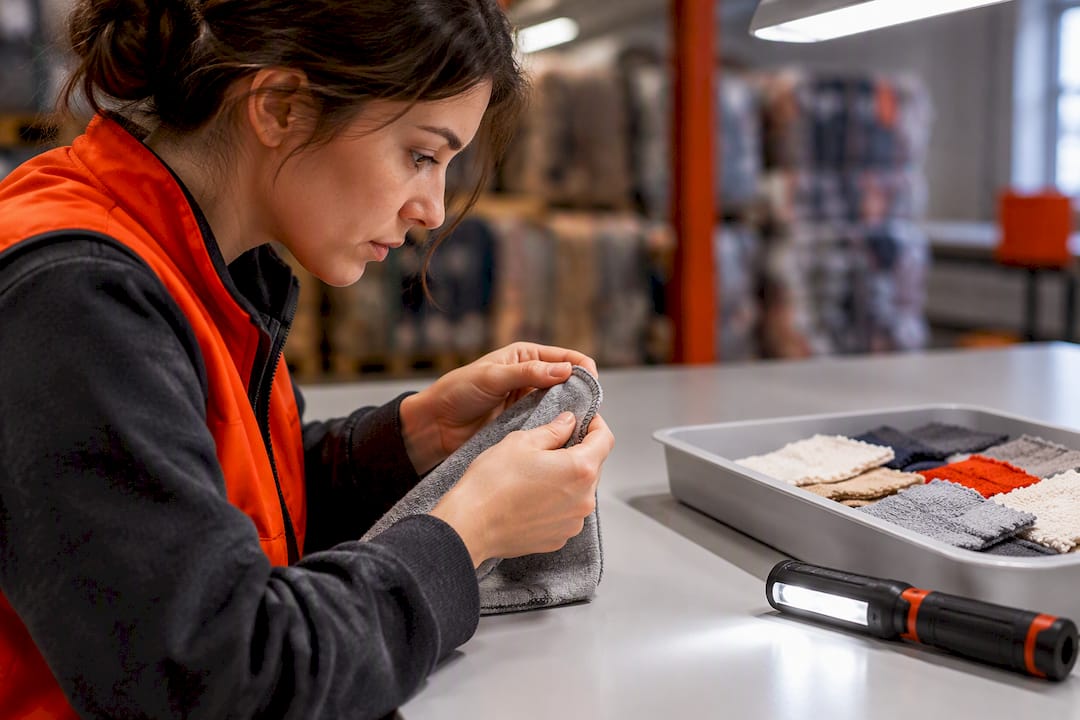
Grading happens on a physical line, not a spreadsheet. Garments move along a conveyor where pickers make first-pass decisions, then move to mezzanine sorters who apply finer criteria before defective pieces are pulled and the rest gets baled. A report on the quality of second-hand clothes imported to Kenya describes sorting centers applying hundreds of internal criteria per garment, far more granular than a simple pass or fail.
- Check for pilling, fading and faint stains, especially at armpits and collars.
- Test zippers, buttons and snaps for function, not just appearance.
- Inspect seams and hems for loose stitching or repairs.
- Confirm the garment matches its stated size and fabric type.
- Sort rejected pieces into waste or rag categories before baling.
Semi-automated sorting exists in some plants, but it has not replaced people. Faint stains and worn elastic are hard for a machine to catch consistently, and experienced sorters working under strong lighting remain the more reliable check for wholesale quality.
Pro Tip: Ask your supplier how many sorting criteria their team applies per garment. A vague answer is a warning sign; a specific number suggests a documented process.
How grades map to market destinations and pricing
Grade is not just a quality label, it is a routing decision. The same LCA-based assessment mentioned above finds that crème grade, which makes up roughly 5% of collected textile volume, gets sold into Western European markets, while B-grade and lower qualities move toward Eastern Europe, the Middle East, Asia and Sub-Saharan Africa depending on weight and fiber type.
That routing pattern has direct pricing consequences. Crème bales command the highest per-kilogram price and the smallest container yield relative to value. C-grade and tropical mixes cost less per kilogram but require higher volume to hit the same margin. Tariffs, import restrictions and local textile regulations can shift landed cost significantly, so a price that looks attractive at the port of origin is not always the number that matters.
- Crème: highest price per kilogram, routed to Western Europe.
- B-grade: mid-range pricing, routed to Eastern Europe and the Middle East.
- C-grade or tropical mix: lowest price per kilogram, routed to Asia and Sub-Saharan Africa.
Practical buyer checklist: samples, specs and red flags
A handful of steps separate a smooth bulk order from a costly mistake. None of these are complicated, but skipping any one of them is where most disputes start.
- Request pre-shipment samples or, for a first order, a trial container before committing to volume.
- Put bale composition, weight tolerance and grade definitions in writing as part of the contract.
- Set an acceptable waste percentage. Reputable exporters typically limit unsellable material to around 1 to 2% of pieces per bale, and that figure is a fair benchmark to write into your terms.
- Arrange third-party inspection, such as PVoC, SGS or Bureau Veritas verification, before goods leave the port.
- Watch for red flags: refusal to provide samples, vague grade descriptions, or bale weights that fluctuate outside your agreed tolerance.
Documented handling and sorting steps matter beyond the commercial relationship, too. Legal reviews referencing case materials on textile waste classification show that clear, recorded sorting processes help distinguish genuine reusable goods from waste, which can matter at customs.
Pro Tip: Keep every sample, photo and inspection report from a supplier in one file per order. If a dispute arises months later, that paper trail is your leverage.
Why supplier capabilities matter for buyers
A supplier’s operational scale affects how consistently they can deliver on a grade spec. Some suppliers use advanced machinery for bale packaging, which they say allows faster turnaround on bulk orders. If turnaround speed matters to your supply chain, ask for evidence: recent packaging photos or a stated turnaround window rather than a general claim.
Some suppliers operate large warehouses, supporting varied bale types and steadier supply across seasons. For a buyer sourcing recurring volume, that kind of capacity reduces the risk of a supplier running short mid-order. Long-term customer relationships and support are often noted as important aspects of supplier offerings. Ask any supplier, including this one, for references or documented inspection reports before you scale up an order.
Building a reliable long-term supplier relationship
The buyers who avoid disputes are the ones who treat grade labels as negotiable commercial terms, not fixed facts. Start every new supplier relationship with a trial shipment and a spec detailed enough to catch disagreements before they become expensive. Layer in periodic inspections or a local agent once volume grows, and revisit your grade definitions as markets and margins shift. Treat this as an ongoing negotiation, not a one-time agreement.
— rodrigues
Requesting a sample or trial container from MS EXP SP Z O O
Before placing a bulk order, ask for the details that actually protect your margin: a written grade spec, confirmed bale weight, current photos of stock, and any inspection report the supplier can share. Some suppliers pack bales using advanced machinery for faster turnaround, ship worldwide, and can work with buyers on custom bale specs across their used clothing lines.
A trial order is the fastest way to confirm any of this firsthand. You can review current stock and request samples through the used clothing category page, and the same team handles related bulk categories like used shoes if you want to compare packing and turnaround across product lines.
Sources
Verify supplier claims against independent research and trade data rather than a single sales pitch.
- LCA-based assessment of the management of European used textiles (European circular economy platform)
- The International Second-Hand Clothing Trade: Contributions to Sustainability and the Circular Economy — MDPI Sustainability
- The Quality of Second-Hand Clothes Imported to Kenya and the Associated Environmental Impacts (Mitumba association report)
- Court of Appeal / related case materials (UNEP LEAP repository)
FAQ
What does “grading” mean for used kids’ clothing?
Grading means sorting used children’s garments into quality bands, commonly crème, A, B and C, based on condition, fiber content and visible wear. Buyers use the grade to predict resale value and to choose which market a bale suits best.
How much does a typical export bale weigh?
Export bales are commonly packed at around 45 kilograms, or 100 pounds, a standard used widely across the international second-hand clothing trade. Kids’ bales at that weight generally hold more individual pieces than an adult clothing bale of the same weight.
What waste percentage should I expect in a bale?
Reputable suppliers typically keep unsellable material to around 1 to 2% of pieces per bale, since exporting large amounts of unsellable stock is not economically sound for the exporter either. Use this range as a benchmark when writing waste tolerance into a contract.
Why do grade definitions differ between suppliers?
Grading criteria are not governed by one global standard, so one supplier’s B-grade can resemble another’s C-grade. That is why a written, supplier-specific grade spec matters more than the label alone, and why pre-shipment samples remain the most reliable check.
What inspection steps reduce risk when buying in bulk?
Third-party verification such as PVoC, SGS or Bureau Veritas inspection confirms that a shipment matches its stated grade and specification before it leaves the origin country. Combining that with a documented sample approval process is a standard way reputable buyers and suppliers avoid disputes.