
Buying vintage by the kilo means you hand-pick individual garments and pay for their total weight. Buying a bale means you purchase a compressed, sealed package of clothing, usually 45 kg (100 lb), and accept what is inside. The kilo route gives you control and costs more per pound. The bale route gives you volume and a lower cost per piece, but with uncertainty you have to manage. Most resellers end up using both at different stages.
This guide compares the two on the things that decide profit: price, grading, sizing, risk, shipping and sell-through. It also shows how to move from one to the other without gambling your cash.
TL;DR
- Kilo buying is selection-based: you choose pieces, pay by weight, and see exactly what you get. It suits testing a niche or topping up a rail.
- Bale buying is volume-based: a sealed 45 kg or 100 lb package, lower cost per piece, but you rely on the grade and the supplier’s sorting.
- Weight is a poor proxy for piece count. A heavy coat and a light T-shirt cost the same per kilo, so compare cost per sellable piece, not cost per kilo.
- Start with a paid sample or a half-size bale, count your sellable share, then scale.
- Landed cost (freight, duty, handling) matters more on bales than the headline price.
Table of Contents
- What buying by the kilo actually means
- What a bale is, and what is inside
- Kilo vs bale: side-by-side
- What the prices look like
- Grading: the real difference in risk
- Sizes, mix and sell-through
- When the kilo makes more sense
- When a bale makes more sense
- A safe way to move from kilo to bale
- Perspective: how we see it
- Buying bales from us
- FAQ
- Sources
What buying by the kilo actually means
A kilo sale is a retail-style event or shop where racks of garments are priced by weight rather than by piece. BBC News described the model as customers choosing individual vintage garments and paying according to the total weight on the scale, not buying a fixed package. In the UK examples the BBC covered, £15 per kilogram bought roughly five T-shirts, three or four dresses, or one heavy winter coat.
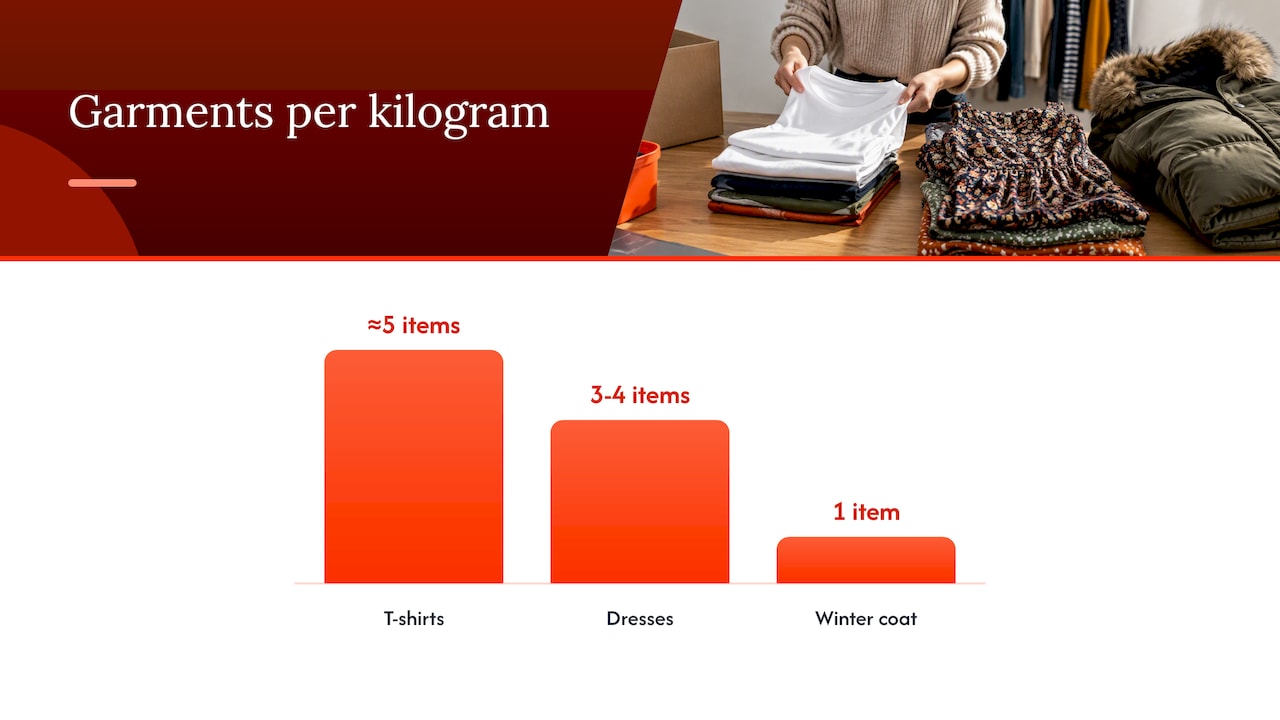
That last detail is the whole logic of kilo buying. Your cost per piece depends on what you choose. Light summer tops and thin blouses are cheap to buy. Denim jackets, wool coats and heavy knitwear eat your weight allowance quickly.
For a reseller, the kilo model has real advantages:
- You see, touch and inspect every piece before paying.
- You can buy a few kilos, not a few hundred.
- You can shop for exactly your customer: 90s sportswear, band tees, workwear, one size range.
It also has limits. The price per kilo is set for shoppers who pick through the stock, so it usually sits well above bale pricing. You also spend your own time on the picking, and you cannot scale a business on an event calendar.
What a bale is, and what is inside
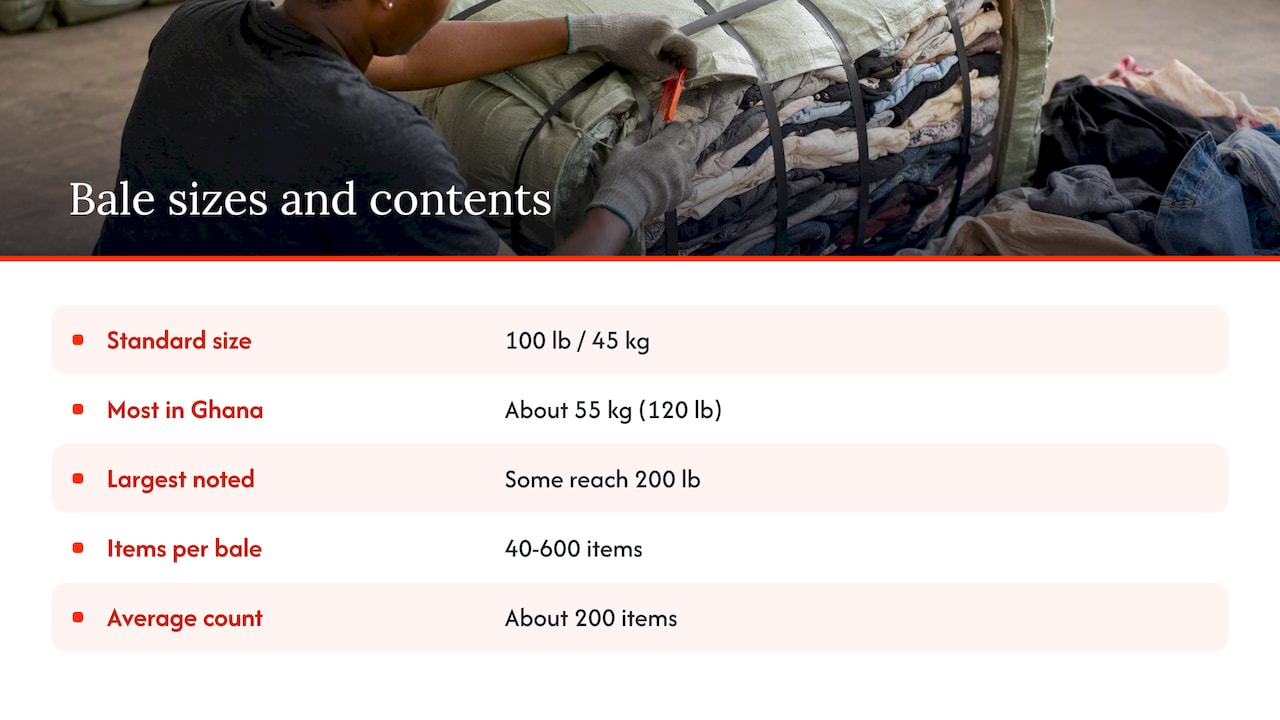
A bale is clothing compressed and strapped into one block for transport. The standard size for sorted export clothing is 100 lb or 45 kg, according to Andrew Brooks’ 2025 paper in MDPI Sustainability, which also notes that sorting plants typically remove rubbish and unwearable rags before packing. Sizes vary: Dead White Man’s Clothes, tracking bales arriving in Ghana, found that most weigh about 55 kg (120 lb) and some reach 200 lb.
Piece count is just as variable. The same research found bales holding anywhere from 40 to 600 items, with an average of about 200. A bale of jackets and a bale of T-shirts are not the same purchase, even at identical weight. For a worked conversion of weight into pieces by category, see our guide to converting clothing bale weights to pieces.
Sorted and unsorted bales
Traders distinguish between two types. Al Jazeera’s reporting from the used clothing trade describes unsorted bales holding a mixture of items and sorted bales holding a single type. Its example is a sorted bale of 45 kg against an unsorted bale of a couple of hundred kilograms.
For vintage, sorted is the point. A vintage bale is normally pulled by era, style or category, such as 90s sportswear, denim, or sweatshirts, then graded. If you are new to reading grades, start with our explainers on how bale grades work and how to read vintage bale grades before you buy.
Kilo vs bale: side-by-side
| Factor | Buying by the kilo | Buying a bale |
|---|---|---|
| Selection | You choose every piece | Supplier sorts; you accept the contents |
| Typical quantity | A few kilos to a few dozen | 45 kg / 100 lb and up |
| Cost per kg | Higher | Lower |
| Quality control | Your own eyes, piece by piece | Grade, photos, samples, supplier reputation |
| Size mix | Chosen by you | Mixed, as supplied |
| Time spent | High (picking) | Low to buy, moderate to sort and list |
| Shipping | Often carried home | Freight, duty and handling to plan |
| Best for | Testing niches, topping up | Scaling a proven category |
The table hides one truth: neither is cheaper in the abstract. What matters is how many pieces you can actually sell and at what margin.
What the prices look like
Prices move with era, brand mix, grade and origin, so treat any figure as a snapshot. Reporting on the trade shows the spread between the two ends:
- In 2014, traders told Al Jazeera that unsorted bales cost about $1.50 per kilo, while sorted bales cost up to $5.00 per kilo.
- In the Ghanaian market, Dead White Man’s Clothes reports an average bale cost of roughly $150, varying with weight, garment type and origin.
- The UK kilo events described by the BBC in 2016 charged £15 per kilo to shoppers.
Those numbers come from different markets and years, so they will not line up neatly. What they show is the structure: unsorted stock is cheapest per kilo, sorted bales cost more, and selection by hand costs more again. You pay for someone else’s sorting labor at every step.
Cost per sellable piece
The number that decides your margin is cost per sellable piece. Work it like this:
- Take the total landed cost of the bale (price, freight, duty, handling).
- Estimate the share you can sell at full resale price, the share that goes to discount, and the share that is waste.
- Divide landed cost by the count of pieces you will actually sell.
A 45 kg bale at a lower price per kilo can still lose to a smaller hand-picked lot if half the bale is unsellable. Equally, a bale where 80% sells can beat any kilo event once you count your picking time.
For the freight side, see how to calculate used clothing shipping costs. U.S. importers should also check the tariff classification covered in our guide to keeping used clothing tariffs low with HTS 6309.
Grading: the real difference in risk
When you pick by the kilo, grading is your own judgment. When you buy a bale, grading is someone else’s, and it is where most disputes come from.
In Ghana, retailers typically sort bale contents into three or four selections, according to Dead White Man’s Clothes. First selection averages 18% of the bale, second 30%, third over 45%, and the remainder is fourth selection or trash. The same research notes that this top 18% carries about 70% of the value a retailer needs, so a bale short on first selection often loses money.
Those figures describe Ghanaian retail sorting of bales rather than a promise about any one supplier. They are still a useful stress test: ask what share of your bale you expect to land in your top tier, and what happens to the rest.
The uncertainty is also studied as an economic problem. A CEPR research project on Kantamanto Market describes an “uncertainty tax”: traders buy sealed bales without knowing the exact share of sellable and unsellable items. The same project notes that waste estimates are contested, with traders and environmental groups citing 30 to 40% and importers claiming 2 to 5%. The gap is the reason you verify before you scale.
Practical checks that cut that risk:
- Ask for the grade definition in writing, not just a letter.
- Ask for photos or video of the actual lot, not stock images.
- Order a sample or a half-size bale first.
- Agree in advance how contamination or off-grade stock is handled. Our guide to bale contamination control lists what to ask.
Sizes, mix and sell-through
Vintage bales always arrive in a spread of sizes, and that is normal rather than a defect. You will get smalls, mediums and plus sizes in proportions set by what was collected. If your customers skew to one size range, you have two options: sell the off-size pieces through a different channel, or buy by the kilo to fill gaps.
This is where the two methods work well together. Bales give you the backbone of your stock at a low cost per piece. Kilo buying lets you correct the mix: more mediums, more outerwear, fewer of what you already hold.
When the kilo makes more sense
Choose the kilo when:
- You are testing. You do not yet know whether 90s sportswear or 70s dresses sells in your market.
- You need specific pieces. A rack for a pop-up, a customer request, a photo shoot.
- Your volume is small. A few market stalls a month do not need 100 lb of anything.
- You value curation over margin. Every piece is vetted by you.
The BBC story shows a good example of the hybrid approach: the vintage brand it covered used kilo sales to trial designs in small runs and increase supply if they worked, while its wholesale customers received clothes in bales.
When a bale makes more sense
Choose a bale when:
- You have a proven category and know your sell-through.
- You list online at volume, where you need enough stock to photograph, describe and rotate. If you plan to scale a wholesale-style resale operation, these Amazon wholesale best practices cover how to think about stock volume and listings.
- Your cost per piece decides your margin, as with market stalls or discount rails.
- You can handle sorting and storage, which are real costs. See what to expect in used clothing warehousing specs.
A safe way to move from kilo to bale
- Define your niche. One era or category, not “vintage” in general.
- Buy a few kilos of that niche and track what sells within 30 days.
- Order a sample or smaller bale. Our guide to testing with a 100 lb paid sample walks through it. For original versus graded stock, see how resellers sample 5 to 10% first.
- Count honestly. Piece count, sellable share, average resale price, time spent.
- Compute landed cost per sellable piece and compare it with your kilo purchases.
- Scale in steps, repeating the check on every new supplier or category.
Perspective: how we see it
We export bales, so we are not neutral about the format, but we are honest about where it fits. The kilo is a discovery tool. The bale is a supply tool. Resellers who try to run a business on kilo buying alone usually hit a ceiling on time and margin, and those who buy a big bale before they know their niche usually hit a ceiling on cash.
What we focus on is the part that makes bale buying less of a gamble: fast, machine-assisted packing and turnaround from our Poland warehouse, shipments we document so you know what left the building, and support with import compliance for your destination. We ship to buyers in more than 40 countries, and the questions we hear most are the practical ones: what is the grade, what will it cost to land, and what happens if something is off. Ask your supplier all three, in writing, before you pay anyone.
Our advice is to buy a sample, count it, and let your own sell-through numbers decide the size of your next order.
— rodrigues
Buying bales from us
We supply wholesale used clothing in bales to retailers, resellers, importers and market traders, along with shoes, bags, toys and other categories. If you are ready to compare stock, start with our used clothing bales or look at used shoes. Pricing is quoted per order, so send us your target category, volume and destination country and we will work from there. Our offer is for business buyers, not individual shoppers.
FAQ
How many kg is one bale of clothes?
The common standard for sorted export clothing is 45 kg (100 lb), per Andrew Brooks’ MDPI paper. Bales reaching Ghana mostly weigh around 55 kg, and some run to 200 lb, according to Dead White Man’s Clothes. Always confirm the net weight with your supplier.
How many pieces are in a bale?
It depends on garment weight. Research on bales in Ghana found a range of 40 to 600 items with an average near 200, per Dead White Man’s Clothes. A bale of light T-shirts holds far more pieces than a bale of coats at the same weight.
Is a bale cheaper than buying by the kilo?
Usually yes per kilogram, because you pay for less sorting and selection. It is not always cheaper per sellable piece, since unsellable stock and freight add to your cost. Compare landed cost per sellable piece before deciding.
Should a new reseller start with a kilo sale or a bale?
Start small. Buy a few kilos or a sample bale in one niche, count what sells, then scale. This limits the cash you put at risk while you learn what your customers buy.
Sources
- Vintage clothes priced by weight attract young shoppers, BBC News
- Kevin The Jeans Bale, Dead White Man’s Clothes
- The International Second-Hand Clothing Trade, MDPI Sustainability
- From US car parks to Sulaymaniyah’s bazaar, Al Jazeera
- Waste and Quality Uncertainty in Imported Secondhand Clothing Markets, CEPR