
Grade A or Grade 1 denim bales mean the highest proportion of sellable, wearable jeans and jackets, so accept them at standard pricing. Grade B signals mixed condition that needs extra sorting and a lower price, and anything labeled Other, mixed, or low-grade should be rejected unless we have a specific reprocessing or rag use for it. Suppliers with documented packaging and inspection practices, including operations like MS EXP SP Z O O, give buyers a more reliable signal than grade names alone.
TL;DR:
- Grade labels vary by seller, so define each grade in writing and request sample photos plus an approximate percentage split for any A/B mix.
- Compare bales by net weight, estimated piece count, packing format, and exclusions; gross weight includes packaging that adds no resale value.
- On arrival, check bale IDs against paperwork, weigh sample bales, and pull pieces from the center, documenting defects before seeking adjustment or rejection.
- Accept packaging only after checking full coverage, secure ties, and matching Permanent Bale Identification tags; exposed lint, torn bags, or oil marks justify rejection.
Table of Contents
- What the common denim bale grade names actually mean
- How do you read a denim bale specification before buying?
- Condition indicators that actually drive denim resale value
- Receiving and inspecting denim bales on arrival
- Converting bale weight to expected piece counts
- Packaging standards that protect denim bale buyers
- What supplier quality practices tell buyers about bale reliability
- A buyer’s perspective on what actually protects margin
- Sourcing denim bales with fewer surprises
- FAQ
- Sources
What the common denim bale grade names actually mean
Grade names in the secondhand denim trade borrow loosely from cotton and textile grading but are not standardized across sellers, so the same label can mean different things depending on who wrote the spec.
- Grade A or Grade 1: denim in wearable, resale-ready condition with minor wear, no major damage, and consistent sizing or style mix.
- Cream or Grade AAA: a step above standard Grade A, often reserved for newer styles, premium brands, or pieces with almost no visible wear.
- Grade B: wearable but with more noticeable flaws such as fading, minor stains, or repairs, usually priced lower and requiring more sorting labor.
- Other or mixed: a catch-all for damaged, heavily worn, or off-trend denim better suited to rag conversion or deep discount resale.
Fashionability matters as much as physical condition. A pair of jeans in excellent shape but cut in a style that fell out of favor years ago can get graded down simply because resale demand is low. Because sellers use this shorthand inconsistently, we always ask for the specific criteria behind a grade label rather than assuming it matches another supplier’s definition.
How do you read a denim bale specification before buying?
A written specification is the only reliable way to compare two bales that look identical from the outside. Before committing to an order, confirm these fields in writing:
- Category: denim specifically, or mixed with other garment types.
- Declared grade: the exact grade name and the seller’s definition of it.
- Weight basis: whether the quoted figure is net or gross weight.
- Piece count: an estimated range, not a guess with no basis.
- Packing format: bale size, compression level, and bagging type.
- Exclusions: anything specifically not included, such as damaged pieces already removed.
Net weight matters more than gross weight for pricing, since gross weight includes bagging, ties, and pallet material that add nothing to resale value. When grade language is vague, such as “A/B mix” or “top quality,” ask for sample photos and a breakdown of the approximate percentage split between grades. Any exceptions a seller agrees to, like a reduced price for a known defect rate, should go into the purchase contract in writing rather than staying as a verbal understanding.
Pro Tip: Request a sample-pull photo set before wiring payment on any bale described with ambiguous grade language.
Condition indicators that actually drive denim resale value
Grade labels are shorthand, but the physical details underneath them determine what a piece can actually sell for.
- Stains and odors: Grade A denim should be free of oil, mold, or strong odors; any trace usually drops a piece to Grade B or lower.
- Repairs and hardware: missing buttons, broken zippers, or amateur patches reduce resale value even on otherwise clean denim.
- Vintage patina versus damage: authentic fading or wash patterns on older denim can add value, while structural wear like torn seams does not.
- Wash type and weight: raw or selvedge denim often commands a premium over standard mass-market washes, and heavier fabric weights tend to hold resale value longer.
Intentional distressing, the kind built into a garment at manufacture, should never count against grade. Structural integrity is what matters: a hem that is fraying from wear is a defect, while a hem that was deliberately frayed as a style choice is not. Buyers who sort by these distinctions, rather than grade name alone, price more accurately.
Receiving and inspecting denim bales on arrival
A grade claim on paper is only as good as what shows up at the dock. Run through this sequence when a container or bale shipment arrives.
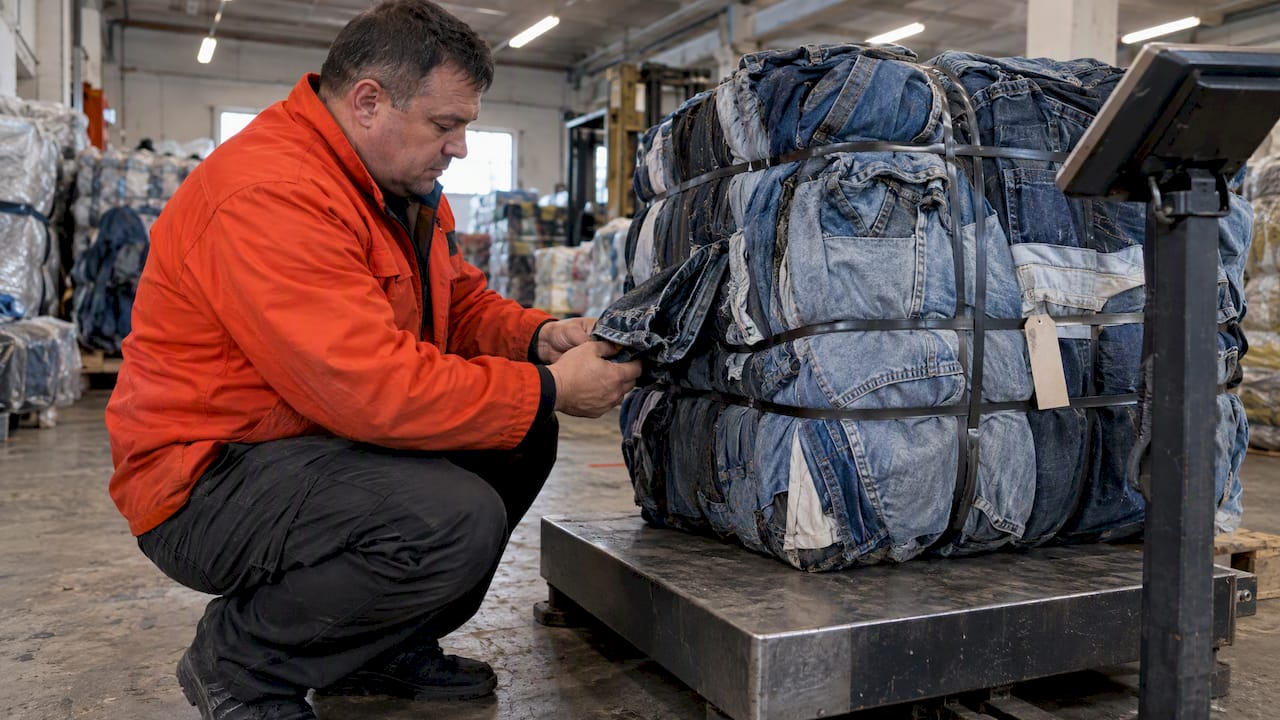
- Match the PBI tag and bale ID against the shipping paperwork and purchase order before breaking the bale open.
- Spot-check net weight on a sample of bales per container rather than trusting the manifest alone.
- Pull a representative sample of pieces, not just the top layer, since packers sometimes place better items near the surface.
- Check for contamination: oil, grease, mold, and unusual odors are the most common reasons to reject a bale outright.
- Inspect for major tears and confirm sample-hole coverage matches what the cotton bale standards guide describes as acceptable for higher grades.
- Document any discrepancy with photos and timestamps before contacting the seller about a price adjustment or rejection.
Applying a defect-point system, similar to the four-point fabric inspection method described in ASTM D5430, gives an objective basis for deciding whether a batch of denim pieces falls below an agreed threshold. This matters most when a seller disputes a claim, since a documented point count is harder to argue against than a general complaint about quality. Buyers who skip sampling and rely only on the top layer of a bale are the ones most likely to discover a mismatch after the container is already unpacked.
Pro Tip: Photograph the PBI tag, the bale weight on your own scale, and a cross-section sample pull before you sign off on delivery.
Converting bale weight to expected piece counts
Piece counts per bale vary with item type and how tightly the bale was compressed, so treat any seller estimate as a starting range rather than a fixed number.
- Adult jeans typically run heavier per piece than t-shirts or lightweight tops, which lowers the expected piece count for a given weight.
- Denim jackets add even more weight per piece than jeans, further reducing pieces per bale at the same total weight.
- Mixed denim bales (jeans, jackets, skirts) fall somewhere between these extremes and are harder to estimate precisely without a sample pull.
- Compression level changes density: a tightly packed 45 kg bale and a loosely packed one can yield noticeably different piece counts even at the same declared weight.
As a worked example: if a seller quotes a certain price per kilogram for a Grade A denim bale of given weight and a sample pull suggests an estimated piece count, the rough cost can be calculated per piece before freight and sorting labor. For more detailed conversion ranges across bale sizes, see our guide to converting clothing bale weights to pieces.
Packaging standards that protect denim bale buyers
Packaging quality is not cosmetic. It directly affects contamination risk and the condition denim arrives in.
The JCIBPC cotton bale standards guide defines three visual grading tiers that translate well into secondhand apparel procurement: Grade A, Grade B, and Other. Grade A bales feature complete coverage, approved bagging and patching material, a specified number of ties with recessed ties preferred, square heads, and a Permanent Bale Identification tag. Grade B allows some exposed lint if it is free of contaminants, along with completely covered heads and covered sample holes, per the 2022 cotton bale standards update. Bales that fall below Grade B packaging are generally recommended for repair or repackaging before acceptance.
- Complete coverage: no exposed fabric beyond approved sample holes.
- Correct tie count: loose or insufficient ties risk the bale opening in transit.
- PBI tagging: lets buyers trace a specific bale back to its packing record.
- No oil marks or bag tears: these materially raise contamination risk for denim stored or shipped in warm, humid conditions.
Poor bale packaging, including exposed lint and oil-marked bagging, is a documented reason for rejecting shipments under cotton bale standards guidance. Building a hold point into the contract, where payment finalizes only after packaging inspection, gives buyers real leverage without slowing down a legitimate order. Our packaging and strapping guide for used clothing buyers covers the specific methods worth requesting from a supplier.
What supplier quality practices tell buyers about bale reliability
Supplier-level practices matter because grade claims are only as trustworthy as the process behind them. We operate a large warehouse and use advanced packaging machinery that produces more consistent bale density and faster repack turnaround, which reduces the kind of weight and piece-count surprises buyers run into with less consistent operations, a key factor to verify any brand’s fashion supply chain transparency. Shipping internationally also means our documentation and compliance practices get tested against a wide range of import requirements.
When evaluating any supplier, ask for:
- Sample photos of the actual bales being offered, not stock images.
- PBI tag verification tied to the specific shipment.
- Packing videos showing the compression and bagging process.
- Documented turnaround times from order to repack and dispatch.
Buyers who build these proof points into their acceptance criteria, alongside moisture test reports like those described in our bale moisture limits guide, catch problems before a shipment leaves port rather than after it arrives.
A buyer’s perspective on what actually protects margin
The buyers who do well in this trade are not the ones who negotiate the sharpest price. They are the ones who insist on documentation: a written spec, a sample pull, a packaging check, before money changes hands. That extra hour of due diligence costs far less than a container of mislabeled Grade B denim sold as Grade A. Ask for the proof before you ask for the discount.
— rodrigues
Sourcing denim bales with fewer surprises
We supply used clothing bales, including denim, backed by advanced packaging machinery and international delivery. If you want fewer surprises on arrival, request sample photos, PBI tag verification, and a container quote before you commit.
Reach out through our Used Clothing page to start that conversation and get a quote tailored to the grade mix you need.
FAQ
What are the different grades of denim bales?
Common grades include Cream or Grade AAA (premium, near-new condition), Grade A or Grade 1 (wearable, resale-ready), Grade B (mixed condition needing more sorting), and Other or mixed (damaged or low-demand items). Grade names vary by seller, so always confirm the specific condition criteria behind the label.
Is 12-ounce denim considered heavy?
Twelve-ounce denim sits in the mid-weight range, heavier than lightweight summer denim but lighter than heavyweight raw or selvedge denim often used in workwear. Fabric weight affects durability and resale positioning more than it affects grading itself.
What are the different shades of denim?
Denim shades commonly include raw or dry (unwashed), light wash, medium wash, dark wash, and black or overdyed denim, each appealing to different resale segments. Shade is a style factor buyers track separately from condition grade when sorting mixed bales.
How should buyers handle vague grade language like “A/B mix”?
Treat vague grade language as a request for more information, not a reliable spec. Ask the seller for a percentage breakdown between grades and sample photos before agreeing on price, and document any clarification in the purchase contract.
What packaging details should buyers verify before accepting a bale?
Verify complete bag coverage, the correct number of ties, and a Permanent Bale Identification tag matching the shipment paperwork, as outlined in the cotton bale standards guide. Exposed lint, bag tears, or oil marks are packaging faults that raise contamination risk and are valid grounds for a rejection or price adjustment.
Sources
- A guide for cotton bale standards (JCIBPC / National Cotton Council)
- ASTM D5430: Visually inspecting and grading fabrics — TextileSchool