
Tropical mix grading sorts lightweight, summer-weight used-clothing bales into clear quality tiers, typically Grade A or Premium, Grade B, and Grade C, based on wear, fabric condition, and seasonal fit. Buyers should treat grading as a contract issue, not a trust issue: require bale labels stating weight, category, and season, and insist on sample verification before goods ship.
TL;DR:
- Grade A suits boutiques; Grade B suits volume stalls seeking faster sales despite visible wear, while Grade C belongs in recycling or industrial reuse.
- Winter coats, wool sweaters, thermal layers, and boots do not belong in tropical mixes; their presence signals season mixing and adds sorting labor before resale.
- Sample 5% to 10% across the bale, document defects, and make approval and a written rejection threshold conditions of final payment before shipment.
- Before payment, require supplier and importer contacts, country of origin, and shipment specific treatment certificates; also check destination rules for prohibited garments.
Table of Contents
- Grade categories explained: Premium, B, and C
- Tropical mix composition and seasonality explained
- Bale specs, labeling, and packaging standards to require
- Sampling and acceptance checks before you accept a bale
- Regulatory and export considerations worth checking
- How we grade and quality-check tropical mix bales
- Our take: what actually protects your margin
- Order a tropical mix sample from our warehouse
- FAQ
- Sources
Grade categories explained: Premium, B, and C
Grade A, often labeled Premium, contains lightweight garments in near-retail condition: minimal fading, no holes, intact zippers and buttons, and styles that still read as current, as explained in this selling a suit resale guide. These bales suit boutique resellers and markets where customers pay for appearance over price.
Grade B is the workhorse of tropical mix sourcing. Items are wearable but show signs of use: mild pilling, a little fading, maybe a small repair or two, and a wider mix of brands than Grade A. Resellers running volume stalls or flea markets typically buy Grade B because the margin per unit is lower but the sell-through is faster.
Grade C covers garments that are not fit for retail resale. Stains that will not wash out, structural damage, or heavy wear push items into this tier, where they are better suited to recycling, wiping rag production, or industrial reuse rather than a clothing rack.
- Grade A / Premium: near-retail condition, light wear, current styles, highest resale value per unit.
- Grade B: wearable with visible wear, mixed brands, moderate resale value.
- Grade C: unsaleable as apparel, directed toward recycling or industrial use.
Higher grades generally support stronger returns per bale, but the relationship is directional rather than fixed. A buyer’s actual return depends on local demand, seasonal timing, and how closely the bale’s declared grade matches what arrives.
Tropical mix composition and seasonality explained
A genuine tropical mix bale consists of lightweight, warm-weather garments: short-sleeve shirts, t-shirts, sundresses, shorts, light skirts, sandals, and summer accessories. Cotton, linen, and light synthetic blends dominate; anything heavy, like winter coats, wool sweaters, or insulated outerwear, does not belong and signals a supplier mixing seasons to pad bale weight.
Season homogeneity matters because mismatched items drag down the bale’s usable percentage. A bale sold as tropical mix but padded with transitional-weight garments forces the buyer to re-sort, which adds labor cost and cuts into margin before a single item reaches a shelf.
- Core items: t-shirts, light dresses, shorts, tank tops, summer footwear.
- Common fabrics: cotton, linen, lightweight polyester and viscose blends.
- Exclusions to flag: heavy coats, winter knitwear, thermal layers, boots.
Contamination, meaning non-matching or unsellable items mixed into a graded bale, also shifts with season. Suppliers that separate summer stock from transitional inventory at the sorting stage produce more consistent tropical mix bales, which is why asking a supplier how they segregate seasonal stock is a reasonable due-diligence question before placing a large order.
Bale specs, labeling, and packaging standards to require
Consistent bale weight makes planning easier on both sides of a shipment. Consistent bale weight makes planning easier on both sides of a shipment; suppliers should clearly state their standard bale weight to help buyers calculate landed cost per unit before goods arrive.
National and technical standards for textile sorting generally call for labeling that covers mass, category, supplier and importer contact, and origin, which supports traceability and smoother inspection, as reflected in requirements for sorting and grading textile waste.
- Confirm bale weight (for example, a 45 kg standard) and ask for consistency across shipments.
- Require labels showing garment category, gender/age segment, season, and declared grade.
- Check that supplier and importer contact details and country of origin appear on the manifest.
- Ask whether packaging uses machine strapping rather than manual ties, since tighter strapping reduces shifting and damage in transit.
- Request copies of fumigation or treatment certificates alongside the bale manifest before payment.
Sampling and acceptance checks before you accept a bale
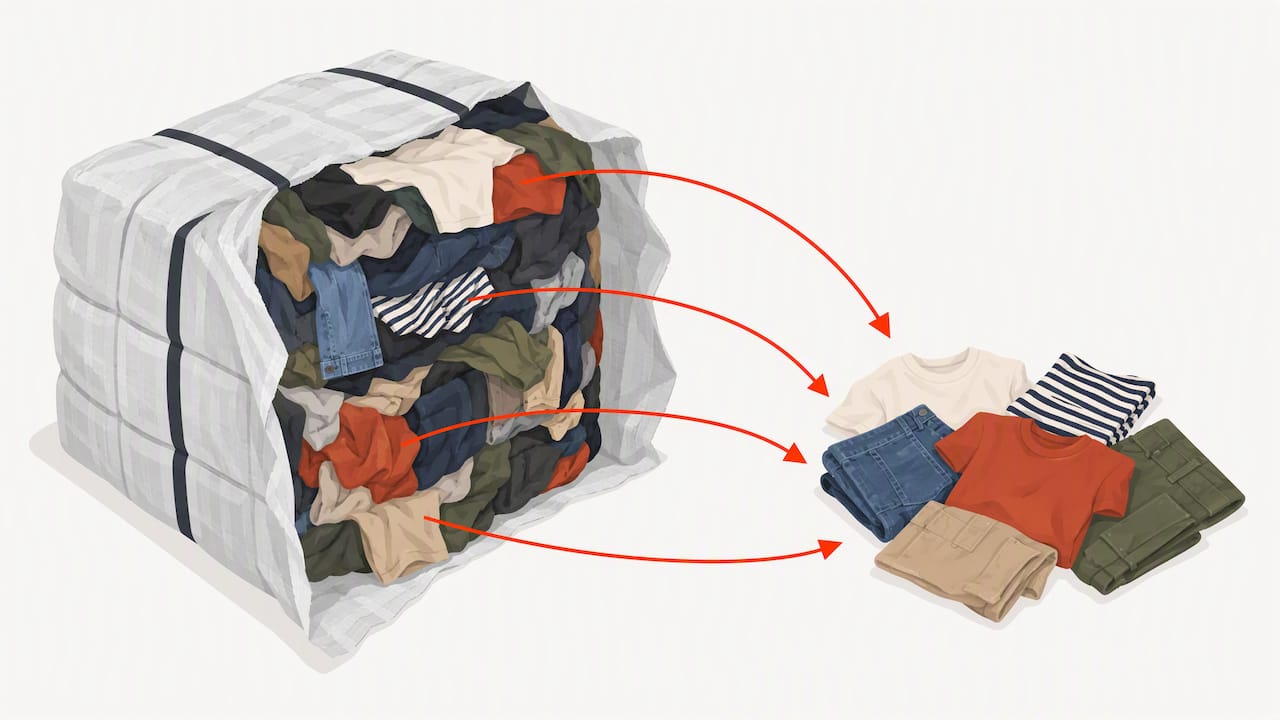
Sampling turns a grading claim into a verified one.
- Select sample items from different points in the bale, not just the top layer.
- Check each sampled piece for wearability, stains, repairs, fabric type, and season match.
- Compare branding and style relevance against what the bale label promises.
- Record findings with photos or short video, timestamped against the bale number.
- Set a rejection threshold in writing, for example a defined share of non-matching items, before the shipment leaves the supplier’s warehouse.
Pro Tip: Build sample approval into the purchase contract as a condition of final payment, not a courtesy step after goods have already shipped.
Our guide on sampling methodology for graded clothing walks through documentation templates buyers can adapt for their own purchase orders.
Regulatory and export considerations worth checking
Harmonized grading remains a work in progress across markets. The EU Waste Framework Directive now requires member states to set up separate collection for used textiles, part of a broader push toward clearer classification and reporting that eventually touches export-bound bales too. Separately, advocacy positions on end-of-waste criteria recommend limiting bales to homogenous categories by season, size, and user group, alongside transparent labeling, exactly the standard buyers should already be requesting.
- Ask for treatment or fumigation certificates tied to the specific shipment.
- Confirm the destination country’s prohibited-item list; some national protocols exclude categories like used underwear or hospital wear.
- Request a supplier self-declaration covering prohibited items and bale contents.
- Build certificate delivery into the purchase contract rather than treating it as optional paperwork.
Our overview of import compliance for used clothing covers documentation requirements buyers commonly face at customs.
How we grade and quality-check tropical mix bales
We run tropical mix grading through a warehouse built for volume and consistency, paired with packaging machinery that keeps bale turnaround fast without cutting corners on checks. Each bale follows a 45 kg standard, and our sorting teams track seasonal contamination patterns so summer stock does not get diluted with transitional-weight garments.
- We grade and weigh bales to a consistent standard, with contamination checks built into the sorting line.
- We recommend buyers sample 5 to 10% of any bale before acceptance, and we support that process with documentation.
- We provide bale manifests, packaging photos or video, and treatment certificates on request.
- We can connect prospective buyers with references from long-term partners who have worked with our shipments before.
These controls exist to protect your resale margin and keep customs clearance predictable, since a well-documented bale moves through inspection faster than one with gaps in its paperwork.
Our take: what actually protects your margin
Buyers obsess over brand names inside a bale and underweight the basics: season homogeneity and labeling accuracy predict resale success far more reliably than which labels show up in the mix. Treat sample approval and certificate delivery as contract terms, not favors, and favor suppliers who can produce the same documentation shipment after shipment. Predictable paperwork beats a lucky bale every time.
— rodrigues
Order a tropical mix sample from our warehouse
We built our tropical mix grading process around the questions buyers actually ask: what’s the weight, what’s the season mix, and can you prove it. Our warehouse capacity and packaging machinery keep turnaround fast, so a sample order does not sit in a queue for weeks, and our grading checks mean the bale that ships matches the label on it.
- Request a sample bale with full documentation, including weight, grade, and season declaration.
- Ask for packaging photos or video before your shipment leaves our facility.
- Get fumigation and treatment certificates bundled with your bale manifest.
Visit our Used Clothing page to request a quote or start a sample order, and review our bale specification checklist before you place your first bulk order.
FAQ
What does “tropical mix” mean in used clothing bales?
Tropical mix refers to bales of lightweight, warm-weather garments such as t-shirts, shorts, light dresses, and summer footwear, packed separately from winter or transitional-weight stock. Buyers should confirm the label states “tropical” or “summer” explicitly, since mixed-season bales reduce usable yield.
What is the difference between Grade A and Grade B tropical mix?
Grade A, often called Premium, contains near-retail condition garments with minimal wear and current styling, while Grade B includes wearable items with visible signs of use such as fading or minor repairs. Grade A typically supports higher resale value per unit, though actual returns depend on local market demand.
How much of a bale should I sample before accepting it?
This level of sampling is generally enough to catch mislabeling or seasonal contamination without unpacking the full bale.
What documents should I request from a tropical mix supplier?
Ask for a bale manifest listing weight, category, and origin, along with fumigation or treatment certificates tied to the specific shipment. Our contract checklist for used clothing outlines clauses that make these documents a condition of payment rather than an afterthought.
Why does contamination vary by season in tropical mixes?
Contamination, meaning non-matching or unsellable items inside a graded bale, tends to shift as suppliers transition inventory between seasons, since summer stock sorted alongside transitional garments is more likely to pick up mismatched pieces. Suppliers who separate summer stock early in sorting generally produce more consistent tropical mix bales.
Sources
- Management of used and waste textiles in Europe’s circular economy | Publications | European Environment Agency (EEA)
- TS.LB.010 – Technical and Management Requirements for TEX and WTEX
- ECOS and EEB position on End-of-Waste criteria for reuse textiles