
The fastest reliable route to tropical mix clothing bales is a direct exporter relationship backed by a written spec sheet, a verified sample, and a stated grade before you pay a deposit. Start by requesting a sample parcel and a bale specification from a supplier like MS EXP SP Z O O, then confirm grade, weight, and packaging terms in writing before committing to a full container.
TL;DR:
- Request a sample parcel equal to 5% to 10% of the planned order, and wait for its arrival before committing to a full load.
- Surveyed importers favored Grade A, with 83% buying it and only 2% buying Grade C; state grade, weight, manifest counts, and rag limits in contracts.
- Add freight, insurance, duty, and handling to FOB; then include a 5% to 15% unsellable allowance, with Grade A and B nearer the low end.
- For smaller trials or mixed categories, choose less than container load shipping, and verify the HS code and any required disinfection certificate before departure.
- Custom mixes can prioritize adult or children’s garments, prints, or lighter fabrics, but tailored sorting may extend lead times or raise minimum order quantities.
Table of Contents
- Bale specs and grading buyers must demand for tropical mix clothing
- Where and how to place orders: direct exporters, marketplaces, and brokers
- Inspection and acceptance checklist to reduce returns and unsellable stock
- How to convert FOB quotes into landed cost and margin estimates
- Quick logistics and customs items buyers must get right
- MS EXP SP Z O O: capacity, turnaround, and buyer support
- Customization and mixing options within tropical mix bales
- Storage and handling tips for bales after purchase
- Supplier perspective: what buyers gain from a reliable exporter relationship
- How to order from MS EXP SP Z O O and request a sample
- FAQ
- Sources
Bale specs and grading buyers must demand for tropical mix clothing
Tropical mix bales typically arrive at standard weights of 45 kilograms or 50 kilograms for small test orders, while full container loads often move in bulk formats closer to 400 kilograms. Weight and packaging format matter because they drive per-kilogram pricing, handling costs at port, and how much sorting labor you need once goods land.

Grade matters just as much as weight. A 2026 SMEP/UNCTAD bale analysis of imports in sampled East African markets’ found that importers strongly favor higher grades: Most surveyed importers reported buying predominantly Grade A, followed by smaller shares of Grade B and very few Grade C. Grade preference tracks local taste, so a Grade A bale that performs well in one region may not match buyer expectations in another market. Tropical mix itself usually means lightweight fabrics, short sleeves, shorts, sundresses, and bold prints suited to warm-climate resale, which makes it a strong fit for seasonal tropical styles in coastal and equatorial markets year round.
Before signing a purchase agreement, buyers should require:
- A packing manifest listing item counts and category breakdowns.
- A clear grade declaration (A, B, or C) tied to the manifest.
- Strapping and bale-weight confirmation matching the agreed spec.
- A stated allowable percentage of rags or wipers mixed into the bale.
Pro Tip: Ask for the bale spec checklist in writing before you wire a deposit, not after the bale ships.
Where and how to place orders: direct exporters, marketplaces, and brokers
Direct exporter relationships tend to deliver the most consistent supply because you negotiate grade, weight, and packaging directly with the party packing your bales. Verified marketplace listings can work for one-off test orders, but consistency varies by seller. Brokers and agents add a markup and a communication layer, which can slow down sample requests and dispute resolution.
Once you pick a channel, the order process generally follows these steps:
- Request a sample parcel, typically 5% to 10% of a planned order, with pre-shipment photos of representative bales.
- Confirm the sample ships separately and arrives before you commit to a full load.
- Negotiate deposit and balance terms, often a partial deposit with the balance due against shipping documents.
- Lock in a 45 kilogram bale contract with clear inspection rights before the balance payment clears.
Lead times and minimum order quantities vary by exporter, so ask early rather than assuming industry-wide figures. Before releasing final payment, insist on photos of the actual bales being loaded, a bale manifest matching your agreed spec, and an inspection report from either your own agent or a third party.
Inspection and acceptance checklist to reduce returns and unsellable stock
A tight inspection process at both the sample stage and on arrival protects your margin. At the sample stage, check fabric condition, visible stains, and whether functional trims like zippers and buttons still work. Reject samples that show heavy staining or broken closures beyond what your target market will accept.
On arrival, re-check against the agreed grade and rag or wiper allowance. The SMEP/UNCTAD study found that the vast majority of imported secondhand clothing in its sampled markets was rewearable, with only a small percentage classified as textile waste and a low percentage as rags, a useful benchmark when judging whether a shipment’s contamination falls within normal range.
Documentation to require includes:
- A signed grade declaration matching the packing manifest.
- Itemized category counts (clothing, rags, accessories).
- Disinfection certificates where your destination market requires them.
- Clear bale labeling matching the shipping documents.
Pro Tip: Instruct any third-party inspector to photograph open bales from multiple angles and flag any rag percentage that exceeds your contract terms.
How to convert FOB quotes into landed cost and margin estimates
An FOB quote is only the starting point. Landed cost adds international freight, cargo insurance, import duty, port handling fees, inland transport to your warehouse, and an expected shrink or unsellable rate.
- Start with the FOB price per kilogram quoted by your supplier.
- Add freight, insurance, duty, and port and inland handling fees to get a landed cost per kilogram.
- Divide landed cost per kilogram by the average garment weight in the bale to estimate cost per item.
- Subtract an unsellable allowance before calculating gross margin against your planned resale price.
Say a bale costs $1.20 per kilogram FOB and total freight, insurance, duty, and handling add $0.60 per kilogram, bringing landed cost to $1.80 per kilogram. At roughly 300 grams per average garment, that works out to about $0.54 landed cost per item before shrink.
Buyers should build an unsellable allowance of 5% to 15% into that math depending on grade and market, a range supported by the SMEP/UNCTAD finding that most sampled imports were rewearable, which favors the lower end of that range for Grade A and Grade B buys. Negotiation levers that move the FOB price include larger minimum order quantities, consolidating multiple bale types into one shipment, and repeat-order discounts from the same exporter. Full per-kilogram pricing bands and additional landed-cost worked examples can help you stress-test a quote before committing.
Quick logistics and customs items buyers must get right
Full container load shipments suit buyers placing large, consistent orders, while less than container load works for smaller test orders or buyers mixing multiple product categories in one shipment. Either way, require machine-strapped bales and correct cargo transport unit coding on the packing list.
- Confirm the HS code quoted on your shipping documents matches the actual goods category, since a mismatch is a common trigger for port holds.
- Ask for a correct HS code reference before the shipment leaves origin, not after it arrives.
- Request a disinfection certificate upfront if your destination market requires one for used textiles.
- Work with an experienced freight forwarder or customs broker, since documentation errors on used-goods shipments are a frequent source of delays and extra charges.
MS EXP SP Z O O: capacity, turnaround, and buyer support
We operate a large warehouse and use advanced packaging machinery built for fast bale turnaround, which helps keep supply consistent for buyers placing repeat orders. We ship internationally, and our long-term partners highlight a dependable relationship and consistent quality as reasons for reordering.
- Machine-assisted packaging shortens the time between order confirmation and bales ready for pickup.
- Consistent sorting standards reduce contamination risk between shipments.
- Global shipping coverage to 40+ countries supports both container and smaller test orders.
The practical next step is to request a sample and bale spec sheet directly, confirm grade and weight in writing, then move to an FOB quote once the sample checks out.
Customization and mixing options within tropical mix bales
Tropical mix does not have to mean a fixed, unchangeable blend. Many exporters can adjust the ratio of garment types within a bale to better match your target market, shifting toward more sundresses and short-sleeve shirts for a beach-resort resale market, or more children’s wear for a family-focused retail floor. Buyers who specify preferences upfront, rather than accepting a standard mix, generally see fewer unsellable items per bale.
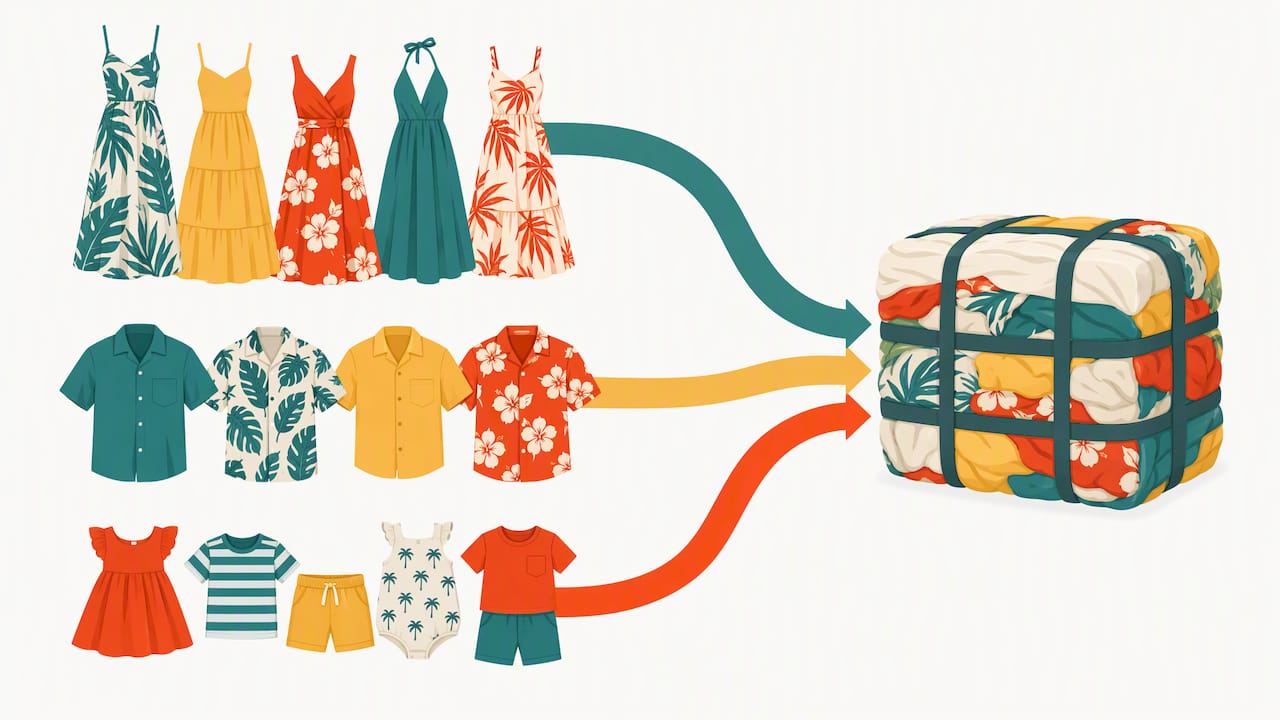
Common customization requests include adjusting the proportion of adult versus children’s garments, emphasizing specific prints or fabric weights suited to a hot, humid climate, and separating accessories like swimwear or sun hats into their own smaller bales rather than blending them throughout a larger lot. Some buyers also request a defined cap on the percentage of rags or non-wearable textiles mixed into a tropical lot, which ties back to the contamination allowance discussed earlier in your purchase agreement.
Requesting a custom mix usually means a slightly longer lead time than a standard bale, since the exporter has to sort to your specification rather than ship from existing stock. It can also affect minimum order quantities, since a highly specific mix request may require a larger total order to make sorting economically worthwhile for the supplier. Buyers testing a new market often start with a standard mix sample, then move to a customized specification once they understand which garment types sell fastest in their region.
Storage and handling tips for bales after purchase
Once a bale lands in your warehouse, how you store it affects both resale speed and garment condition. Store bales off the ground on pallets to avoid moisture damage from concrete floors, and keep storage areas dry and ventilated, since tropical mix fabrics are often lightweight and prone to mildew if kept in humid, poorly ventilated spaces.
Avoid stacking bales more than a few units high, since excessive weight on lower bales can crush and wrinkle garments, adding extra labor to your sorting and steaming process before items reach the sales floor. Open bales promptly after arrival rather than letting them sit sealed for weeks, since early inspection lets you catch any contamination or grade mismatch while you still have recourse with your supplier.
Label opened bales by grade and arrival date so staff sorting inventory can prioritize older stock first, reducing the chance that slower-moving items sit in storage long enough to lose seasonal relevance. For buyers sourcing lightweight, warm-weather garments, moving inventory quickly matters more than with heavier seasonal wear, since tropical styles have a narrower resale window in cooler climates. A simple first-in, first-out system on your warehouse floor keeps tropical mix stock moving before print trends or seasonal demand shift.
Supplier perspective: what buyers gain from a reliable exporter relationship
We prioritize consistent inventory, fast packaging turnaround, and direct communication because buyers lose money when supply is unpredictable. A dependable exporter answers sample requests quickly and quotes honestly from the first conversation.
— rodrigues
How to order from MS EXP SP Z O O and request a sample
We supply tropical mix and broader used clothing bales with machine-assisted packaging and international shipping. Getting started takes three steps.
- Request a sample parcel and bale spec sheet from our used clothing page.
- Confirm grade, weight, and packaging terms in writing.
- Request an FOB quote and agree payment terms before the full order ships.
For buyers also sourcing footwear, our used shoes category follows the same sample-first process.
FAQ
What is tropical mix clothing in wholesale bales?
Tropical mix clothing refers to bales of lightweight, warm-climate garments such as sundresses, short-sleeve shirts, shorts, and bold prints, packed for resale in warm or coastal markets. Exporters can often adjust the mix toward more adult or children’s items depending on your target resale market.
What bale weights are standard for tropical mix clothing?
Small test bales commonly weigh 45 or 50 kilograms, while full container loads often use bulk formats closer to 400 kilograms. Buyers testing a new market typically start with a smaller bale before scaling to a larger order.
How do Grade A, B, and C differ in resale value?
Grade A bales contain the most wearable, least damaged garments and command the highest resale prices, while Grade C includes more worn or damaged items at a lower price point. SMEP survey data found 83% of importers in its sample bought Grade A and only 2% bought Grade C, showing a strong market lean toward higher grades.
What rag or contamination percentage is normal in a bale?
A 2026 SMEP/UNCTAD analysis found about 2.9% to 3.2% of sampled imported clothing classified as rags and 1.1% to 1.3% as textile waste, with the remaining roughly 96% rewearable. Buyers should set a contamination cap in their purchase agreement based on similar ranges.
How do I calculate landed cost from an FOB quote?
Add international freight, insurance, import duty, port fees, and inland transport to the FOB price per kilogram, then divide by average garment weight to estimate landed cost per item.